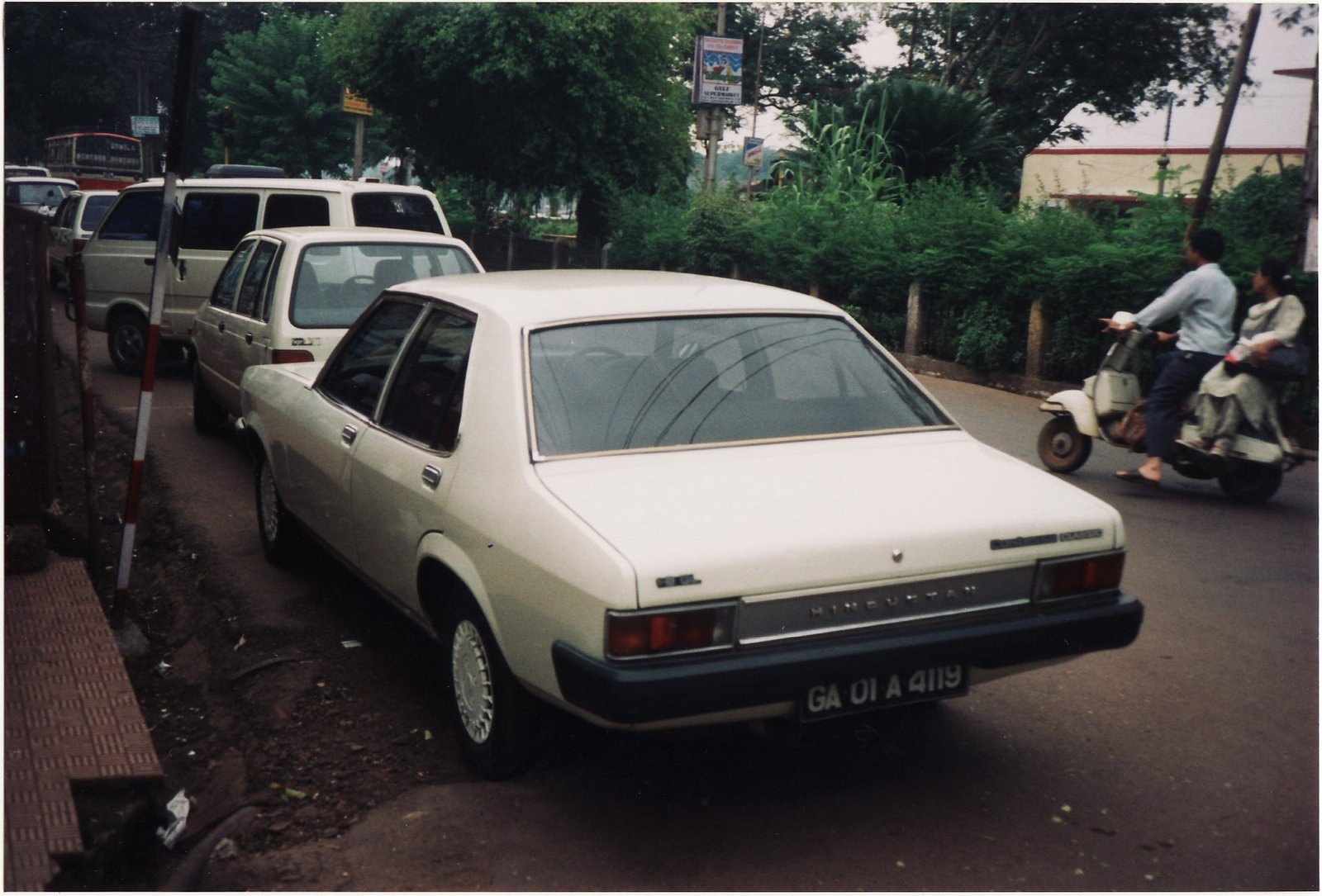
Hindustan Contessa Classic
The Desi Muscle Cruiser: Britain's Vauxhall Bones, Japan's Isuzu Heart, and Bollywood's Favorite Godfather Chariot
Historical Significance & National Impact
Cultural Phenomenon & Bollywood Lore
The Non-Negotiable Bollywood Don Uniform
Between 1987 and 2002, if you were casting a Bollywood action thriller, the villain's entry was codified in cinematic law: a pitch-black Hindustan Contessa Classic with dark sun-control film, gold-plated mesh alloys, and a red velour interior rolling slowly up a gravel driveway. As the rear door swung open, the camera lingered on a polished leather boot stepping out, accompanied by an ominous bass synth score. From Amrish Puri and Danny Denzongpa to Gulshan Grover, every iconic on-screen criminal mastermind rode in a Contessa, flanked by two Maruti Gypsys loaded with armed henchmen. The Ambassador was the car of the system; the Contessa was the car of the man who ruled above the law.
The Industrialist & Feudal Feud Chariot
While IAS officers and cabinet ministers were mandated to commute in austere white Ambassadors, private capital demanded a louder statement. In the 1990s, Kolkata jute mill magnates, Western Maharashtra sugar cooperative barons, Rajasthani royal scions, and tea estate superintendents in the Dooars and Assam hills drove Contessa Classics. Parking a Contessa in front of a colonial-era porch signaled generational land ownership, industrial monopolies, and untouchable local clout. Its massive 65-litre fuel tank and heavy-gauge sheet metal allowed feudal patriarchs to traverse potholed district roads without feeling the topography.
The Birth of the 'Desi Mustang' Mythos
Long before Fast & Furious or YouTube restomods existed, Indian car enthusiasts looked at the Contessa's long, flat snout, wide track, fastback roofline transition, and squat rear haunches and saw what the country was otherwise denied: an American muscle car. It looked like a 1969 Dodge Dart or Chevy Chevelle adapted for Commonwealth roads. When that twin-barrel Mikuni carburettor dumped extra fuel under wide-open throttle, the rear live axle squatted, the nose lifted slightly, and the exhaust let out a deep, bassy induction bark that sounded unlike anything else in the country.
The Wedding Dowry Pinnacle
In northern India's agricultural belts during the 1990s, gifting a Contessa Classic as part of a high-profile wedding was considered the ultimate display of family prestige. Delivering a groom in an air-conditioned Contessa was proof that the bride's family possessed royal-grade wealth. Mechanics in small towns were often summoned on wedding mornings solely to ensure the temperamental Lucas-TVS electricals and twin horn setups were in peak auditory condition.
Mechanical Anatomy & Driving Soul
The Isuzu 4ZB1: Japan's Bulletproof Highway Heart
The engine that saved the Contessa was the 1,817cc Isuzu 4ZB1, an iron-block, aluminum-head SOHC masterpiece. Engineered for durability, it featured a forged steel crankshaft, crossflow hemispherical combustion chambers, and a progressive twin-barrel carburettor. Unlike the old BMC engine that overheated on highway runs, the Isuzu block could sustain 4,500 RPM for hours without breaking a sweat, running cool even in 45°C Rajasthani heat with the factory air conditioner running at full tilt.
The Isuzu MSG5 5-Speed Floor-Shift Gearbox
The transmission was a revelation. While the Ambassador suffered with vague, column-mounted 4-speed linkages that slipped out of second gear, the Contessa Classic came with a direct-floor-mounted Japanese 5-speed manual box. Fifth gear was a tall 0.86:1 overdrive, allowing the engine to turn at barely 2,800 RPM while cruising at 120 km/h, significantly improving fuel efficiency and highway refinement.
The 4-Link Rear Live Axle & Panhard Rod
Underneath the Contessa's handsome tail lay a classic rear-wheel-drive layout: a heavy live axle located by four trailing links, coil springs, telescopic hydraulic dampers, and a transverse Panhard rod. This suspension geometry gave the Contessa remarkable straight-line stability and load-carrying strength over brutal monsoon potholes, though aggressive cornering on wet roads could provoke lively, tail-happy oversteer.
The Dual-Chamber Vacuum Servo Disc Brakes
To bring a 1.2-tonne cruiser down from triple-digit speeds, HM equipped the Contessa with front disc brakes augmented by a large tandem vacuum brake booster. For drivers transitioning from all-drum Ambassadors, the Contessa's braking bite felt like dropping an anchor—safe, progressive, and confidence-inspiring.
The Contessa Diesel (4FC1) & 2.0 DSL Turbo
In 1990, HM introduced the Contessa Diesel powered by an imported 1,995cc Isuzu 4FC1 naturally aspirated diesel engine (55 PS), followed in 1997 by the intercooled 2.0L Turbo Diesel (75 PS). While clattery at idle, these diesels were virtually indestructible, regularly clocking 5,00,000 km in the hands of long-distance courier fleet owners and highway express travelers.
Production Milestones Timeline
Acquisition of Vauxhall Tooling
Hindustan Motors acquires the production tooling and dies for the Vauxhall Victor FE from General Motors UK following its phase-out in Luton, shipping the presses to Uttarpara.
Launch of the First Contessa
Debuts in India with a 1,489cc BMC B-Series petrol engine (50 PS) and 4-speed manual gearbox. Priced at ₹83,437, it stuns with its modern styling but faces criticism for underpowered acceleration.
The 'Classic' Revolution with Isuzu 1.8L
HM inaugurates the Pithampur plant and launches the Contessa Classic, powered by the 1,817cc Isuzu 4ZB1 engine (85 PS) and 5-speed gearbox. Becomes India's undisputed premium performance sedan.
Contessa Diesel 2.0L (4FC1) Introduced
Responding to soaring fuel costs, HM launches the diesel variant featuring the 2.0L Isuzu 4FC1 engine, offering 14+ kmpl highway economy with executive luxury.
Contessa 2.0 DSL Turbo & GLX Trim
Introduces the 75 PS turbocharged diesel engine along with power windows, power steering, central locking, and revised interior upholstery to fight foreign entrants.
The Foreign Sedan Influx & Sales Slump
The launch of modern Japanese monocoques like the Honda City, Mitsubishi Lancer, and Daewoo Cielo shatters the Contessa's market dominance. Annual sales drop below 1,000 units.
Final Curtain at Uttarpara
Stricter Bharat Stage II (BS2) emissions norms and modern frontal crash regulations make continuing production commercially unviable. HM quietly discontinues the Contessa after an 18-year production run of approximately 35,000 units.
Factory Engineering Blueprint
Restorer's Reality & Critical Rust Zones
Rust Hotspots
Windshield rubber beadings shrink and let rainwater seep into the firewall, rusting the front floorboards. Rear quarter panels, wheel arches, and boot troughs are primary rust hotspots. The Isuzu powertrain is indestructible, but carburettor tuning requires experienced mechanics.
Collector Index (2026)
India's premier restomod icon. Highly sought after for muscle-car conversions (Mustang / Dodge clones) and engine swaps (2JZ, SR20, mHawk). Pristine factory-condition Classics fetch ₹5,00,000 to ₹9,00,000, with bespoke restomods touching ₹15,00,000+ in 2026.
Frequently Asked Questions
Was the Hindustan Contessa an authentic American muscle car?
No. The Hindustan Contessa was actually based on the British Vauxhall Victor (FE series / VX4/90) produced by General Motors UK between 1972 and 1976. However, because GM styled the Vauxhall Victor FE with strong transatlantic influences—such as a long hood, sculpted waistline, quad headlamps, and a sloping fastback rear—it closely resembled iconic American muscle cars like the Chevrolet Chevelle and Dodge Dart. In India, its rear-wheel-drive platform and aggressive proportions earned it the affectionate moniker 'The Desi Muscle Car'.
Why was the early 1984 Contessa a massive disappointment to buyers?
When launched in 1984, the Contessa looked like a sleek high-speed cruiser, but under the hood, Hindustan Motors had fitted the ancient 1,489cc BMC B-Series petrol engine from the Ambassador. Producing just 50 bhp and mated to a clunky 4-speed gearbox, it took over 30 seconds to reach 100 km/h and choked on inclines. It was universally mocked as 'a cheetah with the heart of a bullock cart' until the 1989 introduction of the 85 PS Isuzu engine saved its reputation.
How reliable was the Isuzu 1.8L petrol engine in the Contessa Classic?
The 1,817cc Isuzu 4ZB1 petrol engine was legendary for its bulletproof Japanese reliability. Manufactured in Pithampur under an HM-Isuzu joint venture, it featured an iron block, crossflow cylinder head, and a durable forged steel crankshaft. It could easily endure 3,00,000+ km without an engine rebuild, ran cool in extreme Indian summers, and could cruise at 130 km/h all day on open highways.
Why did Hindustan Motors discontinue the Contessa in 2002?
The Contessa was discontinued in 2002 due to three converging factors: 1) The post-1991 economic liberalization brought technologically advanced foreign sedans like the Honda City, Mitsubishi Lancer, and Opel Astra, making the Contessa feel heavy, dated, and unrefined. 2) The thirsty twin-barrel carburettor returned poor city mileage (6.5–8 kmpl) as fuel prices skyrocketed. 3) The implementation of strict Bharat Stage II (BS2) emission norms and modern passenger safety standards made re-engineering the 1972 Vauxhall chassis financially unviable for HM.
What makes the Hindustan Contessa India's most popular restomod car today?
The Contessa is the only accessible vintage Indian automobile with authentic classic rear-wheel-drive proportions—a long hood, low roofline, wide stance, and solid rear axle. Restorers and custom shops across Punjab, Kerala, and Delhi love using it as a blank canvas to build 1969 Mustang replicas or high-power sleepers, frequently dropping in Toyota 2JZ-GE straight-sixes, BMW engines, or tuned Mahindra mHawk diesels with modern disc brakes and luxury interiors.
Can you still daily-drive a Hindustan Contessa in 2026?
Yes, provided the cooling system and steering are well-sorted. The Isuzu 1.8L petrol and 2.0L diesel engines are rock solid and can handle modern traffic if the radiator is upgraded with dual electric fans. However, heavy low-speed manual steering, lack of ABS/airbags, scarce body panels, and 7 kmpl city fuel consumption make it far better suited as a weekend cruiser, highway tourer, or showstopper car than a bumper-to-bumper office commuter.
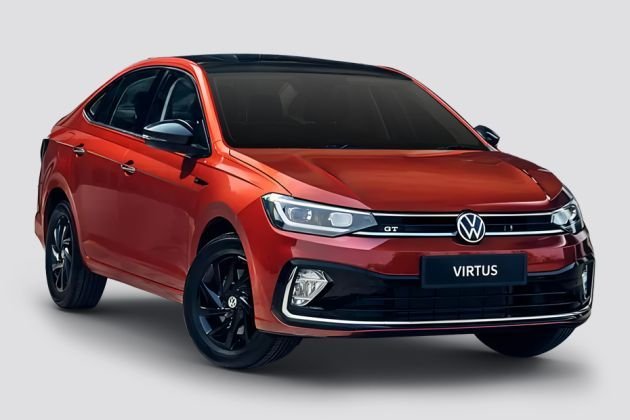
Volkswagen Virtus GT / Skoda Slavia 1.5 TSI
Inherited the grand touring road presence, planted highway stability, and enthusiast cult following, but replaces mechanical carb induction with 150 PS turbo direct injection and DSG electronics.