1980s - 2000s • 1984 - 2002
1220 kg
The Desi Muscle Cruiser: Britain's Vauxhall Bones, Japan's Isuzu Heart, and Bollywood's Favorite Godfather Chariot
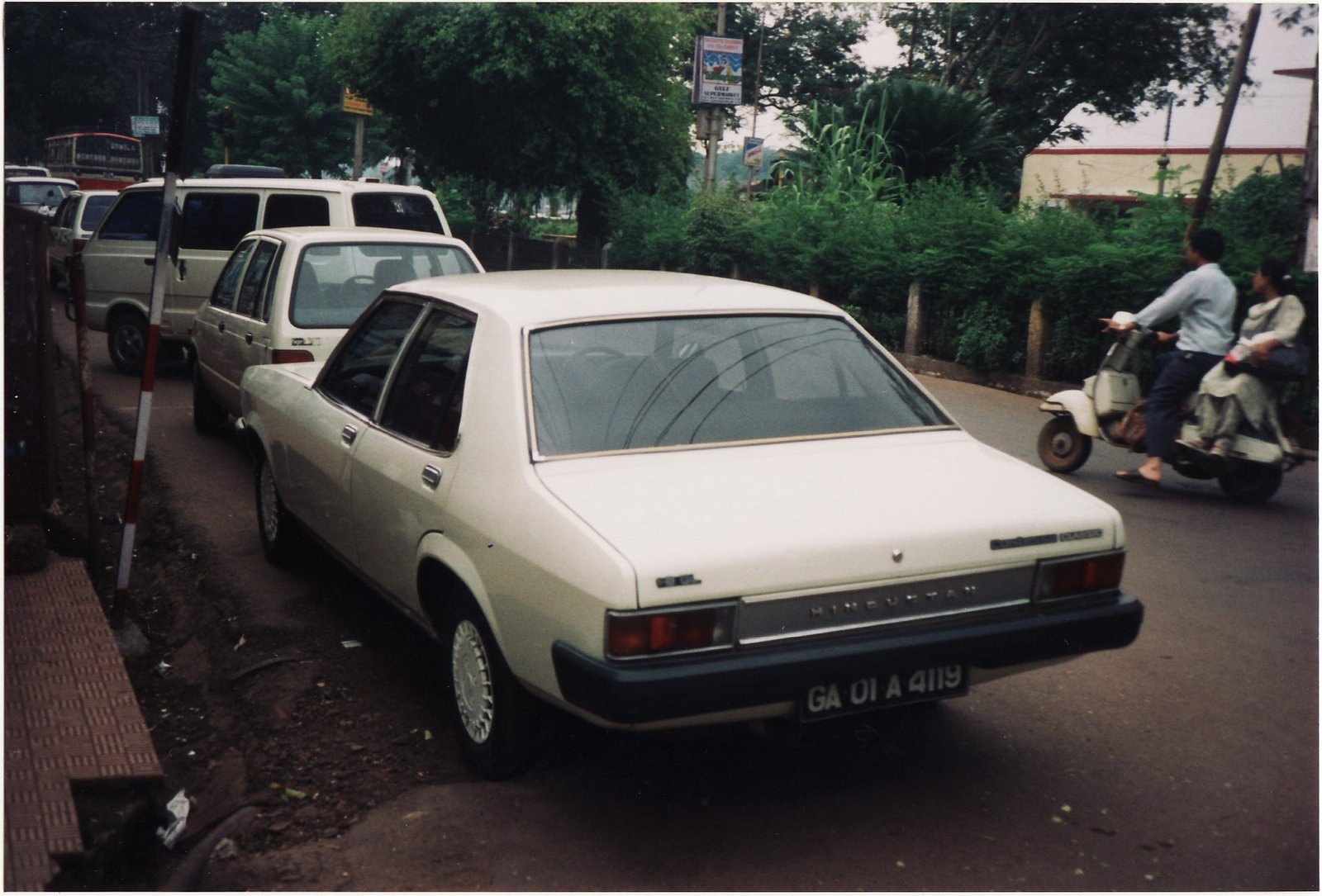
The story of the Contessa is one of the most fascinating industrial gambles in Indian automotive history. In the early 1980s, Hindustan Motors realized that the 1950s Morris Oxford-derived Ambassador was losing its sheen against the impending Maruti revolution. Seeking an executive status symbol, HM struck a deal with General Motors UK to purchase the retired stamping dies, press tooling, and body jigs of the 1972 Vauxhall Victor (FE series / VX4/90), shipping the massive presses from Luton across the oceans to Uttarpara, West Bengal.
When the Contessa was unveiled in 1984, the sheer visual shock wave stunned the nation. India had never seen a low-slung, sharp-shouldered three-box notchback with a menacing horizontal grille and flush-fitted door handles. Yet, the initial 1984–1988 launch was nearly a fatal embarrassment: hamstrung by License Raj import curbs, HM shoehorned the ancient 1,489cc BMC B-Series petrol engine from the Ambassador under that muscle car hood. Generating a tragic 50 bhp, the 1.2-tonne Contessa could barely cross 110 km/h and was routinely humiliated by tiny Maruti 800s at stoplights.
The redemption arrived in 1989. In a stroke of brilliant engineering diplomacy, HM partnered with Isuzu Motors of Japan, establishing a cutting-edge engine facility in Pithampur, Madhya Pradesh. They dropped the high-revving 1,817cc Isuzu 4ZB1 petrol engine mated to an imported 5-speed overdrive manual transmission into the bay. Renamed the 'Contessa Classic', the car was reborn. Overnight, output jumped to 85 PS and 138 Nm. It could silently cruise at 140 km/h with the air conditioner blowing Arctic air, turning the Contessa from a laughing stock into India's most coveted highway express.
Engine: 1817cc Isuzu 4ZB1 SOHC Twin-Barrel Petrol | Power: 85 PS @ 5000 RPM | Real Mileage: 6.5 - 8.0 kmpl (Twin-Barrel Carburettor)
Explore Full Historic Profile & Restoration Reality →
Vintage & Classics (1950s - 1980s) • 1954 - 1988
1040 kg
The Unbreakable Ancestor: From WWII Battlefield DNA to Rural Feudal Patriarch
The CJ3B laid the entire industrial foundation for Mahindra & Mahindra. Designed originally for American military reconnaissance, its high-hood configuration was engineered to clear the tall overhead intake valve of the F4-134 Hurricane engine. In India, Mahindra gradually localized every component, replacing imported Toledo stampings with homegrown Indian steel.
From patrolling the borders in the 1965 and 1971 Indo-Pak wars to clearing irrigation canals during the Green Revolution, the CJ3B was not merely transport—it was national infrastructure. It spawned generations of descendants, directly fathering the MM540, Classic CL340, and the modern Mahindra Thar.
Engine: Willys 2.2L Hurricane F4-134 F-Head | Power: 72 PS @ 4000 RPM | Real Mileage: 6.0 - 7.5 kmpl
Explore Full Historic Profile & Restoration Reality →
1980s • 1983 - 1986
610 kg
The Japanese Red-Box Revolution That Motorized Modern Middle-Class India
Before the SS80, owning a car in India meant either inheriting a heavy Ambassador or nursing a fragile Premier Padmini through weekend breakdowns. Maruti Udyog—originally born from Sanjay Gandhi's dream of an indigenous people's car—teamed up with Osamu Suzuki in 1982 to establish a state-of-the-art automated robotics plant in Gurugram, Haryana.
The initial SS80 batch arrived largely as completely knocked-down (CKD) kits imported directly from Hamamatsu, Japan. The build quality was a cultural shock to Indian buyers: flush glass seals, doors that shut with a crisp click instead of a violent slam, electronic ignition that fired on the first crank in sub-zero Himalayan winters, and an all-synchromesh gearbox that shifted like a hot knife through butter. It democratized private mobility, enabling middle-class salaried families to undertake 1,000 km interstate road trips without carrying a mobile workshop in the boot.
Engine: 796cc Suzuki F8B SOHC 3-Cylinder | Power: 39.5 PS @ 5500 RPM | Real Mileage: 14.5 - 16.0 kmpl
Explore Full Historic Profile & Restoration Reality →
1980s - 2010s • 1985 - 2019
985 kg
The Unbreakable Mountain Soldier: Indian Army Chariot & Raid De Himalaya Sovereign
The Gypsy was conceived in 1985 to satisfy both civilian lifestyle buyers and the demanding specifications of the Indian Armed Forces. The Army required a rapid-deployment light reconnaissance 4x4 that could be airlifted by Indian Air Force IL-76 transports and parachuted into operational zones.
Over its 34-year production run, the Gypsy evolved from the initial 1.0L F10A 4-speed carburetted model (MG410) to the wider-track 1.3L 8-valve carburettor (MG413), culminating in 2000 with the legendary 'Gypsy King' powered by the 16-valve all-aluminum G13BB MPFi engine. Over 35,000 Gypsy 4x4s served along the Line of Control, counter-insurgency operations in Kashmir, and high-altitude posts in Ladakh.
Engine: 1298cc Suzuki G13BB SOHC 16-Valve MPFi | Power: 81 PS @ 6000 RPM | Real Mileage: 9.0 - 10.5 kmpl
Explore Full Historic Profile & Restoration Reality →
1980s • 1984 - 2019
785 kg
The Sliding-Door National Time Machine: 35 Years of Kidnappings, School Runs & Lifesaving Sprints
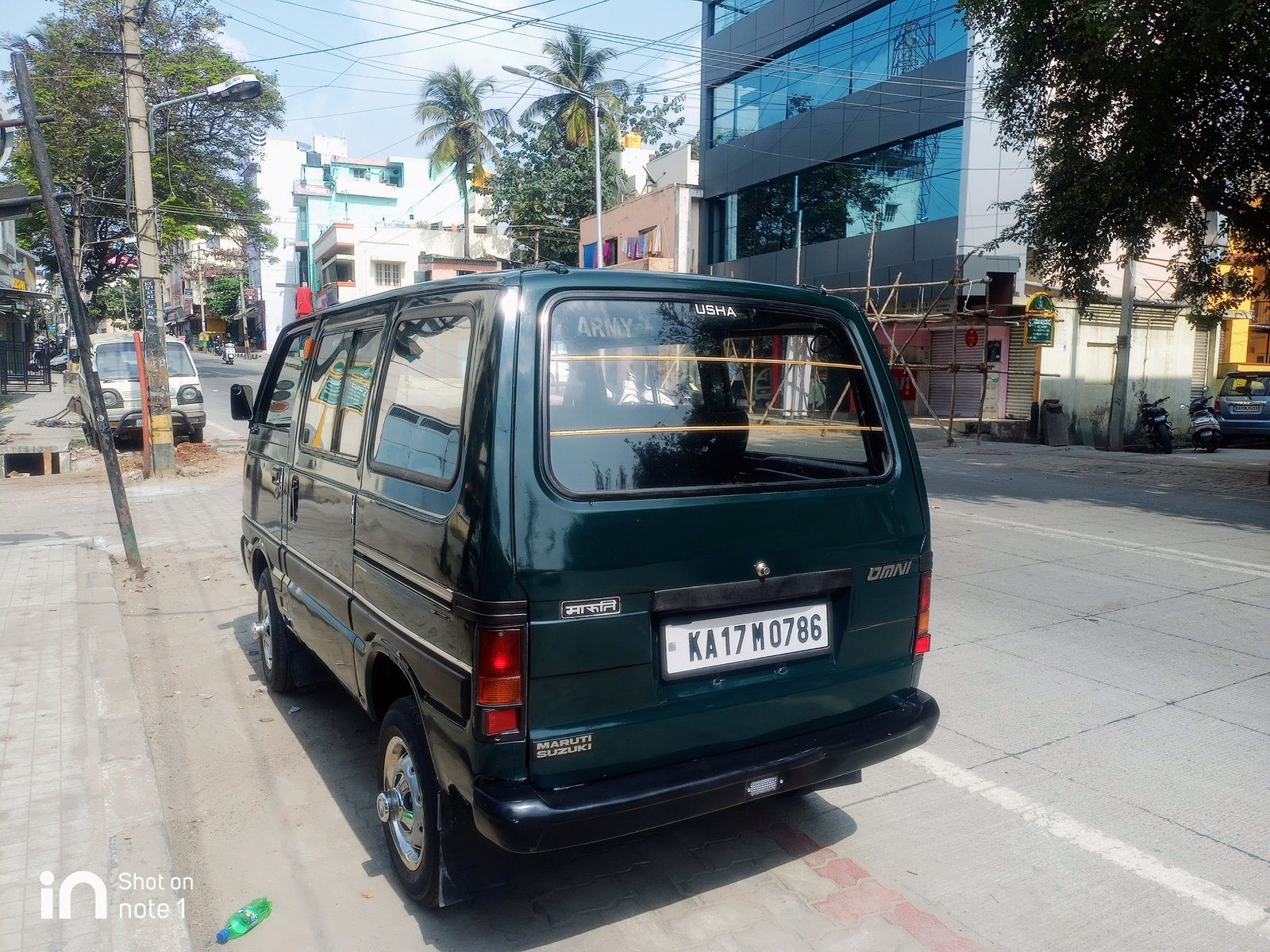
When Maruti Udyog introduced the 800 (SS80) in late 1983, it revolutionized private Indian personal mobility. But it was the launch of the Maruti Van exactly twelve months later in December 1984 that solved India's collective mass transport bottleneck. At a launch price of just ₹45,000, an Indian business owner or extended joint family could purchase a vehicle that seated eight adults, carried 500 kilograms of cargo, navigated alleys too narrow for an Ambassador, and sipped petrol at 16 kmpl. By the time safety regulations (BNVSAP) forced its retirement on April 1, 2019, the Omni had achieved immortality in Indian pop culture.
Engine: Suzuki 796cc 3-Cylinder F8B (Carburettor & MPFI) | Power: 37 PS (35 bhp) @ 5000 RPM | Real Mileage: 13.5 - 15.0 kmpl (Dense Traffic with AC/Blower)
Explore Full Historic Profile & Restoration Reality →
Vintage & Classics (1950s - 1980s) • 1976 - 1985
1420 kg
The Million-Kilometer Bank Vault: Bruno Sacco's Over-Engineered Masterpiece
The W123 defined the global gold standard for mechanical longevity. Its OM617 5-cylinder diesel engine routinely crossed 1,000,000 kilometers with only routine oil changes and valve adjustments. Before economic liberalization in 1991, India imposed staggering 300%+ import tariffs on foreign luxury cars, meaning every single W123 on Indian roads had arrived via State Trading Corporation (STC) diplomat auctions or NRI transfer-of-residence schemes.
It featured deformable crumple zones, a rigid passenger cell, ribbed dirt-shedding taillights, and MB-Tex synthetic leather seats that remained pristine after four decades of tropical heat.
Engine: Mercedes-Benz 3.0L OM617 5-Cylinder Diesel | Power: 88 PS @ 4400 RPM | Real Mileage: 10.0 - 11.5 kmpl
Explore Full Historic Profile & Restoration Reality →
Vintage & Classics (1950s - 1980s) • 1985 - 2001
890 kg
The Japanese-Italian Aristocrat: Nissan Heart, Fiat Soul, and the Slickest Manual Gearbox in India
The 118NE represented India's first taste of modern Japanese mechanical refinement before Maruti Suzuki's total domination. Built at Premier's Kurla and Kalyan plants in Maharashtra, the car licensed the 1171cc all-aluminum OHV Nissan A12 engine—an engineering marvel that could idle so quietly you could balance a coin on the rocker cover.
It became the preferred sedan of senior advocates, doctors, and bank executives who found the Premier Padmini too cramped and the Ambassador too agricultural. When PAL introduced the Peugeot-engined 138D diesel in 1996, the chassis proved equally capable of frugal highway cruising.
Engine: Nissan 1171cc A12 OHV 4-Cylinder | Power: 52 PS @ 5600 RPM | Real Mileage: 12.0 - 13.5 kmpl
Explore Full Historic Profile & Restoration Reality →
Vintage & Classics (1950s - 1980s) • 1985 - 1988
1320 kg
The Tragic British Fastback: Ferrari Looks, Tractor Heart, and India's Greatest Auto Scandal
The Standard 2000 was the most luxurious car ever assembled on Indian soil in the 1980s. But India's strict indigenisation laws prevented SMPI from importing the Rover 2.6L straight-six or 3.5L Rover V8. In desperation, SMPI shoehorned an ancient 2061cc overhead-valve four-cylinder engine derived from the 1948 Standard Vanguard tractor into the heavy 1,300 kg body.
Equipped with twin SU carburetors, the car produced a pathetic 83 bhp and delivered real-world fuel economy of just 5 to 6 kmpl. When customers complained, the Indian Government tested the vehicle, discovered false fuel-efficiency claims, and filed criminal charges—triggering the complete collapse of SMPI in 1988.
Engine: Standard Vanguard 2061cc OHV Petrol | Power: 83 PS @ 4250 RPM | Real Mileage: 6.5 - 7.5 kmpl
Explore Full Historic Profile & Restoration Reality →
Vintage & Classics (1950s - 1980s) • 1960 - 1984
1550 kg
The Japanese Mountain Fortress: Bulletproof 2F Torquer & Planter Dynasty Royalty
When Toyota designed the 40 Series in 1960, they tested it in the Australian Outback and the South American Andes under conditions that shattered rival Jeeps and Land Rovers. It became the vehicle that proved Japanese automotive engineering could outperform Western rivals in pure mechanical durability.
Equipped with a cast-iron 2F engine that produced immense torque right off idle, heavy-duty leaf springs, and solid live axles with giant ring gears, the FJ40 could haul tons of timber, coffee beans, and passengers up vertical monsoon-soaked mud trails for four decades without mechanical breakdown.
Engine: Toyota 4.2L 2F Inline-6 Carburettor Petrol | Power: 135 PS @ 3600 RPM | Real Mileage: 5.5 - 7.0 kmpl
Explore Full Historic Profile & Restoration Reality →
Vintage & Classics (1950s - 1980s) • 1938 - 2003
840 kg
The People's Air-Cooled Bug: 65 Years of Cheerful Simplicity & Worldwide Cultural Iconography
The Beetle mobilized post-war Germany and became a global phenomenon of honest, unpretentious transportation. In India, where foreign cars were heavily restricted, the Beetle earned legendary status for its inability to boil over in 45°C summer traffic—because it had no radiator, no coolant hoses, and no water pump to fail.
Its bug-eyed round fenders, friendly smiling face, and whistling twin pea-shooter exhausts made it beloved across cultural divides. It was featured in movies from Disney's Herbie the Love Bug to Bollywood hits, proving that utilitarian transport could have an infectious, joyful soul.
Engine: Volkswagen 1192cc - 1584cc Aircooled Flat-4 Boxer | Power: 50 PS @ 4000 RPM | Real Mileage: 11.0 - 12.5 kmpl
Explore Full Historic Profile & Restoration Reality →
2000s • 2009 - 2017
1490 kg
The Diesel Rocket That Threw 166 Bhp and 380 Nm on Indian Highways
Built at General Motors' Halol plant in Gujarat, the Cruze shattered the stereotype that diesel cars were sluggish commuter vehicles. Initially launched with 150 PS and later upgraded to a terrifying 166 PS and 380 Nm (Z-engine), the Cruze could pin passengers into their seats in 3rd gear, out-accelerating contemporary German luxury diesels. Its aggressive muscle-car styling and high-speed highway stability made it a legend among enthusiasts who loved effortless triple-digit interstate touring.
Engine: 1998cc 16V VCDi Common Rail Turbo Diesel (Z20D1) | Power: 166 PS @ 3800 RPM | Real Mileage: 10.5 - 12.0 kmpl
Explore Full Historic Profile & Restoration Reality →
The Golden Era (1990s & 2000s) • 2010 - 2016
1240 kg
The Italian Turbo Cruiser: 207 Nm Sledgehammer & Hydraulic Steering Purist
The Linea T-Jet was the first affordable mass-market turbocharged petrol sedan sold in India. Engineered on Fiat's robust Small platform and styled by Centro Stile Fiat in Turin, it possessed timeless Italian proportions that still look breathtaking today.
While mass-market buyers worried about Fiat's troubled dealer network, car enthusiasts celebrated it as the ultimate highway weapon. It could tackle the Mumbai-Pune Expressway or Bangalore-Mysore highway with the poise of an imported Alfa Romeo, shaming sedans costing three times as much with its supple ride and telepathic steering feedback.
Engine: Fiat 1.4L T-Jet Turbocharged DOHC 16-Valve | Power: 114 PS (Early) / 125 PS (125S) @ 5000 RPM | Real Mileage: 9.0 - 10.5 kmpl
Explore Full Historic Profile & Restoration Reality →
2000s • 2001 - 2006
1080 kg
The 100 BHP Pocket Battering Ram: Sachin Tendulkar Edition & Italian Heavyweight Soul
The Palio 1.6 GTX introduced India to the authentic European hot-hatch philosophy: prioritizing chassis rigidity, suspension compliance, and high-speed stability over thin-metal fuel efficiency. In 2002, Fiat launched the iconic 'S10' limited edition—painted in canary yellow with Sachin Tendulkar's signature decaled on the bonnet and front fenders, titanium-finish center console, and a free-flow rear exhaust.
While Fiat's disorganized dealership network and poor fuel mileage eventually doomed its commercial success, the Palio 1.6 GTX earned permanent demigod status among Indian driving purists.
Engine: 1596cc Fiat 'Torque' DOHC 16-Valve 4-Cylinder | Power: 100 PS @ 5500 RPM | Real Mileage: 8.5 - 10.0 kmpl
Explore Full Historic Profile & Restoration Reality →
The Golden Era (1990s & 2000s) • 2015 - 2019
1198 kg
The Indian Pocket Rocket: 145 Horses, Scorpion Sting & The Untamed Hot Hatch
The Abarth Punto was an automotive miracle in a conservative Indian market. Carlo Abarth's philosophy was 'Sunday on the track, Monday at the office', and this car delivered that exact promise. It featured zero electronic speed governors, no numb electric steering, and no soulless CVT transmissions.
Equipped with a hydraulic steering rack that writhed in the driver's hands under full boost (torque steer), 16-inch 'Scorpion' alloy wheels, and lowered, track-tuned dampers, the Abarth Punto humiliated luxury cars at drag strips and became an instant legend before BS6 emission regulations permanently silenced it.
Engine: Abarth 1.4L T-Jet Turbocharged 16-Valve | Power: 145 PS @ 5500 RPM | Real Mileage: 8.5 - 10.0 kmpl
Explore Full Historic Profile & Restoration Reality →
2000s • 2016 - 2020
2394 kg
The 5-Cylinder 470Nm Titan That Made Fortuners Sweat
Introduced in 2016 and assembled in Chennai, the third-generation Endeavour revolutionized the luxury off-roader segment in India. While competitors relied on spartan interiors and bumpy commercial suspensions, the 3.2 Endeavour featured Watts linkage rear suspension, three-row electric folding seats, acoustic laminated glass, and a panoramic sunroof. When Ford abruptly ceased Indian manufacturing in 2021, the 3.2 Duratorq became an instant blue-chip collector icon, with used values actually appreciating beyond their original showroom sticker prices.
Engine: 3198cc 5-Cylinder Duratorq TDCi Turbo | Power: 200 PS @ 3000 RPM | Real Mileage: 7.5 - 9.0 kmpl
Explore Full Historic Profile & Restoration Reality →
The Golden Era (1990s & 2000s) • 2008 - 2011
1110 kg
The Handling Benchmark: Aquarius Blue Screamer & Hydraulic Steering Perfection
The Fiesta 1.6 S was Ford's love letter to Indian driving purists. While market rivals were softening suspension setups for pillowy city rides, Ford engineered the 1.6 S for the twists of the Western Ghats and track days at the Kari Motor Speedway.
It proved that you did not need 300 horsepower to experience automotive euphoria. With 101 naturally aspirated horses, perfectly spaced gear ratios, a stiff chassis that communicated tire grip through the seat of your pants, and steering that read road texture like Braille, the Fiesta 1.6 S became the benchmark against which every subsequent driver's car in India was judged.
Engine: Ford 1.6L Duratec DOHC 16-Valve | Power: 101 PS @ 6500 RPM | Real Mileage: 10.0 - 11.5 kmpl
Explore Full Historic Profile & Restoration Reality →
1990s - 2000s • 1999 - 2008
1015 kg
The Josh Machine: Telepathic Steering Rack & Explosive Low-End Throttle Bark
The Ikon proved that a family sedan could have genuine sports-car handling. With short front overhangs, a rising boot line, and distinctive teardrop headlamps, it stood out sharply against boring Japanese econoboxes. The 1.6L Rocam engine made 130 Nm of torque at a low 2,500 RPM, allowing drivers to execute tire-spinning launches without needing high revs.
In the Indian National Rally Championship and club racing circuits across Coimbatore and Chennai, stripped-down Ikon 1.6s became legendary track weapons, lauded for their ultra-rigid chassis and razor-sharp turn-in agility.
Engine: 1597cc Ford Rocam (Zetec-Rocam) SOHC 8-Valve | Power: 92 PS @ 5500 RPM | Real Mileage: 9.5 - 11.0 kmpl
Explore Full Historic Profile & Restoration Reality →
The Golden Era (1990s & 2000s) • 2003 - 2007
1530 kg
The Executive Jet: 221 Horsepower VTEC Symphony & The Boardroom Express
The Accord V6 democratized high-performance executive motoring in India. Before its arrival, luxury buyers were trapped between underpowered German entry models or unreliable domestic sedans. Built at Honda Siel's Greater Noida plant, the Accord proved that a car could deliver 220+ horsepower and silky high-speed cruising while offering bulletproof Japanese reliability.
It became the preferred ride of top corporate CEOs, Bollywood producers, and high-court advocates who spent weekdays being chauffeured in the back seat and weekends tearing up empty highways from behind the wheel.
Engine: Honda 3.0L J30A4 SOHC 24-Valve VTEC V6 | Power: 221 PS @ 6250 RPM | Real Mileage: 6.5 - 8.0 kmpl
Explore Full Historic Profile & Restoration Reality →
2000s • 2000 - 2003
985 kg
The Golden Arrow: 7,200 RPM Naturally Aspirated Japanese Screamer
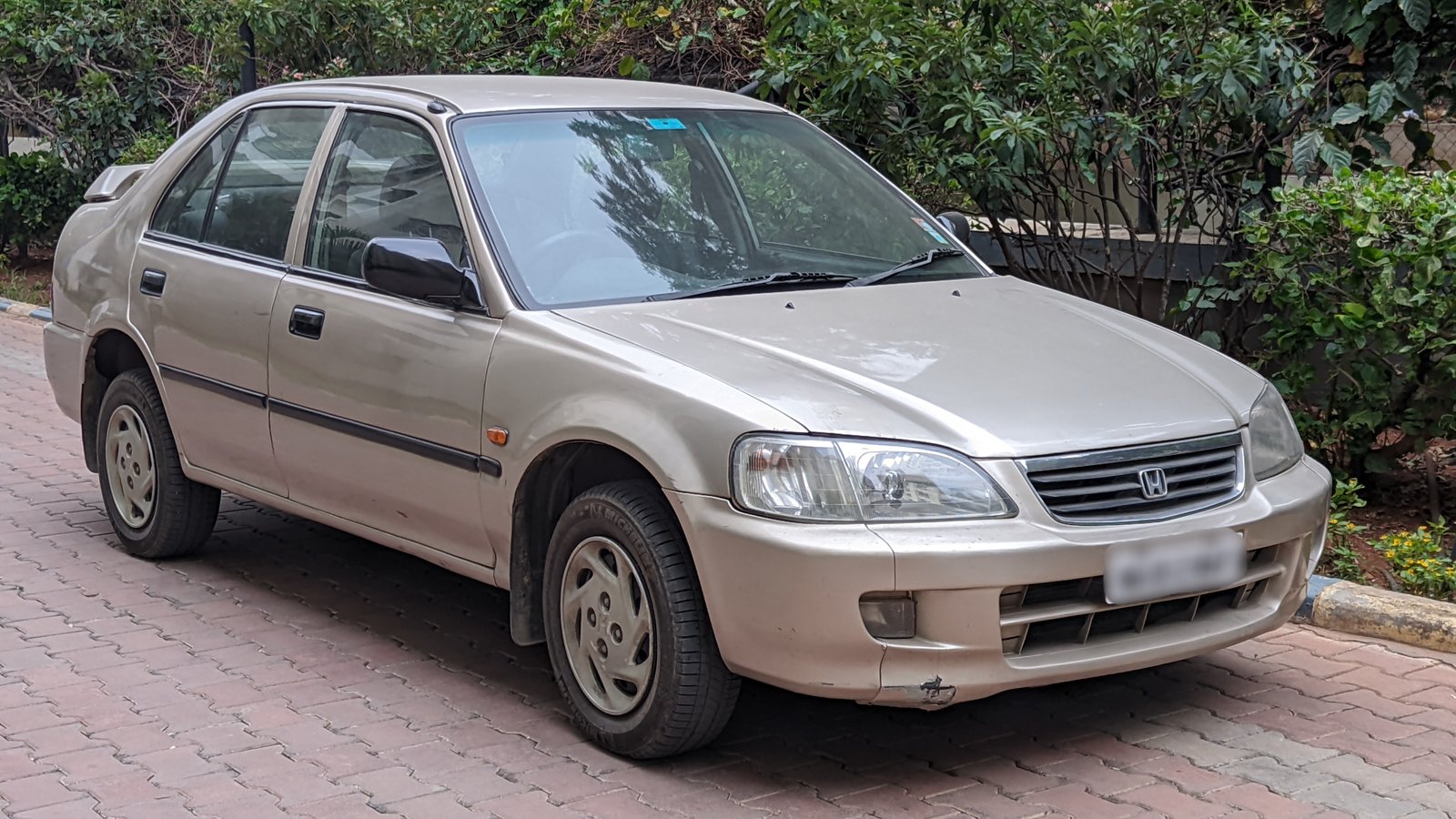
Built on Honda's global SX8 chassis, the City Type 2 was originally introduced in 1998 with hyper-reliable non-VTEC 1.3L and 1.5L engines. But at the turn of the millennium, Honda decided to give Indian enthusiasts their first taste of genuine Formula 1-derived Variable Valve Timing and Lift Electronic Control (VTEC).
The B15C2 engine featured roller rocker arms, high-lift camshaft lobes, and a crossflow combustion chamber. Paired with a slick, short-throw 5-speed manual gearbox, factory rear boot spoiler, 14-inch star alloy wheels, and dual-tip chrome exhaust, it blew away every German and American competitor on Indian highways.
Engine: 1493cc Honda B15C2 SOHC 16-Valve VTEC | Power: 106 PS @ 6800 RPM | Real Mileage: 10.5 - 12.0 kmpl
Explore Full Historic Profile & Restoration Reality →
The Golden Era (1990s & 2000s) • 2003 - 2008
1065 kg
The Urban Living Room: Magic Seats, Stepped CVT & The Sophisticated Family Cruiser
The Dolphin City shifted Honda's image from boy-racer underground status to refined corporate respectability. Powered initially by the dual-spark 1.5L i-DSI engine (and later the punchy 1.5L VTEC in the ZX facelift), it achieved phenomenal fuel efficiency of 16+ kmpl in city conditions.
It became the defining status symbol of India's surging IT and financial boom in Gurgaon, Bangalore, and Pune. With feather-light electric power steering, a silent cabin, and an automatic CVT that eliminated shift shock completely, the Dolphin City was the undisputed king of suburban executive commuting throughout the 2000s.
Engine: Honda 1.5L i-DSI / 1.5L VTEC SOHC 16-Valve | Power: 77 PS @ 5700 RPM (i-DSI) / 100 PS (VTEC) | Real Mileage: 13.5 - 15.0 kmpl
Explore Full Historic Profile & Restoration Reality →
2000s - 2010s • 2006 - 2012
1210 kg
The Starship Enterprise: Twin-Tier Digital Dashboard & 6,800 RPM Japanese Masterpiece
The 8th-gen Civic was the definitive high-water mark of Japanese luxury sedan engineering in India. Powered by the silky, bulletproof 1.8L R18A1 i-VTEC engine producing 132 PS, it was capable of genuine 200 km/h top speeds while delivering plush highway ride comfort.
Its independent double-wishbone rear suspension made it a corner-carving masterclass on winding ghat roads, while its sleek, low-slung stance became the premier canvas for Type R body kits, TE37 bronze wheels, and air-suspension stance builds across Kerala, Punjab, and Maharashtra.
Engine: 1799cc Honda R18A1 SOHC 16-Valve i-VTEC | Power: 132 PS @ 6300 RPM | Real Mileage: 9.5 - 11.0 kmpl
Explore Full Historic Profile & Restoration Reality →
2000s • 2002 - 2007
1045 kg
India's First Common-Rail Direct-Injection Turbo Diesel Rocket
The Accent Viva CRDi arrived when the Indian diesel market was dominated by sluggish, smoky indirect-injection engines. Built at Hyundai's Sriperumbudur facility near Chennai, the Viva introduced Indian motorists to high-pressure common-rail technology. Its fastback rear tailgate, integrated rear spoiler, alloy wheels, and aggressive mid-range punch proved to Indian car buyers that diesel could be sporty, fast, and remarkably refined, paving the way for the modern CRDi revolution.
Engine: 1493cc 3-Cylinder D3EA CRDi Turbodiesel | Power: 82 PS @ 4000 RPM | Real Mileage: 13.0 - 15.0 kmpl
Explore Full Historic Profile & Restoration Reality →
1990s • 1998 - 2014
855 kg
The Tall-Boy Revolution That Challenged Maruti's Monopoly
The Santro turned Hyundai from an unknown Korean brand into India's second-largest automaker. Promoted by a young Shah Rukh Khan, the Santro offered standard power steering (ZipDrive) when rivals charged premiums for it. Its high-roof architecture meant passengers could sit wearing traditional turbans with ample headroom. The bulletproof Epsilon engine proved indestructible across taxi fleets and suburban families, selling over 1.5 million units and transforming Indian middle-class mobility.
Engine: 999cc / 1086cc 4-Cylinder 12V Epsilon Petrol | Power: 63 PS @ 5500 RPM | Real Mileage: 13.0 - 14.5 kmpl
Explore Full Historic Profile & Restoration Reality →
2000s • 2000 - Present
1615 kg
The Uncrowned Rural Kingpin & Immortal Metal Fortress
Launched in 2000 to modernize Mahindra's utility fleet, the Bolero became the undisputed king of non-metro India. Built in Nashik and Zaheerabad, it could carry double its rated payload over unpaved village roads on low-grade fuel without breaking down. From police patrol fleets to rural milk cooperatives, the Bolero's simplicity, negligible maintenance costs, and exceptional mechanical toughness made it the bedrock of Indian rural commerce for over a quarter of a century.
Engine: 2523cc DI Turbo / 1493cc mHawk75 CRDe | Power: 75 PS @ 3600 RPM | Real Mileage: 12.0 - 13.5 kmpl
Explore Full Historic Profile & Restoration Reality →
1990s • 1996 - 2000
1180 kg
The Ultimate Open-Air Beach & Off-Road Heartthrob with the Willys Soul
Directly descended from the Willys Overland CJ-3B that Mahindra began assembling under license in 1949, the Classic CL340 was created under the vision of Anand Mahindra to capture India's emerging urban adventure culture. Prior to the Classic, open-top Jeeps were strictly perceived as rural police vehicles or sugar plantation workhorses.
The Classic changed that overnight. Equipped with the French Peugeot XDP 4.90 diesel engine and the legendary Dana 18/Spicer transfer case, it offered genuine world-conquering off-road ability paired with jaw-dropping open-air beach aesthetics. Built in limited numbers between 1996 and 2000, it laid the cultural and design foundation that would eventually birth the modern Mahindra Thar.
Engine: 2112cc Peugeot XDP 4.90 Naturally Aspirated Diesel | Power: 62 PS @ 4500 RPM | Real Mileage: 10.0 - 11.5 kmpl
Explore Full Historic Profile & Restoration Reality →
1990s - 2000s • 1990 - 2007
865 kg
The INRC Rally Legend: 85 BHP Lightweight Saloon That Ruled Indian Dirt
The Esteem was the car that signaled you had 'arrived' in 1990s corporate India. Prior to the Esteem, an executive sedan meant an Ambassador or Contessa. The Esteem delivered crisp Japanese air conditioning, low aerodynamic drag, electric windows, and an indestructible aluminum engine that would rev happily to 6,500 RPM all day.
Its independent rear suspension allowed it to carry tremendous speed through fast sweepers, while its featherweight construction meant it could easily out-accelerate heavier luxury cars off the line.
Engine: 1298cc Suzuki G13BB All-Aluminum SOHC 16V MPFi | Power: 85 PS @ 6000 RPM | Real Mileage: 12.0 - 13.5 kmpl
Explore Full Historic Profile & Restoration Reality →
1990s - 2000s • 1993 - 2006
765 kg
The Jellybean Go-Kart: Zero Engine Noise & Indian Rally Championship Sovereign
The Zen was Maruti's first true export car, shipped in tens of thousands to Europe as the Suzuki Alto. In India, its low center of gravity, ultra-stiff monocoque, and silky 4-cylinder engine made it significantly more sophisticated than the boxy Maruti 800. In 2000, Maruti equipped it with 16-bit multi-point fuel injection (MPFi), pushing output to 60 PS.
In 2003, Maruti launched the rare, limited-edition 3-door 'Zen Carbon' and 'Zen Steel' (only 300 units produced for each color), which have since become the most sought-after Indian modern collector hatchbacks in history.
Engine: 993cc Suzuki G10B All-Aluminum SOHC 4-Cylinder | Power: 60 PS @ 6000 RPM (MPFi) / 50 PS (Carb) | Real Mileage: 13.0 - 14.5 kmpl
Explore Full Historic Profile & Restoration Reality →
The Golden Era (1990s & 2000s) • 1998 - 2006
1060 kg
The Rally Pedigree Champion: Tommi Mäkinen Lineage & Razor-Sharp Chassis Agility
The Mitsubishi Lancer brought genuine rally heritage to Indian showrooms. While competitors used torsion beams and leaf springs, the Lancer featured an advanced multi-link independent rear axle that delivered supernatural cornering composure on broken asphalt.
It dominated the Indian National Rally Championship (INRC) for over a decade in the hands of legends like VR Naren Kumar and Hari Singh. On street corners, it inspired India's first genuine import-tuning movement: every Lancer owner dreamed of transforming their SFXi into an Evo VI with wide body kits, HKS exhausts, and Sparco bucket seats.
Engine: Mitsubishi 1.5L 4G15 SOHC 12-Valve MPFI | Power: 87 PS @ 5500 RPM | Real Mileage: 10.5 - 12.0 kmpl
Explore Full Historic Profile & Restoration Reality →
2000s • 2002 - 2012
1960 kg
The Dakar Rally Legend in Two-Tone Red & White Warpaint
Imported as CKD kits and assembled by Hindustan Motors in Chennai, the Pajero SFX was the choice of true off-road connoisseurs. While modern SUVs were filled with fragile sensors and electronic nannies, the Pajero featured mechanical differential locks, dashboard altimeter and inclinometer gauges, and long-travel suspension that floated over broken trails. Its rugged reliability and timeless design made it a permanent status icon among tea planters, wildlife photographers, and expedition travelers.
Engine: 2835cc 4M40 4-Cylinder Intercooled Turbodiesel | Power: 118 PS @ 4000 RPM | Real Mileage: 8.5 - 10.0 kmpl
Explore Full Historic Profile & Restoration Reality →
2000s • 2004 - 2008
1320 kg
The Czech Turbo Missile: Green Calipers, Bank-Vault Doors & Stage 1 Remap Royalty
Built on Volkswagen Group's celebrated PQ34 platform (shared with the Audi TT and Golf Mk4), the Octavia vRS was assembled via CKD kits in Aurangabad. It was equipped with signature 16-inch 'Spider' multi-spoke alloy wheels, racing green brake calipers, a high-downforce rear boot spoiler, xenon projector headlights, and bolstered leather-and-Alcantara sports seats.
More importantly, the EA113 1.8T engine kickstarted India's modern ECU remapping and turbo tuning subculture. With a simple Stage 1 remap, upgraded downpipe, and front-mount intercooler, the vRS easily jumped from 150 bhp to 220+ bhp, humbling imported sports cars on expressway runs and establishing a cult that remains untouchable.
Engine: 1781cc Volkswagen Group EA113 1.8T 20-Valve Turbo | Power: 150 PS @ 5700 RPM | Real Mileage: 8.0 - 9.5 kmpl
Explore Full Historic Profile & Restoration Reality →
1990s - 2010s • 1998 - 2019
2040 kg
The Chariot of Power: 'Reclaim Your Life' Highway Kingpin & Convoy Flagship
Unveiled at the 1998 Auto Expo, the Safari was India's first genuine full-size homegrown executive SUV designed to challenge imported giants like the Mitsubishi Pajero and Toyota Land Cruiser at a fraction of the cost. Over its 21-year legacy, the Safari underwent three monumental mechanical heart transplants.
It began in 1998 with the 1.9L TCIC diesel (90 PS), followed in 2005 by the explosive 3.0L DiCOR derived from Tata's commercial 407 truck line (115 PS, 300 Nm), and peaked in 2007 with the refined, state-of-the-art 2.2L 16-valve aluminum-head DiCOR/VariCOR engine developed in collaboration with AVL of Austria, generating 140 PS and 320 Nm. The final iteration, the Safari Storme (2012–2019), utilized the stiffer hydroformed X2 chassis from the Tata Aria, transforming it into a high-speed intercity cruise missile.
Engine: 2179cc Tata 2.2L DiCOR / VariCOR 16V Turbo Diesel | Power: 140 PS @ 4000 RPM | Real Mileage: 10.0 - 11.5 kmpl
Explore Full Historic Profile & Restoration Reality →
1990s • 1991 - 2002
1640 kg
India's First True Lifestyle SUV with the Iconic Curved Alpine Glass
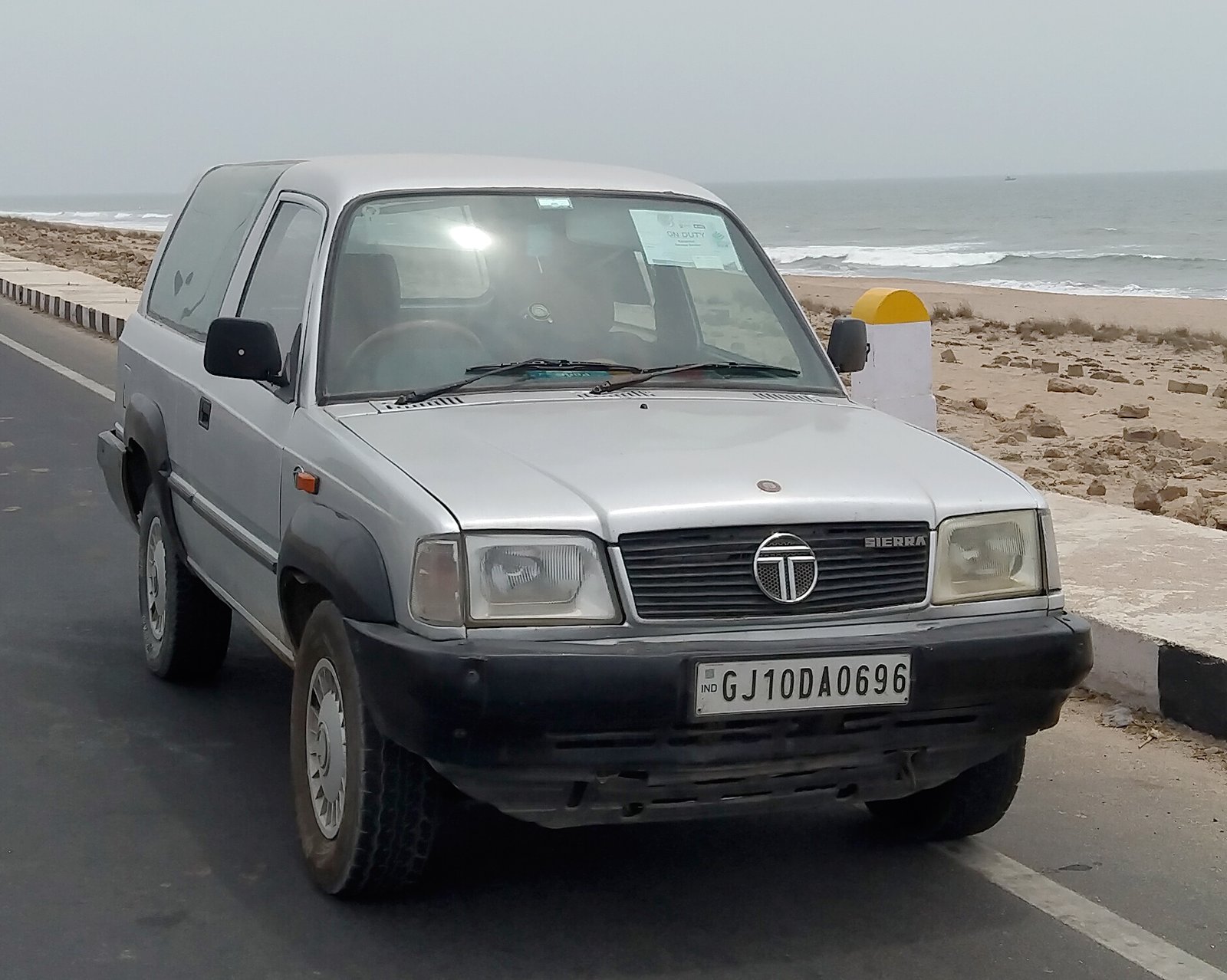
Built on Tata's rugged Telcoline (TATAMOBILE 206) pickup platform, the Sierra proved that an Indian commercial truck manufacturer could design world-class personal passenger vehicles. Prior to the Sierra, luxury in India meant a sedan with chrome accents. The Sierra pioneered the premium lifestyle 4x4 segment long before the Mahindra Thar or modern compact SUVs existed.
Initially launched in 1991 with a naturally aspirated 1.9L Peugeot-derived 483DL diesel engine (68 PS), it was underpowered for its 1.6-tonne kerb weight. In 1997, Tata answered enthusiasts' prayers by adding a turbocharger and intercooler, bumping output to 90 PS and a massive 190 Nm of torque. The 'Sierra Turbo' featured a hood scoop, wider alloy wheels, and an optional BorgWarner electronic push-button 4x4 transfer case.
Engine: 1948cc Tata 483DL Turbocharged Diesel | Power: 90 PS @ 4300 RPM | Real Mileage: 9.5 - 11.0 kmpl
Explore Full Historic Profile & Restoration Reality →
1990s - 2010s • 1994 - 2019
1820 kg
The Iron Workhorse of the Hinterland: Named After Sumant Moolgaokar
Engineered on the indestructible Telcoline pickup chassis, the Sumo was designed to solve India's massive shared rural transit deficit. Before the Sumo, rural transport meant cramped Mahindra Commander jeeps or decrepit state transport buses. The Sumo offered car-like front passenger comfort, towering headroom, and two rows of parallel jump seats in the rear.
In 2000, Tata launched the 'Sumo Spacio', replacing the 2.0L Peugeot diesel with the bulletproof 3.0L direct-injection 4SP engine from the Tata 407 light commercial truck. Generating 223 Nm of torque at barely 1,600 RPM, it could climb steep Himalayan inclines at idle without touching the accelerator pedal.
Engine: 2956cc Tata 4SP DI / 1948cc 483DL Diesel | Power: 70 PS @ 3000 RPM (Spacio DI) | Real Mileage: 10.0 - 11.5 kmpl
Explore Full Historic Profile & Restoration Reality →
2000s - 2010s • 2005 - 2016
1680 kg
The Million-Kilometer Highway Sovereign: Indestructible Ladder-Frame Luxury
The first-gen Innova completely redefined passenger travel in India. It bridged the gap between family luxury and commercial durability. Fleet operators, politicians, industrialists, and joint families all bought the exact same vehicle. It virtually eradicated highway fatigue through its coil-sprung 4-link rear suspension and whisper-quiet common-rail diesel.
Its residual resale value became an economic phenomenon: owners routinely sold 5-year-old Innovas with 1,50,000 km on the clock for more than their original ex-showroom purchase price, earning it the reputation of an automotive asset class as stable as gold.
Engine: 2494cc Toyota 2KD-FTV D-4D Common Rail Turbo Diesel | Power: 102 PS @ 3600 RPM | Real Mileage: 10.5 - 12.0 kmpl
Explore Full Historic Profile & Restoration Reality →
2000s • 2000 - 2005
1540 kg
The Boxy Japanese Indestructible: Taught India the Meaning of 500,000 km Zero-Breakdown Reliability
The Qualis established Toyota's legendary reputation for quality, durability, and reliability (QDR) in India. While competitors suffered from oil leaks, suspension rattles, and electrical gremlins, the Qualis simply refused to break down. Built in Bidadi, Karnataka, it featured the bulletproof Toyota 2L diesel engine and an ultra-rigid ladder frame.
When Toyota abruptly discontinued the Qualis in 2005 to launch the modern Innova—even while Qualis sales were breaking all-time records—fleet operators protested, begging Toyota to keep the boxy workhorse in production.
Engine: 2446cc Toyota 2L Naturally Aspirated Diesel | Power: 75 PS @ 4200 RPM | Real Mileage: 11.0 - 12.5 kmpl
Explore Full Historic Profile & Restoration Reality →
Modern & Latest Fleets (2010s - 2026) • 2021 - Present
1610 kg
258 Horsepower TwinPower Turbo: The Ultimate Long-Wheelbase Chauffeur & Driver Hybrid
Launched in India in 2021 and assembled at BMW's plant in Chennai, the 330Li recognized that Indian luxury car buyers predominantly sit in the rear seat on weekdays but love to drive themselves on weekend getaways. By offering panoramic sunroof, extra-cushioned headrests, and lengthened rear doors alongside a 0-100 km/h sprint of 6.2 seconds, the Gran Limousine instantly became the highest-selling 3 Series variant in the country.
Engine: BMW 2.0L B48 TwinPower Turbo Inline-4 | Power: 258 PS @ 5000 RPM | Real Mileage: 9.0 - 10.5 kmpl
Explore Full Historic Profile & Restoration Reality →
Modern & Latest Fleets (2010s - 2026) • 2021 - Present
1550 kg
The Desi Mercedes G-Wagon on a Sensible Budget
While modern lifestyle 4x4s compromise with electronic button switches and chrome garnishes, the Force Gurkha remains an unapologetic, purpose-built overland expedition rig. Built around a Mercedes-derived 2.6-litre FM 2.6 CR turbo diesel engine (140 PS, 320 Nm) bolted to a heavy-gauge tubular ladder chassis, it is engineered to cross raging rivers, conquer boulder fields, and explore remote corners of the Himalayas where cellphone networks don't exist. It features mechanical manually operated differential locks on BOTH front and rear axles (a feature unavailable on any sub-₹50 Lakh SUV in India) and a factory-fitted air-intake snorkel allowing 700 mm of water wading depth. It drives like a military truck, but on extreme off-road trails, nothing touches it.
Engine: Mercedes-Derived 2.6L FM 2.6 CR Turbo Diesel (The Low-RPM Grunt Machine) | Power: 140 PS @ 3200 RPM | Real Mileage: 9.8 - 11.0 kmpl
Explore Full Historic Profile & Restoration Reality →
Modern & Latest Fleets (2010s - 2026) • 2021 - Present
1180 kg
The Sensible Chartered Accountant Special with Butter-Smooth CVT
If you want an automatic compact sedan in India, your choices are almost entirely limited to jerky, head-nodding Automated Manual Transmissions (AMTs). Except for one car: the Honda Amaze. Honda refused to cut corners and equipped the Amaze with a proper, step-less Continuously Variable Transmission (CVT) paired with its butter-smooth 1.2-litre 4-cylinder i-VTEC engine. The result? Zero gear-shift jerks, effortless city crawling, and peaceful daily office commutes. It also features a massive 420-litre boot (larger than many ₹15-Lakh crossovers), plush suspension that glides over broken city roads, and clean, dignified styling that never looks cheap. It is the default choice for chartered accountants, doctors, and practical professionals.
Engine: 1.2L 4-Cylinder i-VTEC Petrol (The Smooth Japanese Motor) | Power: 90 PS @ 6000 RPM | Real Mileage: 12.5 - 13.8 kmpl
Explore Full Historic Profile & Restoration Reality →
Modern & Latest Fleets (2010s - 2026) • 2021 - Present
1550 kg
The Original VTEC Legend & Official Senior Executive Chariot
For over a quarter of a century, the Honda City has been the undisputed symbol of professional arrival in India. Passing your CA exam, getting promoted to Vice President, or expanding your family business: parking a white Honda City in your driveway was the ultimate declaration of taste and stability. In its current 5th-generation avatar, it retains the magnificent high-revving 1.5-litre naturally aspirated i-VTEC engine that sings gloriously up to 7,000 RPM while lasting 300,000 kilometers with routine care. For eco-conscious executives, the e:HEV Strong Hybrid variant pairs dual electric motors to deliver an astonishing 27.13 kmpl with silky electric torque. It has the most comfortable rear sofa seats in corporate India, a massive 506-litre boot, and camera-based Honda Sensing ADAS that works reliably in Indian traffic.
Engine: 1.5L i-VTEC DOHC 4-Cylinder Petrol (The High-Revving Icon) | Power: 121 PS @ 6600 RPM | Real Mileage: 12.0 - 13.2 kmpl
Explore Full Historic Profile & Restoration Reality →
Modern & Latest Fleets (2010s - 2026) • 2021 - Present
1550 kg
Japanese Reliability For People Who Hate Turbos & Complex Gadgets
In an automotive market obsessed with fragile dual-clutch gearboxes, temperamental touchscreens, and complex hybrid batteries, the Honda Elevate is an oasis of straightforward Japanese engineering. Built on the proven 5th-gen City platform, it is powered by that immortal, high-revving 1.5-litre naturally aspirated 4-cylinder i-VTEC engine that revs cleanly to 7,000 RPM and lasts 300,000 trouble-free kilometers. Honda gave it a towering 220 mm of ground clearance (the tallest in the entire midsize SUV segment), sofa-like front seats with incredible lumbar support, a class-leading 458-litre boot, and camera-based Honda Sensing ADAS that works reliably in Indian conditions. It is not trying to be a spaceship; it is an honest, dependable family SUV that will never let you down.
Engine: 1.5L i-VTEC DOHC 4-Cylinder Petrol (The Unkillable Legend) | Power: 121 PS @ 6600 RPM | Real Mileage: 11.2 - 12.5 kmpl
Explore Full Historic Profile & Restoration Reality →
Modern & Latest Fleets (2010s - 2026) • 2021 - Present
1550 kg
Creta With Extra Seats For Extended In-Laws & Executive Boss-Mode Luxury
The Hyundai Alcazar is the answer for car buyers who adore the refined, low-maintenance ownership of the Creta but occasionally need to transport elderly parents or extended in-laws without taking two cars. Built on a stretched 2760 mm wheelbase (150 mm longer than Creta), it features individual second-row captain seats with cooling ventilation and boss-mode adjustment, allowing passengers to push the front passenger seat forward to create limousine-like legroom! Powered by either the punchy 160 PS 1.5L Turbo petrol or the thrifty 1.5L CRDi diesel, it comes equipped with Level 2 ADAS, dual 10.25-inch panoramic screens, and an expansive panoramic skyroof. It is the executive family cruiser.
Engine: 1.5L Turbo GDi Petrol (The 160 PS Expressway Missile) | Power: 160 PS @ 5500 RPM | Real Mileage: 10.2 - 11.5 kmpl
Explore Full Historic Profile & Restoration Reality →
Modern & Latest Fleets (2010s - 2026) • 2021 - Present
1550 kg
The Expressway High-Beam Blaster & India’s Default Middle-Class Flex
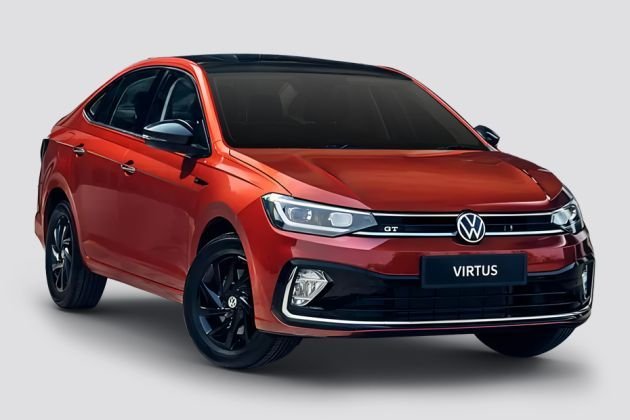
The Creta is the undisputed monarch of Indian midsize SUVs for one simple reason: it refuses to give you headaches. It does not boast the off-road hardware of a Scorpio-N or the laser-guided cornering precision of a German Virtus, but it nails the 95% of daily Indian life that actually matters. The suspension glides over broken city tarmac without bone-jarring thuds, the cabin is quieter than a bank vault, the panoramic sunroof keeps the kids thrilled, and Hyundai service centres exist in practically every tehsil headquarters. Yes, Creta drivers have earned a notorious highway reputation for aggressively flashing high beams at 130 km/h, but when it’s time to resell the car 5 years later, you will recover more money than any other vehicle in this segment.
Engine: 1.5L U2 CRDi Diesel (The True Mileage Hero) | Power: 116 PS @ 4000 RPM | Real Mileage: 13.8 - 15.2 kmpl
Explore Full Historic Profile & Restoration Reality →
Modern & Latest Fleets (2010s - 2026) • 2021 - Present
1180 kg
The Grand i10 on Stilts with A Factory Dashcam and Sunroof
Hyundai looked at the roaring success of the Tata Punch and asked: how can we beat it? Their answer was the Hyundai Exter. Instead of a vibey 3-cylinder engine, they fitted a buttery-smooth 1.2-litre 4-cylinder Kappa petrol motor that idles in total silence. They made 6 airbags standard on every single variant, fitted an electric sunroof, added steering paddle shifters to the AMT automatic, and installed a factory dual-facing dashcam that records both the road ahead and the cabin. With 185 mm of ground clearance and boxy styling with H-pattern LED daytime running lights, it gives young Indian families the look and feel of an SUV with the ease of parking a small hatchback.
Engine: 1.2L Kappa 4-Cylinder Petrol (The Refined City Cruiser) | Power: 83 PS @ 6000 RPM | Real Mileage: 13.2 - 14.5 kmpl
Explore Full Historic Profile & Restoration Reality →
Modern & Latest Fleets (2010s - 2026) • 2021 - Present
1180 kg
The Sensible Hatchback with Rally Stage Fantasies
The Hyundai i20 is the undisputed aristocrat of Indian premium hatchbacks. With its low, wide European stance, parametric jewel dark grille, and sharp angular Z-shaped LED taillights, it looks fast even when parked outside a cafe. Inside, you get a 10.25-inch infotainment screen, Bose 7-speaker sound system, electric sunroof, and air purifier. For driving enthusiasts, the i20 N-Line variant adds a throatier twin-tip exhaust with real popping notes, 30% stiffer suspension damping for razor-sharp cornering, all-4 disc brakes, and a weighted 3-spoke N steering wheel with paddle shifters. It is the closest thing to an authentic European hot hatch sold in India today.
Engine: 1.0L Turbo GDi Petrol (The N-Line Rally Motor) | Power: 120 PS @ 6000 RPM | Real Mileage: 11.0 - 12.2 kmpl
Explore Full Historic Profile & Restoration Reality →
Modern & Latest Fleets (2010s - 2026) • 2021 - Present
1180 kg
The High-Heel City Hatchback Calling Itself An SUV
The Hyundai Venue is the ultimate stress-free urban vehicle for Indian cities. It does not pretend to conquer Himalayan boulder fields or haul 7 passengers to a village wedding. Instead, it measures under 4 meters, turns in a tight 5.1-meter radius, and fits into parking spots that make full-size SUVs weep. Inside, you get Hyundai’s impeccable fit-and-finish, air purifier, cooled glovebox, and connected car tech with Alexa support. Under the hood, the 1.0L Turbo GDi petrol paired with the 7-speed DCT gives you hot-hatch acceleration when you find open stretches of flyover. It is practical, reliable, and keeps your blood pressure low during rush-hour traffic.
Engine: 1.0L Turbo GDi Petrol (The Pocket Rocket) | Power: 120 PS @ 6000 RPM | Real Mileage: 10.8 - 12.0 kmpl
Explore Full Historic Profile & Restoration Reality →
Modern & Latest Fleets (2010s - 2026) • 2021 - Present
1550 kg
The Cyberpunk Spaceship with 160 Horsepower Supercar Dreams
When Hyundai unveiled the new Verna, people were either mesmerized or shocked. With full-width horizon LED lightbars, angular fastback rooflines, and parametric jewel accents, it looks like a vehicle from the year 2040. But step on the accelerator pedal of the 1.5L Turbo GDi model and all debates cease: with 160 horsepower and 253 Nm of torque, it is the most powerful sedan in the sub-₹20 Lakh category, sprinting from 0 to 100 km/h in 8.1 seconds! Even more crucial for Indian buyers: it scored a certified 5-star Global NCAP safety rating for both adult and child occupants, shattering the myth that Korean sedans lack heavy metal armor. Inside, you get heated and ventilated front seats, dual 10.25-inch curved screens, a switchable climate/infotainment touch bar, and Level 2 ADAS. It is a technological triumph.
Engine: 1.5L Turbo GDi Petrol (The 160 PS Guided Missile) | Power: 160 PS @ 5500 RPM | Real Mileage: 10.5 - 11.8 kmpl
Explore Full Historic Profile & Restoration Reality →
Modern & Latest Fleets (2010s - 2026) • 2017 - Present
1650 kg
350 Nm American Trailhawk Legend: Frequency Selective Damping & 4x4 Trail Authority
Launched in August 2017, the Compass became an instant sensation, proving that Indian buyers would gladly pay ₹20+ lakh for authentic American build quality and genuine four-wheel-drive capability. Built for both domestic sales and right-hand-drive export worldwide (including the UK, Japan, and Australia), the Ranjangaon facility adhered to world-class manufacturing standards. The Compass stood apart with its bank-vault door thud, high-speed road manners, and rugged off-road credibility.
Engine: 2.0L Multijet II Turbocharged Diesel | Power: 170 PS @ 3750 RPM | Real Mileage: 11.5 - 13.0 kmpl
Explore Full Historic Profile & Restoration Reality →
Modern & Latest Fleets (2010s - 2026) • 2021 - Present
1550 kg
Innova Comfort on an IT Professional’s Sensible Budget
When Indian joint families go car shopping, the biggest challenge is finding a 3-row vehicle that doesn't feel like a commercial taxi or cost ₹35 Lakh like an Innova. The Kia Carens solved this puzzle with genius packaging. Measuring 4.54 meters long on a stretched 2780 mm wheelbase, it features one-touch electric tumble second-row seats (letting kids and elderly parents hop into the 3rd row with a single button press), dedicated roof-mounted AC vents with separate fan controllers for every passenger, and standard 6 airbags and all-wheel disc brakes across every trim. Powered by either the punchy 1.5L Turbo petrol or the thrifty 1.5L CRDi diesel, it is the most comfortable family road-trip vehicle under ₹20 Lakh.
Engine: 1.5L CRDi VGT Turbo Diesel (The Long-Distance Family Workhorse) | Power: 116 PS @ 4000 RPM | Real Mileage: 13.5 - 14.8 kmpl
Explore Full Historic Profile & Restoration Reality →
Modern & Latest Fleets (2010s - 2026) • 2022 - Present
2090 kg
The 800V Ultra-Fast Charging Electric Spaceship: 325 PS & 605 Nm Rocket
Imported into India as a CBU (Completely Built Unit) in 2022, the EV6 won the prestigious 2022 European Car of the Year and 2023 World Performance Car awards. In India, it demonstrated that luxury electric vehicles did not have to cost ₹1.5 crore with German badges. Its striking Digital Tiger Face, clamshell bonnet, flush door handles, and floating center console made conventional combustion luxury sedans look like relics of the previous century.
Engine: Dual Permanent Magnet Synchronous Motors (PMSM) | Power: 325 PS (Dual Motor AWD) | Real Mileage: 460 - 500 km per charge
Explore Full Historic Profile & Restoration Reality →
Modern & Latest Fleets (2010s - 2026) • 2021 - Present
1550 kg
The Tech-Lover’s Cyberpunk Lounge on Wheels
If Apple or Sony designed an Indian family crossover, it would look and feel like the Kia Seltos. Step inside the refreshed Seltos cabin and you are greeted by twin 10.25-inch curved digital displays, dual-zone climate control, ventilated seats that freeze your back in 45°C Delhi summers, 64-color ambient lighting that syncs to your music beats, and an 8-speaker Bose audio system. On the road, the fiery 160 PS turbo-petrol engine paired with the 7-speed DCT gearbox makes this one of the quickest accelerating crossovers in India. Kia also took past safety criticisms seriously, reinforcing the structural chassis with hot-stamped steel and making 6 airbags and Level 2 ADAS standard on upper trims. It is slightly stiffer over potholes than its cousin Creta, but in terms of cabin sophistication and sheer showroom appeal, it is in a league of its own.
Engine: 1.5L Turbo GDi Smartstream Petrol (The Hot Hatch Killer) | Power: 160 PS @ 5500 RPM | Real Mileage: 9.5 - 10.8 kmpl
Explore Full Historic Profile & Restoration Reality →
Modern & Latest Fleets (2010s - 2026) • 2021 - Present
1180 kg
The Baby Seltos with Maximum Attitude & Diesel Rocket Punch
The Kia Sonet is arguably the most feature-packed compact crossover sold in India. While most competitors cut corners by offering jerky AMTs or ditching diesel engines entirely, Kia did something extraordinary: they put a proper 1.5-litre 4-cylinder CRDi turbo diesel paired with a genuine 6-speed torque converter automatic gearbox into a sub-4-meter car! The result? 250 Nm of silky diesel torque that surges past slow highway traffic effortlessly while delivering 20+ kmpl economy. Add a 10.25-inch touchscreen, Bose 7-speaker sound system with LED mood lamps, front ventilated cooling seats, and Level 1 ADAS, and you have a vehicle that feels like a ₹25-Lakh luxury car shrunken down to city-friendly proportions.
Engine: 1.5L CRDi VGT Turbo Diesel (The Torque Pocket Rocket) | Power: 116 PS @ 4000 RPM | Real Mileage: 14.5 - 15.8 kmpl
Explore Full Historic Profile & Restoration Reality →
Modern & Latest Fleets (2010s - 2026) • 2021 - Present
1180 kg
Built Like An Anvil, Fixed With A Hammer & Emperor of Rural India
Long after modern crossovers with delicate touchscreens and plastic claddings end up in junkyards, the Mahindra Bolero will still be running smoothly across rural Indian farmlands. It is the undisputed emperor of rural and semi-urban India. Featuring real metal bumpers that can push open broken gates without a scratch, an indestructible rear-wheel-drive ladder frame, and the proven 1.5-litre mHawk75 diesel engine (76 PS, 210 Nm), it laughs at roads where the tarmac disappeared a decade ago. Every roadside village mechanic knows how to fix it, replacement parts cost pocket change, and resale value in Tier-2/Tier-3 India is practically equal to gold bullion. It is an automotive anvil.
Engine: 1.5L mHawk75 Turbocharged Diesel (The Indestructible Anvil) | Power: 76 PS @ 3600 RPM | Real Mileage: 12.5 - 13.8 kmpl
Explore Full Historic Profile & Restoration Reality →
Modern & Latest Fleets (2010s - 2026) • 2021 - Present
1550 kg
The Right-Lane High-Beam Bully & Official Gram Panchayat Chieftain
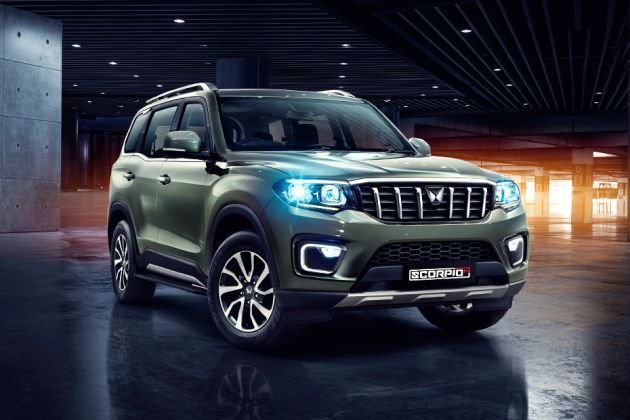
Nobody buys a Scorpio-N to drive politely in the middle lane. You buy this 2.1-ton rolling fortress because when you flash your high beams on an Indian expressway or a potholed state highway, autos, hatchbacks, and Cretas instinctively scurry out of your way. Built like an army bunker on a hydroformed ladder frame, it laughs at crater-sized potholes that would snap a German sedan in half. Just don't expect it to corner like a sports car—over bridge joints at 100 km/h, your rear passengers get a complimentary rollercoaster ride. It is the undisputed king of Indian road presence, raw diesel grunt, and unapologetic desi swagger.
Engine: 2.2L mHawk 175 Diesel (The National Highway Cruiser) | Power: 175 PS (129 kW) @ 3500 RPM | Real Mileage: 11.2 - 12.4 kmpl
Explore Full Historic Profile & Restoration Reality →
Modern & Latest Fleets (2010s - 2026) • 2021 - Present
1180 kg
The Pure Weekend Ego-Booster & Reel-Maker Machine
The 3-door Mahindra Thar is not a sensible car, and that is precisely why everyone loves it. It is an emotional purchase made with your heart, your ego, and your inner child who always wanted to drive an open-top Jeep through a muddy river. Driving a Thar through Indian traffic makes you feel invincible—autorickshaws give you a wide berth, bikers hesitate before cutting you off, and you can park right on top of a broken kerb with zero remorse. But be honest with yourself: rear seat access requires climbing through the front passenger seat like a contortionist, the luggage space fits little more than two laptop bags, and over highway bridge expansion joints, the short-wheelbase ladder chassis will bounce your head off the roof lining. As a second or third car for weekend adventures, nothing touches it for pure unadulterated joy.
Engine: 2.2L mHawk 130 Diesel (The Indestructible Trail Cruiser) | Power: 130 PS @ 3750 RPM | Real Mileage: 11.0 - 12.0 kmpl
Explore Full Historic Profile & Restoration Reality →
Modern & Latest Fleets (2010s - 2026) • 2021 - Present
1550 kg
The Spiti Dreamer That Spends 98% of Its Life in Cyber City Traffic Jams
The 3-door Thar was a magnificent weekend toy, but buying one as your only family car was an act of domestic sabotage—getting elderly grandparents or saree-clad mothers into the rear seat required Olympic gymnastics. Enter the Thar Roxx: Mahindra stretched the wheelbase, added two proper rear doors, bolted on a Watts-linkage rear suspension to tame the violent tail-wag, and threw in white leatherette seats and a panoramic sunroof. It is the ultimate Indian vehicular statement: a ladder-frame 4x4 capable of crossing Ladakh mountain passes that you actually use to drop kids off at DPS Gurgaon and show off to Sharma Ji at weekend mall parking lots.
Engine: 2.2L mHawk CRDe Turbo Diesel (The Torque Freight Train) | Power: 175 PS @ 3500 RPM | Real Mileage: 10.5 - 11.8 kmpl
Explore Full Historic Profile & Restoration Reality →
Modern & Latest Fleets (2010s - 2026) • 2021 - Present
1180 kg
The 131 PS Wide-Body Pocket Rocket with Panoramic Skyroof
When Mahindra overhauled the XUV300 into the XUV 3XO, they didn’t just change the bumpers—they created a genuine disruptor. They retained the widest cabin in the sub-4m segment (1821 mm wide, based on SsangYong’s Tivoli architecture), fixed the old tiny boot by expanding it to 364 litres, added a segment-first panoramic skyroof, and fitted Level 2 ADAS. But the real star is under the hood: the 1.2-litre mStallion TGDi turbo petrol pumps out a wild 131 horsepower and 230 Nm of torque! Paired with a smooth 6-speed Aisin torque converter automatic, it sprints from 0 to 100 km/h in 8.2 seconds, making it the undisputed hot hatch of compact SUVs. If you love driving fast while keeping your family in armchair comfort, this is the one.
Engine: 1.2L mStallion TGDi Turbo Petrol (The Hot Hatch Monster) | Power: 131 PS @ 5000 RPM | Real Mileage: 11.0 - 12.2 kmpl
Explore Full Historic Profile & Restoration Reality →
Modern & Latest Fleets (2010s - 2026) • 2021 - Present
1550 kg
The Alexa-Controlled 200-Horsepower Expressway Interceptor
When Mahindra launched the XUV700, competitors were caught completely flat-footed. Offering a 200-horsepower turbocharged petrol engine, a 450 Nm diesel that pulls like a freight locomotive, twin 10.25-inch Mercedes-style integrated displays, and functional Level 2 ADAS at a starting price under ₹14 Lakh was vehicular warfare. On open Indian expressways like the Mumbai-Nagpur Samruddhi or Delhi-Mumbai Expressway, nothing touches the XUV700 for high-speed cruising stability—the frequency-selective dampers (FSD) swallow bridge joints while the chassis stays glued to the tarmac. Yes, Alexa will occasionally misunderstand your Hindi accent, the flush door handles might freeze when parking valets get confused, and aggressive ADAS emergency braking might give you a mild heart attack in dense city traffic, but pound-for-pound, it is the most complete family SUV ever built on Indian soil.
Engine: 2.2L mHawk CRDe Diesel (The 450 Nm Highway Kingpin) | Power: 185 PS @ 3500 RPM | Real Mileage: 11.5 - 12.8 kmpl
Explore Full Historic Profile & Restoration Reality →
Modern & Latest Fleets (2010s - 2026) • 2021 - Present
1180 kg
The 23 kmpl Living Room on Wheels That Out-Sells Whole Car Companies
There is a reason why the Baleno sells over 15,000 units every single month without breaking a sweat: it offers the exact cocktail of features Indian families prioritize above all else. It has expansive rear legroom that puts ₹20-Lakh sedans to shame, a whisper-quiet 1.2-litre 4-cylinder K12N DualJet petrol engine that idles with zero vibration, a 360-degree camera, a Head-Up Display (HUD), and routine service bills that cost less than a pair of running shoes. It is not an aggressive canyon carver or an off-roader, but for daily office traffic and weekend family shopping, it is the most stress-free car in India.
Engine: 1.2L K12N DualJet Petrol with Idle Start-Stop (The Refinement Master) | Power: 90 PS @ 6000 RPM | Real Mileage: 15.5 - 16.8 kmpl
Explore Full Historic Profile & Restoration Reality →
Modern & Latest Fleets (2010s - 2026) • 2021 - Present
1180 kg
The Sensible Indian Family Workhorse That Refuses to Break Down
If you ask your neighborhood mechanic, your father, and your chartered accountant which sub-4m SUV to buy, all three will unanimously point you toward the Maruti Suzuki Brezza. It is not an exciting car. It does not have a 160-horsepower turbo engine, it does not corner like a European hot hatch, and it won't make heads turn at fancy five-star hotel valets. But what it does have is an immortal 1.5-litre 4-cylinder K15C naturally aspirated engine paired with a proper 6-speed torque-converter automatic gearbox. In a world full of temperamental DCTs and jerky AMTs, the Brezza’s Japanese mechanicals are engineered to run for 250,000 kilometers with nothing more than scheduled engine oil and filter changes. Built on Suzuki's proven Global-C platform (which previously earned 4 stars in Global NCAP), it offers genuine peace of mind, chilled AC, rock-solid resale value, and zero ownership drama.
Engine: 1.5L K15C Smart Hybrid DualJet Petrol (The Indestructible Japanese Motor) | Power: 103 PS @ 6000 RPM | Real Mileage: 13.2 - 14.5 kmpl
Explore Full Historic Profile & Restoration Reality →
Modern & Latest Fleets (2010s - 2026) • 2021 - Present
1180 kg
Cab King by Day, 5-Star NCAP Middle-Class Hero by Night
For years, the Maruti Dzire suffered from an unfair stigma: it was hailed as the undisputed commercial taxi king of India, which made some private buyers hesitate to park it next to their neighbor's crossover. But with this all-new generation model, Maruti turned the tables completely. They completely separated its design from the Swift, sculpting an elegant, sophisticated front grille with horizontal chrome ribs, sharp LED headlamps, and a proper sedan three-box profile that looks like a mini executive car. Even more historic: the new Dzire scored a genuine 5-STAR GLOBAL NCAP crash safety rating with a stable bodyshell, standard 6 airbags, and ESP! Add a segment-first electric sunroof, 382-litre boot, 360-degree camera, and 31.5 km/kg CNG mileage, and you have the smartest, most sensible family sedan purchase in India.
Engine: 1.2L Z12E 3-Cylinder DualJet Petrol (The Fuel-Economy Sensation) | Power: 82 PS @ 5700 RPM | Real Mileage: 17.0 - 18.8 kmpl
Explore Full Historic Profile & Restoration Reality →
Modern & Latest Fleets (2010s - 2026) • 2021 - Present
1550 kg
India’s Official Joint Family Holiday Shuttle & Budget Value King
The Maruti Suzuki Ertiga is the undisputed value champion for Indian joint families. It doesn't pretend to be an off-roader, a luxury sports car, or a high-tech spaceship. Instead, it offers 7 usable seats, a proven 1.5-litre 4-cylinder K15C DualJet engine with mild-hybrid technology, a 6-speed torque converter automatic with paddle shifters, and an unshakeable reputation for reliability. On CNG, it delivers an astonishing 26.11 km/kg, keeping family holiday travel expenses lower than train tickets! With dirt-cheap maintenance, chilled roof-mounted AC, and massive resale value, it is the most practical people mover in India.
Engine: 1.5L K15C Smart Hybrid DualJet Petrol (The Indestructible Japanese Motor) | Power: 103 PS @ 6000 RPM | Real Mileage: 13.5 - 14.8 kmpl
Explore Full Historic Profile & Restoration Reality →
Modern & Latest Fleets (2010s - 2026) • 2021 - Present
1180 kg
The Baleno That Hit The Gym and Put on Combat Boots
Maruti Suzuki pulled off a stroke of marketing and design brilliance with the Fronx. Instead of building another boxy tall-boy hatchback, they sculpted a stunning coupe crossover with high muscular wheel arches, connected LED lightbars, and a front grille that looks identical to the ₹20-Lakh Grand Vitara. Underneath the stylish skin lies the rock-solid, ultra-reliable Baleno mechanical platform, but with 190 mm of ground clearance that laughs at monstrous Indian speed breakers. Best of all, Maruti brought back the enthusiast-favorite 1.0-litre 3-cylinder Boosterjet turbo-petrol engine paired with a proper 6-speed torque-converter automatic with paddle shifters. It gives young Indian families the visual prestige of a modern SUV, the fuel efficiency of a Maruti hatchback, and genuine turbocharged overtaking punch.
Engine: 1.2L K12N DualJet Petrol (The Mileage Miracle) | Power: 90 PS @ 6000 RPM | Real Mileage: 14.2 - 15.5 kmpl
Explore Full Historic Profile & Restoration Reality →
Modern & Latest Fleets (2010s - 2026) • 2021 - Present
1550 kg
The 28 kmpl Strong-Hybrid Miracle in a Macho Kurta
The Grand Vitara is the car that finally solved the Indian car buyer’s greatest existential dilemma: how to own a stylish, imposing 4.3-meter midsize SUV with a panoramic sunroof without crying every time you pull into a petrol pump. Co-developed with Toyota, its self-charging Intelligent Electric Hybrid (IEH) system delivers an unbelievable 27.97 kmpl ARAI mileage, and in real-world crawling Indian city traffic, it consistently achieves 23 to 26 kmpl! While you sit stuck on Silk Board junction or the Gurgaon Expressway, the petrol engine stays asleep for over 60% of the time as you glide in whisper-quiet electric EV mode. Furthermore, for adventure enthusiasts, it is the only SUV in this price bracket to offer mechanical ALLGRIP All-Wheel Drive with Snow and Lock modes.
Engine: 1.5L Intelligent Electric Hybrid (Strong Hybrid - The Fuel Wizard) | Power: 116 PS Combined (92 PS Engine + 80 PS Electric Motor) | Real Mileage: 23.0 - 25.5 kmpl
Explore Full Historic Profile & Restoration Reality →
Modern & Latest Fleets (2010s - 2026) • 2021 - Present
1180 kg
The Pure Mountain Goat Hated by Reel Influencers But Adored by Off-Road Purists
The Maruti Suzuki Jimny is the ultimate purist off-road machine in India. It suffered unfairly from social media influencer comparisons against the 2-ton Thar because it doesn't have a 200 PS turbo engine or massive 18-inch wheels to bully traffic. But take both into deep Himalayan snow, tight Spiti cliff tracks, or wet monsoon slush, and the 1200 kg featherweight Jimny will dance past heavy bogged-down SUVs like a mountain goat! With solid rigid live axles front AND rear, a heavy-duty ladder-frame chassis, mechanical ALLGRIP PRO 4WD transfer case with 4-Low, and narrow dimensions that slip through rocky trails, it is an authentic global off-road legend backed by Maruti’s indestructible reliability.
Engine: 1.5L K15B 4-Cylinder Petrol (The Unkillable Trail Motor) | Power: 105 PS @ 6000 RPM | Real Mileage: 11.8 - 12.8 kmpl
Explore Full Historic Profile & Restoration Reality →
Modern & Latest Fleets (2010s - 2026) • 2021 - Present
1180 kg
The Fuel-Economy Miracle Go-Kart That Refuses to Die
For over two decades, the Maruti Suzuki Swift has been India’s default first car, college car, family car, and weekend canyon carver. In its latest 4th-generation avatar, Maruti did something radical: they replaced the beloved 4-cylinder K-Series engine with an ultra-efficient 1.2-litre 3-cylinder Z-Series motor. Traditional purists complained about the lost cylinder, but the numbers speak for themselves: this new Swift delivers an astonishing 24.8 to 25.75 kmpl, making it the most fuel-efficient petrol hatchback in the country! Even better, Maruti finally silenced safety critics by making 6 airbags, Electronic Stability Program (ESP), and hill-hold assist standard across every single variant from the entry LXi to the top ZXi+. It still steers like a razor-sharp go-kart, parks anywhere, and costs peanuts to maintain.
Engine: 1.2L Z12E 3-Cylinder DualJet Petrol (The Fuel-Sipping Marvel) | Power: 82 PS @ 5700 RPM | Real Mileage: 17.2 - 19.0 kmpl
Explore Full Historic Profile & Restoration Reality →
Modern & Latest Fleets (2010s - 2026) • 2021 - Present
1180 kg
The Tall-Boy Refrigerator on Wheels That Moves A Whole Nation
There is no car on Indian roads that delivers more honest, pragmatic family utility per square foot than the Maruti Suzuki Wagon R. It is shaped like a tall refrigerator on wheels, and that is precisely its superpower: elderly grandparents with severe knee arthritis can literally slide laterally onto the seats without bending down or climbing up. On CNG, it delivers an astonishing 34.05 km/kg—making daily commuting cost less than ₹2.00 per kilometer! It has a massive 341-litre boot (larger than many premium hatchbacks), incredible all-round glass visibility, chilled air conditioning, and parts that cost pocket change. It has moved millions of Indian middle-class families for 25 years and will keep doing so.
Engine: 1.0L K10C DualJet Petrol (The Fuel-Sipping City Commuter) | Power: 67 PS @ 5500 RPM | Real Mileage: 16.5 - 18.0 kmpl
Explore Full Historic Profile & Restoration Reality →
Modern & Latest Fleets (2010s - 2026) • 2021 - Present
1550 kg
The Ertiga in a Tuxedo with Ventilated Seats for Senior Citizens
The Maruti Suzuki XL6 is what happens when you take the unbeatable reliability and fuel economy of the Ertiga, remove the middle bench seat to install plush individual captain chairs with armrests, add ventilated front seats that freeze your back in peak summer, fit UV-cut glass, and dress it in rugged SUV claddings and a bold chrome grille. Sold exclusively through Nexa showrooms, it sheds the commercial taxi image of the Ertiga completely. Powered by the 1.5L K15C Smart Hybrid engine paired with a 6-speed torque converter automatic with paddle shifters, it gives senior citizens and family travelers business-class road trip comfort at half the price of an Innova.
Engine: 1.5L K15C Smart Hybrid DualJet Petrol (The Refined Cruiser) | Power: 103 PS @ 6000 RPM | Real Mileage: 13.5 - 14.8 kmpl
Explore Full Historic Profile & Restoration Reality →
Modern & Latest Fleets (2010s - 2026) • 2021 - Present
1180 kg
The Electric Golf Cart That Conquered Mumbai and Bengaluru Traffic
When you first see an MG Comet EV, you will smile: it looks like a futuristic Japanese Kei-car or a luxury electric golf cart. But spend 2 days driving it in Mumbai’s crowded Dadar market or Bengaluru’s narrow Koramangala lanes, and you will hail it as an urban mobility miracle! Measuring under 3 meters in length with an unbelievable 4.2-meter turning radius, it slips into parking spots that two-wheelers struggle with. Inside, you get dual 10.25-inch connected screens with wireless Apple CarPlay, power windows, and an IP67 waterproof 17.3 kWh battery that runs for roughly 180 km on a single charge. Operating costs are less than ₹0.80 per kilometer! For short daily office commutes, grocery runs, and school drop-offs, nothing is smarter.
Engine: 17.3 kWh Prismatic Cell Battery with 42 PS Motor (The Urban Zip) | Power: 42 PS (31 kW) | Real Mileage: 175 - 190 km Real City Range
Explore Full Historic Profile & Restoration Reality →
Modern & Latest Fleets (2010s - 2026) • 2021 - Present
1550 kg
Internet Inside, Massive Depreciation Also Inside
When MG entered India with the Hector and the tagline 'Internet Inside', purists chuckled. But Indian car buyers loved it: it gave them a massive 14-inch portrait touchscreen, an enormous dual-pane panoramic sunroof that opens half the roof to the stars, voice commands that open windows and sunroofs in Hinglish, and sofa-like rear seat legroom that rivaled ₹50-Lakh luxury imports. Today's refreshed Hector features an aggressive argyle chrome grille, Level 2 ADAS with traffic jam assist, and a plush dual-tone luxury cabin. It is softly sprung for maximum pothole absorption in city traffic, though depreciation in the used market is steeper than Japanese rivals. If you want maximum lounge space and tech gadgetry for your rupee, it is hard to beat.
Engine: 1.5L Turbo Petrol (The Smooth City Lounge Motor) | Power: 143 PS @ 5000 RPM | Real Mileage: 8.5 - 9.8 kmpl
Explore Full Historic Profile & Restoration Reality →
Modern & Latest Fleets (2010s - 2026) • 2021 - Present
1180 kg
The Airline Business-Class Lounge on Wheels with ₹3.50/KM Battery Rental
The MG Windsor EV completely disrupted the Indian electric car market with two unprecedented innovations. First, its 'Aero Lounge' rear seats recline to an astonishing 135 degrees with plush sofa-like cushioning, providing more relaxation than an airline business-class seat! Second, MG introduced Battery-as-a-Service (BaaS), allowing buyers to purchase the car without the battery for just ₹9.99 Lakh and pay a simple ₹3.50 per kilometer battery rental fee! Powered by a 38 kWh prismatic cell lithium-ion battery delivering 136 PS and 200 Nm of instant torque, it glides in whisper-quiet silence with an immense 15.6-inch grand touchscreen display and an expansive infinity glass roof. It is the most comfortable chauffeur-driven electric commuter in India.
Engine: 38 kWh Prismatic Cell Battery with Permanent Magnet Motor (The Lounge Cruiser) | Power: 136 PS (100 kW) | Real Mileage: 260 - 280 km Real-World City Range
Explore Full Historic Profile & Restoration Reality →
Modern & Latest Fleets (2010s - 2026) • 2021 - Present
1550 kg
The Stress-Free 360 KM Highway Electric Pioneer
The MG ZS EV is the electric vehicle that proved to Indian car buyers that electric cars can do serious highway road trips without range panic. Equipped with a large 50.3 kWh prismatic cell lithium-ion battery, it delivers an honest real-world range of 340 to 360 kilometers on a single charge. With 176 horsepower and 280 Nm of instant torque, it sprints from 0 to 100 km/h in 8.5 seconds, pinning you back into its leather seats with sports car urgency. It features Level 2 ADAS, a 360 camera, a panoramic skyroof, and an IP69K waterproof battery pack that laughs at flooded monsoon streets. If you want a zero-emission family crossover that can effortlessly handle Mumbai-Pune or Delhi-Chandigarh on a single charge, this is the benchmark.
Engine: 50.3 kWh Prismatic Cell Battery with 176 PS Motor (The Highway EV) | Power: 176 PS (130 kW) | Real Mileage: 350 - 370 km Real City Range
Explore Full Historic Profile & Restoration Reality →
Modern & Latest Fleets (2010s - 2026) • 2021 - Present
1180 kg
Maximum Metal and Turbo Punch for Minimum Rupees
The Nissan Magnite single-handedly kept Nissan alive in India for one simple reason: it offers the most metal, style, and equipment per rupee in the compact SUV segment. At an entry price under ₹6 Lakh ex-showroom, you get standard 6 airbags, 205 mm of ground clearance, and bold SUV styling. For driving enthusiasts, the 1.0L HRA0 Turbo petrol motor paired with Nissan’s step-less X-TRONIC CVT automatic delivers 100 horsepower and 152 Nm of torque, sprinting past traffic with smooth, step-less acceleration. Certified with a 4-star ASEAN NCAP safety rating, it is the ultimate value-for-money proposition for budget-conscious Indian families.
Engine: 1.0L HRA0 Turbocharged Petrol (The Highway Puncher) | Power: 100 PS @ 5000 RPM | Real Mileage: 11.8 - 13.0 kmpl
Explore Full Historic Profile & Restoration Reality →
Modern & Latest Fleets (2010s - 2026) • 2019 - Present
1505 kg
The Eternal Flat-6 Sports Car Benchmark: Everyday Usability Meets 7,500 RPM Purity
Introduced in 2019, the 992 generation perfected the rear-engine layout that critics once claimed was fundamentally flawed. With a wider front track, staggered 20/21-inch wheels, acoustic sensors in the front wheel wells (Porsche Wet Mode), and an interior paying homage to the classic five-dial 1970s instrument binnacle, the 992 Carrera proves that an analog soul can thrive in an era of digital supercars.
Engine: Porsche 3.0L Twin-Turbocharged Flat-6 Boxer | Power: 385 PS - 450 PS (Carrera S) @ 6500 RPM | Real Mileage: 7.5 - 9.0 kmpl
Explore Full Historic Profile & Restoration Reality →
Modern & Latest Fleets (2010s - 2026) • 2017 - Present
1790 kg
The 7-Seater European Luxury Flagship: Canton 12-Speaker Audio & DCC Purity
Launched in India in 2017 (initially with the 2.0 TDI diesel and later modernized with the 2.0 TSI petrol), the Kodiaq proved that luxury does not need a flashy badge. Assembled at SAVWIPL's Aurangabad plant, it brought adaptive dampers, three-zone climate control, and smart 'Simply Clever' practical features to discerning families who wanted Audi Q7 levels of refinement without ostentation. It stands as a benchmark of modern engineering excellence, shaping consumer expectations for cabin technology, powertrain efficiency, and passenger safety across India.
Engine: 2.0L TSI Turbocharged Stratified Injection EA888 | Power: 190 PS @ 6000 RPM | Real Mileage: 8.5 - 9.8 kmpl
Explore Full Historic Profile & Restoration Reality →
Modern & Latest Fleets (2010s - 2026) • 2021 - Present
1180 kg
The Enthusiast’s Escape from Creta Clones
The Skoda Kushaq was the pioneer that launched the Volkswagen Group's India 2.0 revolution. In a segment overcrowded with softly sprung crossovers that lean heavily around corners, the Kushaq is a breath of fresh air for driving enthusiasts. It has tight body control, an eager steering rack that communicates grip levels directly to your fingers, and exceptional high-speed composure over highway bridge joints. Global NCAP awarded it full 5 stars for both adult and child occupants, making it one of the safest family crossovers in India. Powered by either the energetic 1.0L TSI or the fiery 150 PS 1.5L TSI EVO engine, it turns every mundane commute into an engaging drive.
Engine: 1.5L TSI EVO Turbo Petrol (The Driver’s Dream Motor) | Power: 150 PS @ 5000-6000 RPM | Real Mileage: 10.5 - 11.5 kmpl
Explore Full Historic Profile & Restoration Reality →
Modern & Latest Fleets (2010s - 2026) • 2021 - Present
1550 kg
The Timeless European Notchback with 521-Litre Boot Magic
The Skoda Slavia is the intellectual’s choice in the midsize sedan category. While other cars chase fleeting design fads with oversized grilles and tacky plastic claddings, the Slavia exudes timeless European elegance with its razor-sharp crystalline LED headlamps, butterfly chrome grille, and sculpted notchback rear. Built on the MQB-A0-IN platform with a 5-star Global NCAP safety rating for both adult and child occupants, it combines 179 mm of ground clearance with an immense 521-litre boot that swallows luggage for 5 adults with room to spare. Available with either the punchy 1.0L TSI or the fiery 150 PS 1.5L TSI EVO engine, it is the modern heir to the legendary Skoda Octavia.
Engine: 1.5L TSI EVO 4-Cylinder Turbo Petrol (The Executive Hot Rod) | Power: 150 PS @ 5000-6000 RPM | Real Mileage: 10.5 - 11.8 kmpl
Explore Full Historic Profile & Restoration Reality →
Modern & Latest Fleets (2010s - 2026) • 2021 - Present
1180 kg
The 5-Star Steel Fortress on Wheels with European Door Thud
When you shut the door of a Tata Altroz, the resounding 'thud' tells you everything: this car was engineered by people who refused to compromise on structural safety. Built on Tata’s ALFA modular architecture, it was the first hatchback in India to score a certified 5-star Global NCAP crash rating. All four doors open a full 90 degrees, making getting in and out effortless for elderly grandparents. Unlike rivals that offer jerky AMTs or rubber-band CVTs, the Altroz features a wet-clutch 7-speed DCA automatic with shift-by-wire and machine-learning adaptations. The steering feedback is communicative and the high-speed highway ride is rock-solid. It is a genuine fortress on wheels.
Engine: 1.2L Revotron Naturally Aspirated Petrol (The City Commuter) | Power: 88 PS @ 6000 RPM | Real Mileage: 12.5 - 13.8 kmpl
Explore Full Historic Profile & Restoration Reality →
Modern & Latest Fleets (2010s - 2026) • 2021 - Present
1550 kg
The First Mass-Market Desi Coupe SUV for People Tired of Boring Boxes
Until the Tata Curvv arrived, if you wanted an SUV with a glamorous sloping coupe roofline, you had to spend ₹80 Lakh on a BMW X4 or Mercedes GLC Coupe. Tata democratized the coupe silhouette by launching the Curvv under ₹10 Lakh! Skeptics worried that the sloping roof would sacrifice rear headroom and boot space, but clever engineering delivered an enormous 500-litre boot and adequate headroom for 5'10" passengers. Under the hood, Tata introduced its brand-new 1.2L Hyperion direct-injection turbo petrol (125 PS) and offered a wet-clutch 7-speed DCA automatic on both petrol and diesel engines. Certified with a 5-star Bharat NCAP rating and Level 2 ADAS, it is the freshest, most distinctive vehicle on Indian roads today.
Engine: 1.2L Hyperion Turbocharged GDi Petrol (The Direct-Injection Star) | Power: 125 PS @ 5000 RPM | Real Mileage: 11.5 - 12.8 kmpl
Explore Full Historic Profile & Restoration Reality →
Modern & Latest Fleets (2010s - 2026) • 2021 - Present
1550 kg
The Land Rover Pedigree Fortress with Infotainment Glitch Lottery
The Tata Harrier is built on the OMEGARC platform, derived directly from Land Rover’s legendary D8 architecture (the same platform under the Discovery Sport). The moment you take it onto a 6-lane expressway at 120 km/h, the difference is immediate: while smaller Japanese and Korean crossovers feel floaty over undulations, the Harrier feels like a 1.7-ton hunk of solid iron pinned to the asphalt. Bharat NCAP awarded it the highest crash score in Indian automotive history (31.22/32 points). Its 2.0L Kryotec diesel engine pulls with immense mid-range authority. Yes, the massive 12.3-inch touchscreen and digital software can occasionally throw a tantrum, and finding a top-notch Tata service center requires some homework, but for pure high-speed highway touring comfort and safety, it is magnificent.
Engine: 2.0L Kryotec Turbocharged Diesel (The Land Rover Pedigree Motor) | Power: 170 PS @ 3750 RPM | Real Mileage: 11.0 - 12.2 kmpl
Explore Full Historic Profile & Restoration Reality →
Modern & Latest Fleets (2010s - 2026) • 2021 - Present
1180 kg
The 5-Star NCAP Rolling Bunker with Dealership Service Roulette
The Tata Nexon is the defining car of modern patriotic Indian motoring. Before the Nexon, Indian car buyers cared only about 'Kitna deti hai' and whether the chrome door handles look shiny. The Nexon changed that overnight by earning India's first genuine 5-star Global NCAP rating, proving that a homegrown car could protect your family better than fragile foreign tin cans. Today's facelifted version looks like a mini Range Rover Evoque with sequential LED lightbars and a futuristic twin-spoke steering wheel with an illuminated digital logo. The ride quality over cratered roads is class-leading. Its only Achilles heel? Tata's authorized service centers, where getting your car serviced can feel like applying for a government passport renewal in 1995. If you find a competent local Tata workshop, it is practically the best sub-4m SUV money can buy.
Engine: 1.2L Revotron Turbocharged Petrol (The City Commuter) | Power: 120 PS @ 5500 RPM | Real Mileage: 11.0 - 12.2 kmpl
Explore Full Historic Profile & Restoration Reality →
Modern & Latest Fleets (2010s - 2026) • 2021 - Present
1180 kg
The Pocket Battle-Tank for Indian City Street Brawls
There is a very clear reason why the Tata Punch frequently becomes India’s #1 best-selling vehicle of the month. It completely demolished the myth that budget car buyers must settle for flimsy, paper-thin sheet metal. Built on Tata’s high-strength ALFA architecture, the Punch gives first-time car buyers a towering SUV driving stance, 187 mm of speed-breaker-clearing ground clearance, doors that open a full 90 degrees for elderly grandparents, and an unshakeable 5-star Global NCAP safety rating. The 1.2L naturally aspirated 3-cylinder engine won’t win you any drag races—in fact, when you ask it for sudden highway overtakes, it makes more noise than progress. But in the daily urban jungle of chaotic city traffic, tight bazaar lanes, and broken monsoon potholes, it feels utterly indestructible.
Engine: 1.2L Revotron 3-Cylinder Petrol (The City Workhorse) | Power: 88 PS @ 6000 RPM | Real Mileage: 12.4 - 13.6 kmpl
Explore Full Historic Profile & Restoration Reality →
Modern & Latest Fleets (2010s - 2026) • 2021 - Present
1550 kg
The Grandfather of Indian SUVs in a 6-Seater Cyberpunk Chariot
The Tata Safari badge carries an emotional weight in India that few names can match. But unlike the old body-on-frame Safari Dicor that rolled around corners like a sailing boat, the modern Safari is a high-tech 3-row executive lounge built on Land Rover’s D8 pedigree OMEGARC platform. It features individual second-row captain seats with cooling ventilation (a feature usually found in ₹80-Lakh luxury imports), an expansive panoramic skyroof, a 10-speaker JBL audio system with subwoofer, and full Level 2 ADAS. Bharat NCAP awarded it a record-breaking 5-star safety score with 33.05/34 points for child protection. For large joint families doing 600-km interstate highway journeys, it provides royal comfort with tank-like passive safety.
Engine: 2.0L Kryotec Turbocharged Diesel (The Executive Long-Hauler) | Power: 170 PS @ 3750 RPM | Real Mileage: 10.8 - 11.8 kmpl
Explore Full Historic Profile & Restoration Reality →
Modern & Latest Fleets (2010s - 2026) • 2021 - Present
1180 kg
The ₹1 Per KM City Grocery Commuter & 4-Star Armor Legend
The Tata Tiago is the car that initiated Tata Motors' modern design renaissance. Before the Tiago, entry-level hatchbacks felt like flimsy tin cans with paper-thin doors and hollow sheet metal. The Tiago changed the game by offering a certified 4-star Global NCAP safety rating, heavy-gauge doors that shut with an assuring thud, and a Harman 8-speaker audio system that sounds better than cars costing triple its price. Available in petrol, dual-cylinder iCNG (preserving usable boot space), and a genuine electric EV variant running for just ₹1 per kilometer, it is the safest, most sensible entry car for Indian first-time buyers.
Engine: 1.2L Revotron 3-Cylinder Petrol (The Sturdy Commuter) | Power: 86 PS @ 6000 RPM | Real Mileage: 13.0 - 14.2 kmpl
Explore Full Historic Profile & Restoration Reality →
Modern & Latest Fleets (2010s - 2026) • 2021 - Present
1550 kg
The Immortal Dictator of Indian Highways & Netaji Convoy Chieftain
The Toyota Fortuner is not just an SUV in India; it is a cultural and sociopolitical currency. A top-spec Fortuner 4x4 costs over ₹60 Lakh on-road today—a price tag that buys you a brand-new German BMW X1 or Mercedes GLA. Yet, wealthy industrialists, politicians, civil contractors, and rural landlords queue up with cash in hand. Why? Because a German luxury car depreciates by 50% in 4 years and develops costly electronic tantrums on broken monsoon roads. A Fortuner, on the other hand, commands instant respect at every VIP gate and toll booth, crawls over cratered riverbeds with its bulletproof 500 Nm diesel engine, and sells 7 years later in the used car market for practically 85% of what you originally paid for it! The ride is bumpy, the dashboard feels from 2015, and the steering is heavy, but it will easily survive 500,000 kilometers and outlive civilizations.
Engine: 2.8L D-4D Turbocharged Diesel (The 500 Nm Freight Train) | Power: 204 PS @ 3000-3400 RPM | Real Mileage: 9.0 - 10.2 kmpl
Explore Full Historic Profile & Restoration Reality →
Modern & Latest Fleets (2010s - 2026) • 2021 - Present
1180 kg
The Baleno with a Trustworthy 5-Year Toyota Warranty Badge
The Toyota Glanza takes all the proven strengths of the Maruti Baleno—the expansive rear legroom, whisper-quiet 1.2-litre 4-cylinder engine, 23 kmpl mileage, and 360 camera—and wraps them in a distinct Toyota Camry-inspired front grille with Toyota’s legendary customer service. The real trump card for buyers is the warranty: while Maruti provides a 2-year warranty, Toyota offers an exceptional 5-year / 220,000 km extended warranty package! For practical buyers who want a low-cost, ultra-reliable premium hatchback backed by the best customer service in India, the Glanza is a brilliant choice.
Engine: 1.2L K-Series DualJet Petrol (The Refinement Master) | Power: 90 PS @ 6000 RPM | Real Mileage: 15.5 - 16.8 kmpl
Explore Full Historic Profile & Restoration Reality →
Modern & Latest Fleets (2010s - 2026) • 2021 - Present
1550 kg
The Apocalypse Survival Vehicle for Coffee Estate Owners and Expeditions
Top Gear famously tried to destroy a Toyota Hilux by drowning it in the sea, dropping a caravan on it, setting it on fire, and blowing up a 23-story building under it—and it still started! In India, the Hilux is the ultimate lifestyle adventure statement. Measuring 5.3 meters in length on heavy-duty leaf springs, it features the bulletproof 2.8-litre D-4D diesel engine pumping out 204 horsepower and 500 Nm of torque. It can tow 3,500 kg, carry 435 kg of dirt bikes or camping gear in its rear cargo bed, and wade through 700 mm of fast-flowing river water. With massive dealer discounts often reaching ₹4 to 6 Lakh off sticker price, it is an incredible bargain for outdoor enthusiasts, farm owners, and overland campers.
Engine: 2.8L D-4D Turbocharged Diesel (The 500 Nm Global Icon) | Power: 204 PS @ 3000-3400 RPM | Real Mileage: 9.2 - 10.5 kmpl
Explore Full Historic Profile & Restoration Reality →
Modern & Latest Fleets (2010s - 2026) • 2021 - Present
1550 kg
The Immortal Rear-Wheel-Drive Diesel Tank of Indian Highways
When Toyota temporarily paused the Innova Crysta diesel to launch the petrol-hybrid Hycross, commercial fleet operators, politicians, and rural tourers protested so loudly that Toyota had to bring it back! The Crysta diesel is built on an indestructible ladder-frame chassis with rear-wheel drive, powered by the legendary 2.4-litre 2GD-FTV turbocharged diesel engine (150 PS, 343 Nm). It laughs at broken rural state highways, crater-sized monsoon potholes, and overloading that would crack a monocoque crossover in half. The ride is firm at low speeds, the steering is heavy, and it comes only with a manual gearbox, but it will easily run 500,000 kilometers with zero mechanical complaints and sell 8 years later for top rupee. It is an automotive institution.
Engine: 2.4L 2GD-FTV Turbocharged Diesel (The Immortal Workhorse) | Power: 150 PS @ 3400 RPM | Real Mileage: 11.5 - 12.8 kmpl
Explore Full Historic Profile & Restoration Reality →
Modern & Latest Fleets (2010s - 2026) • 2021 - Present
1550 kg
The Royal Chariot of Indian Politicians & 23 kmpl Business-Class Lounge
When Toyota announced that the immortal Innova was ditching its heavy diesel ladder frame for a lightweight front-wheel-drive monocoque platform with a strong hybrid petrol engine, traditionalists cried treason. But within 3 months, everyone realized Toyota had built the ultimate Indian family luxury cruiser. The TNGA monocoque chassis rides with the plush serenity of a Lexus, the second-row ottoman captain seats let your parents or clients stretch out with full calf support, and the self-charging strong hybrid system delivers a mind-boggling 20 to 23 kmpl in bumper-to-bumper city traffic without ever plugging into a charger! In a 4.75-meter 7-seater executive chariot, that is nothing short of automotive sorcery. It is the king of long-distance Indian touring.
Engine: 2.0L TNGA 5th-Gen Strong Hybrid Electric (The Mileage Miracle) | Power: 186 PS Combined (152 PS Engine + 113 PS Electric Motor) | Real Mileage: 18.5 - 21.0 kmpl
Explore Full Historic Profile & Restoration Reality →
Modern & Latest Fleets (2010s - 2026) • 2021 - Present
1550 kg
The Grand Vitara with A Respected Japanese Trust Badge
The Toyota Urban Cruiser Hyryder is the vehicle that brought authentic, accessible hybrid technology to mainstream Indian car buyers. Built alongside the Grand Vitara at Toyota's Bidadi manufacturing plant, it shares the exact same self-charging strong hybrid powertrain that delivers 27.97 kmpl, class-leading 210 mm ground clearance, and an optional mechanical AWD system. What sets the Hyryder apart is the iconic Toyota badge on the steering wheel, Toyota’s renowned customer care culture, and an exceptional 8-year / 160,000 km hybrid battery warranty. For Indian families looking for bulletproof reliability and microscopic fuel bills, it is practically unbeatable.
Engine: 1.5L Self-Charging Strong Hybrid Electric (The Mileage Miracle) | Power: 116 PS Combined (92 PS Engine + 80 PS Motor) | Real Mileage: 23.0 - 25.5 kmpl
Explore Full Historic Profile & Restoration Reality →
2010s • 2013 - 2020
1109 kg
The German Pocket Rocket: 7-Speed Dual-Clutch DSG & Remap Royalty
Laser-welded in Chakan with galvanized steel body panels that felt indestructible, the Polo set safety and paint quality standards that Indian competitors couldn't touch. The GT TSI introduced Indian drivers to launch control, paddle shifters, and flat-bottom leather sports steering wheels.
It also catalyzed India's modern Stage 1, Stage 2, and Stage 3 tuning culture: with an ECU remap, decat downpipe, and upgraded intercooler, tuners routinely pushed this humble hatchback to 140+ bhp, hunting down BMWs and Audis on expressways.
Engine: 1197cc Volkswagen EA111 1.2 TSI Direct-Injection Turbo | Power: 105 PS @ 5000 RPM | Real Mileage: 11.0 - 12.5 kmpl
Explore Full Historic Profile & Restoration Reality →
Modern & Latest Fleets (2010s - 2026) • 2021 - Present
1180 kg
The Polo GT on Elevated Suspension with Autobahn DNA
If you loved the driving dynamics of the legendary Volkswagen Polo GT but now have a family that demands high ground clearance, an upright SUV seating posture, and a panoramic view of the road, the Taigun is your answer. Built on the MQB-A0-IN platform with laser-welded body seams, its doors shut with an unmistakable, reassuring German 'thud'. In Global NCAP testing, it scored a flawless 5-star rating for both adult and child occupants. While Korean rivals focus on endless digital screens and ambient lighting, the Taigun focuses on how the steering wheel communicates the road surface to your palms and how securely the chassis tracks through high-speed highway sweepers. Powered by either the punchy 1.0L TSI or the fiery 150 PS 1.5L TSI EVO engine, it is a driver’s SUV through and through.
Engine: 1.5L TSI EVO Turbo Petrol (The 150 PS Hot Crossover Motor) | Power: 150 PS @ 5000-6000 RPM | Real Mileage: 10.5 - 11.5 kmpl
Explore Full Historic Profile & Restoration Reality →
Modern & Latest Fleets (2010s - 2026) • 2021 - Present
1550 kg
The Autobahn Corner-Craver with Pothole Anxiety
The Volkswagen Virtus is the car you buy when you love driving too much to surrender to the boring crossover wave. While the rest of India buys tall hatchbacks masquerading as SUVs, the Virtus sits long, low, and menacing. Built on the MQB-A0-IN platform with laser-welded structural seams, it feels like an authentic German sports sedan. Global NCAP awarded it full 5 stars for BOTH adult and child occupants with a rock-solid bodyshell. Under the hood, the 1.5L TSI EVO engine with cylinder deactivation pumps out 150 horsepower and 250 Nm of torque, rocketing from 0 to 100 km/h in 8.8 seconds with lightning-fast 7-speed DSG shifts. It offers 179 mm of ground clearance (clearing Indian speed bumps easily) and a massive 521-litre boot. It is driving therapy on four wheels.
Engine: 1.5L TSI EVO 4-Cylinder Turbo Petrol (The German Hot Rod) | Power: 150 PS @ 5000-6000 RPM | Real Mileage: 10.5 - 11.8 kmpl
Explore Full Historic Profile & Restoration Reality →
1980s - 1990s • 1986 - 1991
1200 kg
The Homologation Hero: High-Revving S14 Twin-Cam & Box-Flared Touring Car Royalty
The E30 M3 was engineered by BMW Motorsport to win races first and sell road cars second. Only the hood, roof panel, and sunroof were shared with the standard 3 Series coupe; every other body panel was reshaped for aerodynamic downforce and to accommodate wide racing slicks. In DTM, the European Touring Car Championship, and rallying, the E30 M3 claimed over 1,500 individual race victories, cementing the legendary status of BMW's M division and becoming one of the most valuable blue-chip collector automobiles in history.
Engine: 2302cc BMW S14B23 Naturally Aspirated DOHC 16-Valve 4-Cylinder | Power: 200 PS @ 6750 RPM (Catalyzed) / 215 PS (Evolution) | Real Mileage: 8.5 - 10.0 kmpl
Explore Full Historic Profile & Restoration Reality →
1980s - 1990s • 1987 - 1992
1100 kg
Enzo's Final Masterpiece: Twin-Turbo V8, Gated Dog-Leg & 201 MPH Raw Mechanical Terror
The F40 shattered the 200 mph barrier in 1987, becoming the fastest production road car in global automotive history at 201.4 mph (324 km/h). Designed by Pininfarina and engineered around a tubular steel spaceframe and composite autoclave panels, the entire car weighed just 1,100 kg. With two massive IHI turbochargers that delivered explosive boost past 3,800 RPM and a massive fixed rear wing that defined a generation of bedroom posters, the F40 remains the definitive analog supercar of all time.
Engine: 2936cc Ferrari Tipo F120A Twin-Turbocharged DOHC 32V 90-Degree V8 | Power: 478 PS @ 7000 RPM | Real Mileage: 4.5 - 6.0 kmpl
Explore Full Historic Profile & Restoration Reality →
1950s - 2010s • 1958 - 2014
1200 kg
The Undisputed King of Indian Roads: Sovereign of the Lal Batti & Kolkata Kaali-Peeli
Manufactured at Uttarpara, Hooghly—Asia's oldest automotive plant—the Ambassador was the supreme symbol of Nehruvian socialist self-reliance. For decades, private car manufacturing was restricted under strict production quotas, ensuring the Ambassador held an unchallenged monopoly alongside the Premier Padmini.
From the Mark I (1958) with its hand-crank starter port to the Mark II, Mark III, Mark IV (which introduced the first diesel passenger car in India with the 1.5L BMC diesel in 1979), and the Ambassador Nova (1990), it evolved slowly. The quantum leap occurred in 1992 with the Ambassador 1800 ISZ, which shoehorned the bulletproof 1.8L Isuzu engine and 5-speed Japanese gearbox into the vintage British body, turning the stately old lady into a highway powerhouse capable of 140 km/h.
Engine: 1817cc Isuzu 4ZB1 / 1489cc BMC B-Series Petrol & Diesel | Power: 75 PS @ 5000 RPM (Isuzu 1.8) | Real Mileage: 8.5 - 10.0 kmpl (Isuzu Petrol)
Explore Full Historic Profile & Restoration Reality →
1980s - 2010s • 1983 - 2016
1910 kg
The Solihull Expedition Sovereign: Aluminum Panels & Camel Trophy World Legend
Introduced in 1983 as the Land Rover One Ten and Ninety (renamed 'Defender' in 1990), it replaced leaf springs with long-travel coil springs, transforming off-road axle articulation. Its body panels were crafted from Birmabright—a corrosion-resistant aluminum-magnesium alloy originally used because steel was rationed in post-WWII Britain.
From the bulletproof mechanical 300Tdi to the characterful 5-cylinder Td5 diesel, over two million Series and Defender vehicles conquered the planet before pedestrian safety and emission mandates ended Solihull production in January 2016.
Engine: 2495cc Land Rover 300Tdi / Td5 2.5L Turbo Diesel | Power: 122 PS @ 4200 RPM (Td5) / 111 PS (300Tdi) | Real Mileage: 8.5 - 10.0 kmpl
Explore Full Historic Profile & Restoration Reality →
1990s - 2000s • 1992 - 2002
1260 kg
The Rotary Masterpiece: Sequential Twin-Turbo 13B-REW & 50:50 Kinetic Purity
Mazda's 'Operation Zero' development program obsessively shaved grams from every component: aluminum double-wishbone suspension arms, hollow anti-roll bars, and a drilled brake pedal. The sequential turbo system used complex electronic solenoids to stage two Hitachi turbochargers, providing seamless boost across the rev range.
Immortalized by Keisuke Takahashi in the cult anime 'Initial D' and tuned by legendary Hiroshima houses like RE Amemiya, the FD RX-7 remains the absolute zenith of rotary sports car engineering.
Engine: 1308cc (654cc x 2) Mazda 13B-REW Sequential Twin-Turbo Rotary | Power: 280 PS @ 6500 RPM (Series 8) / 255 PS (Series 6) | Real Mileage: 5.5 - 7.0 kmpl
Explore Full Historic Profile & Restoration Reality →
1990s - 2000s • 1999 - 2002
1560 kg
Godzilla: Twin-Turbo RB26DETT, ATTESA E-TS All-Wheel Drive & MFD Telemetry Sovereign
The R34 was the grand finale of Nissan's pure mechanical motorsport lineage before the GT-R separated into the automated R35. The RB26DETT engine featured individual throttle bodies (ITBs) for razor-sharp throttle response, sodium-filled exhaust valves, and dual overhead camshafts capable of spinning to 8,200 RPM.
Its ATTESA E-TS Pro system monitored wheel speeds 100 times per second, running in 100% rear-wheel drive for purity before shooting up to 50% torque to the front wheels in milliseconds the moment slip was detected, pulling the car around corners at physics-defying speeds.
Engine: 2568cc Nissan RB26DETT Twin-Turbo Inline-6 24V | Power: 327 PS @ 6800 RPM (Real) / 280 PS (Advertised) | Real Mileage: 6.0 - 7.5 kmpl
Explore Full Historic Profile & Restoration Reality →
1990s • 1994 - 1998
1370 kg
The Last Air-Cooled Titan: Multi-Link Weissach Rear Axle & Hand-Built Analog Royalty
The 993 solved the legendary 'widowmaker' handling trait of earlier 911s through its all-aluminum multi-link LSA rear axle. In 1996, Porsche introduced the 'Varioram' variable induction system, delivering linear torque across the rev range. In an age of sterile modern electronic sports cars, the 993's floor-hinged pedals, air-cooled dry-sump oil aroma, and mechanical hydraulic steering remain an unrepeatable automotive high-water mark.
Engine: 3600cc Porsche M64/05 Air/Oil-Cooled Naturally Aspirated Flat-6 | Power: 272 PS @ 6100 RPM (Varioram: 285 PS @ 6100 RPM) | Real Mileage: 7.0 - 8.5 kmpl
Explore Full Historic Profile & Restoration Reality →
1960s - 2000s • 1964 - 2000
895 kg
The Queen of Marine Drive: Mumbai's Kaali-Peeli Taxi & Parsi Family Darling
Manufactured by Premier Automobiles Limited (PAL) at their historic Kurla facility in Bombay under license from Fiat Italy, the Padmini was the agile, cosmopolitan alternative to the ponderous Ambassador. Its lightweight monocoque body, sweet-revving 1,089cc engine, sharp steering, and floor space made it the darling of urban families.
Over its 36-year production history, the Padmini became the lifeblood of Mumbai's public transit. More than 60,000 Padmini Kaali-Peeli cabs ferried millions of commuters daily between Churchgate, CST, and the suburbs. It withstood salt-laden Arabian Sea winds, bumper-to-bumper crawl traffic, and monsoon flash floods with unmatched mechanical loyalty until the final iconic Kaali-Peeli was officially retired in October 2023.
Engine: 1089cc Fiat OHV 4-Cylinder | Power: 40 PS @ 4800 RPM | Real Mileage: 11.0 - 12.5 kmpl
Explore Full Historic Profile & Restoration Reality →
1990s • 1990 - 1997
2260 kg
The King of Continents: Triple Locking Differentials & Indestructible 1HD-T Turbo Diesel
The 80 Series struck the perfect balance in Land Cruiser history: modern coil-spring ride comfort and highway cruising ability combined with indestructible, heavy-duty mechanical foundations. Favored by the United Nations, Red Cross, and global overland explorers, its cast-iron inline-six engines regularly surpassed 1,000,000 kilometers with routine maintenance. Today, factory triple-locked 80 Series models represent the most sought-after vintage overland investment vehicles in the global automotive market.
Engine: 4164cc Toyota 1HD-T 4.2L SOHC 12V Turbocharged Inline-6 Diesel | Power: 167 PS @ 3600 RPM | Real Mileage: 7.5 - 9.0 kmpl
Explore Full Historic Profile & Restoration Reality →
1990s - 2000s • 1993 - 2002
1510 kg
The Over-Engineered JDM Titan: Cast-Iron 2JZ Block That Laughs at 1,000 Horsepower
The A80 Supra was engineered with zero budget restrictions during the twilight of Japan's economic bubble. Its sequential twin-turbo system operated in two stages: a small turbine spooled at 1,800 RPM for instant low-end throttle response, while the second turbine kicked in past 4,000 RPM to deliver an explosive top-end rush.
Its legendary status reached global immortality in 2001 when Paul Walker drove a candy-orange 1994 Supra Mk4 in 'The Fast and the Furious', transforming the car from an underground Japanese sports car into the most recognizable cultural tuner icon on earth.
Engine: 2997cc Toyota 2JZ-GTE Sequential Twin-Turbo DOHC 24V | Power: 324 PS @ 5600 RPM (Export) / 280 PS (JDM) | Real Mileage: 6.5 - 8.0 kmpl
Explore Full Historic Profile & Restoration Reality →
The Golden Era (1960s & 1970s) • 1969 - 1970
1755 kg
The NASCAR Semi-Hemi Sledgehammer: 7.0L Big Block & Kar-Kraft Front Suspension Surgery
In 1969, NASCAR required automakers to sell at least 500 production road cars equipped with any racing engine. Ford President Bunkie Knudsen bypassed the mid-size Torino and boldly mandated the engine be crammed into the Mustang. Kar-Kraft literally reconstructed the car's front structure, moving the battery to the trunk and modifying the suspension control arms.
Rated at a modest 375 hp for insurance deception, dyno runs proved the Boss 429 actually produced well over 500 horsepower with minor tuning. With its functional manually operated hood scoop and NASCAR engine internals, it stands as the purest, most aggressive homologation muscle car ever conceived.
Engine: 429 cu. in. (7.0L) Ford Boss 429 Semi-Hemi V8 | Power: 380 PS (conservatively rated; 500+ real hp) @ 5200 RPM | Real Mileage: 3.5 - 4.5 kmpl
Explore Full Historic Profile & Restoration Reality →
The Golden Era (1960s & 1970s) • 1968 - 1970
1770 kg
The Quintessential American Brawler: 440 Magnum V8, Coke-Bottle Flanks & Tunnel-Back Window
The second-generation Charger (1968-1970) elevated Chrysler from boxy utilitarian sedans into the stratosphere of pop-culture automotive immortality. Beyond dominating NASCAR ovals (leading to the winged Charger Daytona), the 1969 Charger became a global cultural titan through television and cinema: from the orange 'General Lee' jumping over barnyards in *The Dukes of Hazzard* to Dominic Toretto's supercharged black Charger lifting its front wheels off the asphalt in *The Fast and the Furious*.
With its heavy-duty B-body platform, Chrysler torsion-bar front suspension, and bulletproof 727 TorqueFlite transmission, the Charger R/T combined tire-destroying acceleration with legitimate highway cruising stability.
Engine: 440 cu. in. (7.2L) Chrysler RB Magnum V8 | Power: 380 PS @ 4600 RPM | Real Mileage: 3.2 - 4.2 kmpl
Explore Full Historic Profile & Restoration Reality →
The Golden Era (1960s & 1970s) • 1961 - 1968
1219 kg
The Most Beautiful Car Ever Made: Malcolm Sayer's Aero Monocoque & 150 mph British Royalty
The E-Type was not merely a pretty face; it was a Le Mans-winning racecar adapted for road use. Directly derived from the legendary three-time Le Mans-winning Jaguar D-Type, it abandoned traditional body-on-frame construction for an aviation-grade monocoque tub with a Reynolds 531 tubular steel subframe carrying the front suspension and engine.
It featured four-wheel disc brakes when Ferraris and Corvettes still used drum brakes, and introduced Bob Knight's revolutionary independent rear suspension (IRS) cage with inboard disc brakes that Jaguar used for the next forty years. Celebrated by Brigitte Bardot, Steve McQueen, and George Best, it was inducted into the permanent design collection of New York's Museum of Modern Art (MoMA).
Engine: 3781cc Jaguar XK DOHC Inline-6 | Power: 269 PS @ 5500 RPM | Real Mileage: 6.0 - 7.5 kmpl
Explore Full Historic Profile & Restoration Reality →
The Golden Era (1990s & 2000s) • 1992 - 1998
1138 kg
Gordon Murray's Analog God: Central Seat, Gold-Foil Engine Bay & 240.1 mph World Record
When Gordon Murray began designing the F1, he set a target kerb weight of 1,000 kg and refused every modern compromise: no heavy turbochargers, no power steering, no anti-lock brakes, and no dual-clutch automatics. It was the world's first production road car built entirely around a carbon-fiber reinforced plastic (CFRP) monocoque tub, demanding 6,000 hours of hand labor per car.
BMW Motorsport's Paul Rosche developed the legendary S70/2 6.1L V12 engine. When McLaren took the road car to the 1995 24 Hours of Le Mans—competing against purpose-built racing prototypes—the F1 stunned the world by winning the race outright on its very first attempt. Only 106 total examples were ever built.
Engine: 6064cc 60° BMW Motorsport S70/2 Naturally Aspirated V12 | Power: 627 PS @ 7400 RPM | Real Mileage: 5.5 - 7.0 kmpl
Explore Full Historic Profile & Restoration Reality →
The Golden Era (1990s & 2000s) • 1990 - 1997
1370 kg
Ayrton Senna's Honed Masterpiece: World's First Aluminum Monocoque & 8,000 RPM VTEC Purity
Before the NSX, owning a supercar meant fragile clutches, chronic electrical fires, unbearable cabin heat, and terrible outward visibility. Ferrari's reigning 348 was an unrefined nightmare by comparison. When the NSX arrived, Gordon Murray was so stunned by its ride compliance and packaging that he bought an NSX as his daily driver and used it as the ride-and-handling benchmark for the McLaren F1.
Ferrari was forced to tear up its engineering plans and completely redesign the 355 to match Honda's benchmark. Assembled by Honda's master 'Takumi' craftsmen at a dedicated purpose-built facility in Tochigi, the NSX proved that Japanese precision engineering could out-think and out-handle Maranello.
Engine: 2977cc C30A DOHC 24V VTEC Mid-Ship V6 | Power: 274 PS @ 7300 RPM (280 PS JDM Spec) | Real Mileage: 8.0 - 9.5 kmpl
Explore Full Historic Profile & Restoration Reality →
The Golden Era (1960s & 1970s) • 1962 - 1964
880 kg
The $70-Million Holy Grail: Giotto Bizzarrini's Aero Masterwork & 3.0L Colombo V12 Symphony
To homologate the car for FIA Group 3 GT racing, Ferrari was legally required to produce at least 100 street cars. Enzo Ferrari shamelessly circumvented the rule by skipping chassis numbers (jumping across non-consecutive sequences) to fool FIA inspectors into believing 100 cars existed. The deception worked, and the 250 GTO dominated global motorsport, winning the FIA International Championship for GT Manufacturers three consecutive years (1962, 1963, 1964).
Every single one of the 36 chassis survives today, with chassis 4153GT selling for an astronomical $70 million (over ₹580 crore), cementing the 250 GTO as the most valuable single automobile in human history.
Engine: 2953cc Tipo 168/62 Colombo Short-Block 60° V12 | Power: 300 PS @ 7500 RPM | Real Mileage: 5.0 - 6.5 kmpl
Explore Full Historic Profile & Restoration Reality →
The Golden Era (1980s & 1990s) • 1985 - 1988
1490 kg
The Poster Supercar of Humanity: Marcello Gandini's Scissor-Door Wedge & 5.2L Quad-Cam V12
When the Countach prototype was revealed at the 1971 Geneva Motor Show, a Piedmontese bystander reportedly gasped 'Countach!'—a local exclamation of stunned disbelief—giving the car its immortal name. In 1985, to fight back against Ferrari's new Testarossa, Chief Engineer Giulio Alfieri re-engineered the engine into the Quattrovalvole (four valves per cylinder), moving the six Weber carburetors from the sides to the top of the engine.
This created the iconic 'power hump' on the rear engine lid because the air filters protruded above the bodywork. With zero power steering, an unassisted clutch that required the leg muscles of an Olympic athlete, and a gated five-speed dog-leg manual, the Countach 5000 QV was an unapologetic, physically demanding brute.
Engine: 5167cc Lamborghini 60° Quad-Cam 48V V12 | Power: 455 PS @ 7000 RPM | Real Mileage: 4.5 - 5.5 kmpl
Explore Full Historic Profile & Restoration Reality →
The Golden Era (1950s & 1960s) • 1954 - 1957
1295 kg
The Spaceframe Gullwing Icon: World's First Direct-Injection Production Car & 160 mph Autobahn King
The 300 SL established Mercedes-Benz's post-WWII sporting supremacy. While competitors in 1954 used temperamental carburetors, Mercedes partnered with Bosch to adapt mechanical direct fuel injection from the Messerschmitt Bf 109 fighter aircraft. Injecting fuel directly into the combustion chambers boosted power from the 3.0L inline-six from 115 hp to a staggering 215 hp.
To keep the hood line ultra-low for aerodynamic efficiency, the entire engine was tilted 50 degrees to the left and fitted with dry-sump lubrication. It conquered the grueling Carrera Panamericana in Mexico and the Mille Miglia in Italy, proving that German precision engineering was decades ahead of its era.
Engine: 2996cc Mercedes-Benz M198 SOHC 12V Mechanical Direct-Injection Inline-6 | Power: 215 PS (240 PS with sport cam) @ 5800 RPM | Real Mileage: 6.5 - 8.0 kmpl
Explore Full Historic Profile & Restoration Reality →
The Golden Era (1980s & 1990s) • 1984 - 1986
1298 kg
The Group B Rally Monster: 5-Cylinder Turbo Wastegate Chirp & All-Wheel-Drive Revolution
Before Audi unveiled the Quattro at the 1980 Geneva Motor Show, the motorsport world believed four-wheel-drive was too heavy and complex for performance cars. Audi proved them completely wrong, dominating the World Rally Championship with legends Walter Röhrl, Hannu Mikkola, Stig Blomqvist, and Michèle Mouton.
When Lancia and Peugeot brought agile mid-engine rally specials to Group B, Audi responded with the stubby, short-wheelbase Sport Quattro. Equipped with a permanent quattro all-wheel-drive system with cockpit-switchable differential locks and a wastegate that chirped like an angry banshee, the Sport Quattro permanently ended the era of two-wheel-drive rallying and forced every sports car manufacturer on earth to develop all-wheel drive.
Engine: 2133cc Audi 20V DOHC Turbocharged Inline-5 | Power: 306 PS @ 6700 RPM (500+ PS in S1 E2 Rally Trim) | Real Mileage: 6.0 - 7.5 kmpl
Explore Full Historic Profile & Restoration Reality →
The Golden Era (1980s & 1990s) • 1987 - 1994
1340 kg
The Italian Rally Empress: 6 Consecutive WRC Titles, Box Flares & Torsen AWD Grip
When Group B was banned at the end of 1986, manufacturers had to scramble to prepare production-based Group A cars. Lancia had the Delta HF 4WD ready, and in the hands of legends Juha Kankkunen, Miki Biasion, and Didier Auriol, Lancia systematically crushed Ford, Toyota, and Mazda for six continuous years.
The Evoluzione II represented the final, perfected iteration of this rally lineage: an all-new Garrett water-cooled turbocharger, high-bolstered Recaro Alcantara sport seats, Momo steering wheel, and a rear axle biased with 53% rearward torque delivery that let the car drift through asphalt hairpins with supernatural balance.
Engine: 1995cc Lampredi 16V DOHC Turbocharged Inline-4 | Power: 215 PS @ 5750 RPM | Real Mileage: 6.5 - 8.0 kmpl
Explore Full Historic Profile & Restoration Reality →
World & International Icons • 1963 - 1965
1502 kg
The Immortal 007 Grand Tourer & Superleggera Masterpiece
When David Brown purchased Aston Martin in 1947 for £20,000, he set out to build gentleman's racers that could humble Ferrari at Le Mans and conquer the European continent. The DB5 represented the mechanical zenith of the DB4/DB5/DB6 bloodline. Displacing 4.0 litres with triple carburettors, it was one of the fastest four-seaters of its era, claiming 0-60 mph in 7.1 seconds and a top speed of 145 mph. Only 1,059 units were produced over its two-year production run, making each survivor an irreplaceable artefact of Britain's golden post-war industrial confidence.
Engine: Tadek Marek 4.0L All-Alloy DOHC Inline-6 | Power: 282 BHP | Real Mileage: 4.8 - 5.5 km/l
Explore Full Historic Profile & Restoration Reality →
World & International Icons • 1983 - 1987
940 kg
The Initial D Tofu Touge King & The Genesis of Modern Drifting
Introduced in May 1983, the AE86 generation consisted of two distinct styling variants: the Trueno with pop-up retractable headlamps and the Levin with fixed rectangular lights. It dominated the British Touring Car Championship, European Touring Car Championship, and Japanese Group A touring car series, routinely humiliating far more powerful turbocharged sedans through corners thanks to its featherweight inertia and predictable 53:47 weight distribution.
Engine: Yamaha-Designed 1.6L 4A-GE Twin-Cam 16V | Power: 128 BHP | Real Mileage: 10.5 - 12.0 km/l
Explore Full Historic Profile & Restoration Reality →
World & International Icons • 1998
1270 kg
The Ultimate Widebody WRC Homologation Holy Grail
Designed by McLaren F1 stylist Peter Stevens, the 22B wasn't merely an STI with a bodykit; it was a bespoke factory road racer. The engine was stroked to 2.2 litres using a unique closed-deck EJ22 block, lightweight forged pistons, sodium-filled exhaust valves, and an adjustable Driver Controlled Center Differential (DCCD) that allowed the pilot to manually alter front-to-rear torque bias from 50:50 to 35:65.
Engine: EJ22 2.2L Hand-Built Turbocharged Boxer-4 | Power: 276 BHP | Real Mileage: 6.5 - 7.5 km/l
Explore Full Historic Profile & Restoration Reality →
World & International Icons • 1999 - 2001
1360 kg
The Titanium-Turbo Rally Weapon & Evo 6.5 Apex Legend
The battle between the Mitsubishi Lancer Evolution and Subaru Impreza WRX defined an entire generation of motorsport. The TME was the purest, most focused road version of Tommi Mäkinen's Group A rally car. Unlike later Evos that grew heavier and laden with electronic stability computers, the Evo VI TME possessed razor-sharp analog responses, allowing intermediate drivers to carve through corners at speeds that defied Newtonian physics.
Engine: 4G63T 2.0L DOHC 16V Turbo (Titanium Turbine) | Power: 276 BHP | Real Mileage: 6.8 - 7.8 km/l
Explore Full Historic Profile & Restoration Reality →
World & International Icons • 1984 - 1991
1506 kg
The 80s Synthwave Poster God & Pininfarina Side-Strake Masterpiece
Replacing the cramped and notoriously hot Berlinetta Boxer (512 BB), the Testarossa solved high-speed packaging by moving the radiators from the front nose to behind the doors, generating the iconic side strakes that became the design language of a decade. From Don Johnson's white Testarossa in Miami Vice to Sega's OutRun arcade machine, the car became a universal symbol of luxury, rebellion, and high-velocity ambition.
Engine: Tipo F113 A 4.9L 48-Valve Flat-12 | Power: 385 BHP | Real Mileage: 4.2 - 5.0 km/l
Explore Full Historic Profile & Restoration Reality →
World & International Icons • 1965 - 1967
1060 kg
The 7.0-Litre V8 Widowmaker & Pure Unadulterated American Muscle Rage
Carroll Shelby created the Cobra with one singular mission: to hunt down and vanquish Enzo Ferrari in the FIA World Sportscar Championship. The 427 version was engineered when the 289 Cobra began facing stiff competition from the Ferrari 250 GTO. When FIA homologation requirements for 100 road-legal racing cars fell short, Shelby converted the 31 remaining race chassis into 'Semi-Competition' (S/C) street cars, inadvertently unleashing the fastest street-legal production cars on earth.
Engine: Ford 427 FE 'Side-Oiler' V8 | Power: 425 BHP | Real Mileage: 3.2 - 4.2 km/l
Explore Full Historic Profile & Restoration Reality →
World & International Icons • 1998 - 2003
1795 kg
The S62 Naturally Aspirated V8 Super-Saloon Benchmark
Debuting at the 1998 Geneva Motor Show, the E39 M5 was the first V8-powered M car in history. Unlike the subsequent E60 V10 that suffered from the jerky SMG transmission and fragile rod bearings, the E39 struck the golden compromise between bulletproof analog mechanicals and modern highway refinement. It was also assembled on the regular Dingolfing production line rather than by hand at Garching, allowing 20,482 units to redefine global expectations of luxury sports sedans.
Engine: BMW Motorsport S62 4.9L Naturally Aspirated V8 | Power: 394 BHP | Real Mileage: 6.2 - 7.5 km/l
Explore Full Historic Profile & Restoration Reality →
World & International Icons • 1990
1340 kg
The Cosworth DTM Touring Car King & Wild Aero Wing Legend
When BMW introduced the M3 Evolution, Mercedes-Benz responded with no-holds-barred engineering fury. Only 502 units were built to satisfy Group A regulations, with 500 finished in menacing Blauschwarz (Blue-Black metallic) and two in silver. In the hands of racing legend Klaus Ludwig, the race-spec 190E Evo II utterly annihilated the 1992 DTM Championship, claiming 16 race victories and securing its immortality in motorsport history.
Engine: Mercedes-Benz / Cosworth M102 2.5L 16V High-Output | Power: 232 BHP | Real Mileage: 7.5 - 8.5 km/l
Explore Full Historic Profile & Restoration Reality →
World & International Icons • 1986 - 1993
1450 kg
The Twin-Turbo All-Wheel-Drive Technological Moonshot
While Ferrari built the raw, minimalist F40 as an analog go-kart, Porsche engineered the 959 as an all-conquering technological prophecy. To prove its durability, Porsche entered the 959 in the grueling 1986 Paris-Dakar Rally, sweeping 1st and 2nd place overall across thousands of miles of African desert before winning its class at the 24 Hours of Le Mans. Every modern high-performance all-wheel-drive hypercar (from the Nissan GT-R to the Bugatti Veyron and modern 911 Turbo) owes its existence to the patents pioneered by the 959.
Engine: Type 959/50 2.85L Sequential Twin-Turbo Flat-6 | Power: 444 BHP | Real Mileage: 5.2 - 6.0 km/l
Explore Full Historic Profile & Restoration Reality →
World & International Icons • 1969 - 1974
1044 kg
The Samurai Grand Tourer That Changed Japanese Motoring Forever
Introduced in late 1969 for the 1970 model year, the 240Z was an immediate international triumph. American dealerships had waiting lists stretching over a year, with customers eagerly paying dealer markups. On the motorsport stage, the rugged 240Z conquered the brutal 1971 and 1973 East African Safari Rallies, proving that a gorgeous sports coupe could endure hundreds of miles of African mud, rocks, and dust while leaving British and Italian competitors stranded in the savannah.
Engine: Nissan L24 2.4L SOHC Inline-6 | Power: 151 BHP | Real Mileage: 8.5 - 9.8 km/l
Explore Full Historic Profile & Restoration Reality →
Vintage & Classics (1950s - 1980s) • 1982 - 1990
505 kg
The Fiberglass Pocket-Rocket & South India's Rally Legend
In a protected socialist market where buyers waited up to ten years for a ponderous steel Hindustan Ambassador or Premier Padmini, the Dolphin was a radical outlier. Because its body was moulded from fiberglass, it was completely immune to the coastal rust that destroyed metal cars in Chennai, Kochi, and Mumbai. Furthermore, its lightweight rear-wheel-drive layout allowed ace rally drivers like Vicky Chandhok (father of F1 driver Karun Chandhok) to dominate the South India Rally, routinely defeating cars with more than double its displacement.
Engine: Reliant All-Alloy 848cc Overhead-Valve 4-Cylinder | Power: 40 BHP | Real Mileage: 14.0 - 16.5 km/l
Explore Full Historic Profile & Restoration Reality →
The Golden Era (1990s & 2000s) • 2000 - 2012
760 kg
India's First & Only Indigenous Two-Seater Convertible Sports Car
Launched at the 2000 New Delhi Auto Expo, the San Storm stunned crowds accustomed to utilitarian hatchbacks and diesel taxis. It was homologated not just for India, but was exported to the United Kingdom, France, and Malta as an affordable boutique roadster. Weighing just 760 kg with a tubular steel spaceframe and independent suspension all around, it drove with the nimble, communicative joy of a classic French hot-hatch, proving that Indian passion could build an authentic sports car.
Engine: Renault D7F 1.2L 16V Multi-Point EFI | Power: 60 BHP | Real Mileage: 12.5 - 14.0 km/l
Explore Full Historic Profile & Restoration Reality →
1960s - Muscle Golden Age • 1968
1530 kg
The King of Cool's San Francisco Brawler: The Highland Green Fastback That Revolutionized Cinema Car Chases
The 1968 Mustang GT 390 arrived during Detroit's golden horsepower escalation. Ford dropped the massive 390ci FE big-block from the Galaxie into the lightweight pony car chassis to counter Chevy's 396 Camaro. Two Highland Green GT Fastbacks with consecutive VINs (8R02S125558 and 8R02S125559) were modified for Warner Bros by Max Balchowsky with Koni shocks, heavy-duty springs, and welded camera mounts. The hero car vanished into private hands for four decades before resurfacing in 2018 and hammering for a record-shattering $3.74 million at Mecum Auctions.
Engine: 390ci (6.4L) FE V8 with Holley 4-Barrel Carburettor | Power: 325 PS @ 4800 RPM | Real Mileage: 3.8 - 4.5 kmpl (9 - 11 MPG)
Explore Full Historic Profile & Restoration Reality →
1960s - Muscle Golden Age • 1968 - 1970
1650 kg
The Flying Rebel of Hazzard County & Street King of Quarter-Mile Asphalt
Chrysler's B-body platform achieved legendary status with the second-generation Charger designed by Richard Sias and Harvey Winn. The 1969 R/T (Road/Track) package equipped the beast with heavy-duty police brakes, stiffer suspension, bumblebee tail stripes, and either the 440 Magnum or the race-bred 426 Street Hemi. It was so aerodynamically potent that Dodge used its roofline as the foundation for the 200-mph Daytona winged warrior.
Engine: 440ci (7.2L) RB Magnum V8 with Carter AVS 4-Barrel Carburettor | Power: 375 PS @ 4600 RPM | Real Mileage: 3.0 - 4.0 kmpl (7 - 9 MPG)
Explore Full Historic Profile & Restoration Reality →
1980s - Retro Tech & Synthwave • 1981 - 1983
1230 kg
The Stainless Steel Flux Capacitor Chariot: John DeLorean's Rebellious Dream That Traveled Through Time
John DeLorean left GM as its youngest VP to build an 'ethical sports car.' Engineered in partnership with Colin Chapman of Lotus, the DMC-12 utilized the Lotus Esprit's backbone chassis. Built in a purpose-built factory in Dunmurry near Belfast during the height of the Northern Ireland Troubles, approximately 9,000 cars were built before financial collapse and DeLorean's infamous FBI entrapment scandal closed the factory in 1982. Today, it remains one of the world's most famous pop-culture artifacts.
Engine: 2.85L Peugeot-Renault-Volvo (PRV) ZMJ-159 SOHC V6 with Bosch K-Jetronic Fuel Injection | Power: 130 PS @ 5500 RPM (US Spec) | Real Mileage: 6.5 - 7.5 kmpl (15 - 18 MPG)
Explore Full Historic Profile & Restoration Reality →
1970s - Hollywood Pop Culture • 1977
1680 kg
The Bootlegger's Sovereign: Burt Reynolds, CB Radios, Coors Beer, and the Golden Screaming Chicken
While other Detroit automakers neutered their muscle cars under 1970s emissions and insurance laws, Pontiac chief engineer Bill Collins and John Schinella kept the muscle fire burning. The optional W72 performance package boosted the 400ci Pontiac V8 with a high-lift camshaft, 8.0:1 compression ratio, and revised ignition advance, making the Trans Am the fastest-accelerating American production car of 1977. Following the movie, Trans Am sales exploded from 46,000 in 1976 to over 93,000 by 1978.
Engine: Pontiac T/A 6.6L (400ci) W72 V8 with Rochester Quadrajet 4-Barrel Carburettor | Power: 203 PS @ 3600 RPM | Real Mileage: 4.2 - 5.0 kmpl (10 - 12 MPG)
Explore Full Historic Profile & Restoration Reality →
1980s - Retro Tech & Synthwave • 1982 - 1985
1450 kg
The Cybernetic Guardian: Molecular Bonded Armor, Red Scanner Sweeps, Turbo Boost & Super Pursuit Mode
The third-generation 1982 Firebird Trans Am was an aerodynamic tour de force with a 0.32 drag coefficient, concealed pop-up headlights, and a steeply raked 62-degree windshield. Hollywood customizer Michael Scheffe created the iconic K.I.T.T. interior featuring twin cathode-ray tube (CRT) screens, hundreds of blinking LED bar-graphs, and an aircraft gull-wing steering yoke. The show drove millions of teenagers and car buffs to Pontiac dealerships, creating the blueprint for autonomous vehicles four decades ahead of its time.
Engine: 5.0L (305ci) Crossfire Injection LU5 V8 (Knight Industries Cybernetic Hydrogen Turbine in lore) | Power: 167 PS @ 4200 RPM | Real Mileage: 6.0 - 7.0 kmpl (14 - 17 MPG)
Explore Full Historic Profile & Restoration Reality →
1950s - Post-War Tailfin Era • 1959
2950 kg
The Ghostbusting Leviathan: 42-Inch Rocket Fins, Rooftop Proton Racks, and Sirens That Wakened the Dead
Built by the Miller-Meteor company on Cadillac's massive commercial chassis Series 69, the 1959 ambulance represents the extreme zenith of tailfin styling with towering 42-inch rear wings capped by dual bullet taillights. Only about 400 Miller-Meteors were handcrafted in 1959. Universal car coordinator Stephen Dane designed the Ecto-1 hardware over a single weekend using aircraft surplus greebles, oscilloscope screens, and strobe beacons.
Engine: 390ci (6.4L) Cadillac OHV V8 with Carter AFB 4-Barrel Carburettor | Power: 325 PS @ 4800 RPM | Real Mileage: 2.5 - 3.2 kmpl (6 - 8 MPG)
Explore Full Historic Profile & Restoration Reality →
1960s - Muscle Golden Age • 1967
1720 kg
The Demon Hunter's Sanctuary: 5,000 Miles of Bad Road, A Trunk Full of Rock Salt, and Kansas on the 8-Track
The 1967 Impala featured Coke-bottle rear fenders and rounded full-perimeter styling. Series creator Eric Kripke initially intended to use a 1965 Mustang, but a car-buff neighbor advised him: 'You want a 1967 Impala 4-door hardtop. Because at a stoplight, you don't know who is in that car, but you know you don't mess with them. And you can fit a dead body in that trunk.' The trunk became cinema's ultimate paranormal armory with false-bottom weapon drawers.
Engine: 327ci (5.4L) Small-Block Turbo-Fire V8 with Rochester 4-Barrel Carburettor | Power: 275 PS @ 4800 RPM | Real Mileage: 4.5 - 5.5 kmpl (11 - 13 MPG)
Explore Full Historic Profile & Restoration Reality →
1950s - Post-War Tailfin Era • 1958
1780 kg
The Jealous Red Siren: Golden Fins, Dual 4-Barrel Carbs, and the Possessed V8 That Healed Its Own Metal
Virgil Exner's 'Forward Look' styling revolutionized Chrysler in the late 1950s with razor-edged tailfins that proclaimed 'Suddenly, it's 1960!' The 1958 Fury was Plymouth's flagship luxury-performance coupe, featuring gold anodized grille inserts, gold spear bodyside trim, and the new 350ci Golden Commando V8. Only 5,303 genuine 1958 Furys were ever built. Stunt coordinator Terry Leonard sourced 24 Plymouth Furys, Belvederes, and Savoys for the movie, many of which were crushed by hydraulic cables on film.
Engine: 350ci (5.7L) Golden Commando V8 with Dual Carter 4-Barrel Carburettors | Power: 305 PS @ 5000 RPM | Real Mileage: 3.5 - 4.5 kmpl (8 - 11 MPG)
Explore Full Historic Profile & Restoration Reality →
1970s - Hollywood Pop Culture • 1974 - 1976
1890 kg
The Striped Tomato: 351 Cleveland Power, Red Paint, and the Most Famous White Side Stripe on Television
By 1976, Federal 5-mph bumper mandates transformed mid-size intermediates into massive boulevard cruisers. The Gran Torino rode on a full perimeter frame with rubber isolators, offering a cloud-like ride. The TV show was so popular that in spring 1976, Ford Motor Company produced an official limited edition run of 1,002 factory replica 'Starsky & Hutch' Gran Torinos (Paint Code 2B with White Vinyl Laser Stripe Code 67) at their Chicago plant.
Engine: 400ci (6.6L) 335-Series V8 with Motorcraft 2-Barrel Carburettor (351W or 460 in stunts) | Power: 180 PS @ 3800 RPM | Real Mileage: 4.0 - 4.8 kmpl (9 - 11 MPG)
Explore Full Historic Profile & Restoration Reality →
1970s - Hollywood Pop Culture • 1974
2120 kg
The Holy Roller of Chicago: Cop Motor, Cop Tires, Cop Suspension, Cop Shocks, and a Full Tank of Gas
The 1974 Dodge Monaco C-body was a staple of North American police fleets in the 1970s. Equipped with the factory A38 Police Pursuit package, it featured a heavy-duty frame, certified 140-mph speedometer, auxiliary engine oil cooler, severe-duty transmission cooling, and the 440ci big-block V8. It could run down almost anything on the highway while surviving massive curb impacts.
Engine: 440ci (7.2L) Magnum High-Performance Police V8 with Carter 4-Barrel Carburettor | Power: 275 PS @ 4400 RPM (Net) | Real Mileage: 3.2 - 4.0 kmpl (7 - 9 MPG)
Explore Full Historic Profile & Restoration Reality →
1970s - Hollywood Pop Culture • 1970 - 1974
1610 kg
The White Steed of the Mojave: 390 Horsepower, Three Two-Barrel Holleys, and the Pure Spirit of American Speed
The Challenger was Dodge's late entry into the pony-car race, built on the shortened E-body platform shared with the Plymouth Barracuda. Designed by Carl Cameron, it offered the widest engine bay in the segment, allowing Dodge to shoehorn every powerplant from the slant-six up to the 426 Hemi and 440 Six Pack. Quentin Tarantino famously paid homage to Vanishing Point in his 2007 grindhouse film Death Proof, with stuntwoman Zoë Bell riding the hood of a matching 1970 white Challenger at 100 mph.
Engine: 440ci (7.2L) Six Pack V8 with Three Holley 2-Barrel Carburettors | Power: 395 PS @ 4700 RPM | Real Mileage: 3.2 - 4.2 kmpl (7 - 10 MPG)
Explore Full Historic Profile & Restoration Reality →
1960s - Muscle Golden Age • 1969 - 1970
1610 kg
The NASCAR Boss: Semi-Hemi Combustion Chambers, Massive Hood Scoop, and Baba Yaga's Unbreakable Vow
The Boss 429 was born from pure NASCAR homologation warfare. Ford needed to qualify its radical crescent-shaped 'Shotgun' semi-hemi cylinder heads for stock-car racing against Chrysler's 426 Hemi. The engine was so wide that standard Mustang assembly lines couldn't install it. Ford contracted Kar Kraft in Brighton, Michigan to hand-modify the Mustang engine bay, relocating shock towers, widening the front track, and battery-mounting in the trunk. Only 859 Boss 429s were built in 1969.
Engine: 429ci (7.0L) Semi-Hemi "Shotgun" V8 with Holley 735 CFM 4-Barrel Carburettor | Power: 380 PS @ 5200 RPM (Conservatively Rated; Actually 500+ hp) | Real Mileage: 3.0 - 4.0 kmpl (7 - 9 MPG)
Explore Full Historic Profile & Restoration Reality →
1970s - Hollywood Pop Culture • 1975 - 1980
1360 kg
The Mirthmobile: Flame Decals, Red Licorice Dispensers, Fishbowl Glass, and Bohemian Rhapsody Headbanging
Designed by Richard A. Teague, the AMC Pacer was advertised as 'the first wide small car.' At 77 inches wide, it was as broad as a full-size Cadillac Eldorado but shorter than a Ford Pinto. Its asymmetrical passenger door was 4 inches longer than the driver's door to ease rear passenger ingress. With 37% of its exterior surface made of curved glass, it was nicknamed 'the Flying Fishbowl.' Wayne's World single-handedly revitalized Queen's popularity and turned the quirky Pacer into an icon.
Engine: 258ci (4.2L) AMC Inline-6 with Carter 1-Barrel Carburettor | Power: 110 PS @ 3500 RPM | Real Mileage: 6.5 - 7.5 kmpl (15 - 18 MPG)
Explore Full Historic Profile & Restoration Reality →
1960s - Muscle Golden Age • 1967
1540 kg
The Silver Unicorn: Pepper Gray War Paint, Side-Exit Borla Pipes, 428 Police Power, and the Go-Baby-Go Red Button
Designed by hot-rod legend Chip Foose and built by Cinema Vehicle Services (CVS), Eleanor fused classic 1967 Shelby fastback styling with aggressive modern pro-touring elements: molded front fascia with PIAA driving lights, functional side body scoops, flared fenders, and 17-inch PSE American Racing Halibrand-style wheels. CVS built 11 Eleanors for the movie, of which only three were fully functional driving hero cars. The primary hero car sold at Mecum Auctions for $1,000,000.
Engine: 428ci (7.0L) Police Interceptor V8 with Dual Holley 4-Barrel Carburettors & NOS Nitrous Oxide | Power: 360 PS @ 5400 RPM (450+ hp on Nitrous) | Real Mileage: 3.5 - 4.5 kmpl (8 - 11 MPG)
Explore Full Historic Profile & Restoration Reality →
1950s - Post-War Tailfin Era • 1951 - 1954
1640 kg
The Fabulous Step-Down Champion: 308ci Twin H-Power, Low Center of Gravity, and the Dirt-Track Drift King
The Hudson Hornet won 27 of 34 NASCAR Grand National races in 1952, 22 of 37 in 1953, and 17 in 1954 behind legendary drivers like Marshall Teague, Herb Thomas, and Tim Flock. While competitors rolled over and scrubbed tires in corners, the rigid Hudson glided through turns flat and stable. The 308ci inline-six was the largest displacement six-cylinder passenger car engine in the world at the time, equipped with factory dual-carburettor 'Twin H-Power' induction.
Engine: 308ci (5.0L) H-145 L-Head High-Torque Inline-6 with Twin H-Power Dual 1-Barrel Carter Carburettors | Power: 170 PS @ 3800 RPM | Real Mileage: 5.5 - 6.5 kmpl (13 - 15 MPG)
Explore Full Historic Profile & Restoration Reality →
1960s - Muscle Golden Age • 1969
1470 kg
The High-Revving 302 Screamer: Solid Lifters, 7,000 RPM Valvetrain, Cowl Induction, and Mark Donohue's Road-Course Terror
Under the brilliant engineering direction of Vince Piggins and driving mastery of Mark Donohue with Roger Penske's Sunoco team, the Camaro Z/28 dominated the Trans-Am road-racing series in 1968 and 1969 against Ford's Boss 302 Mustangs. The 1969 redesign featured squarer, more aggressive wheel arches, an optional functional cowl-induction hood scoop, and twin wide rally stripes, making it the most celebrated design in Camaro history.
Engine: 302ci (5.0L) Small-Block V8 with Holley 780 CFM 4-Barrel on High-Rise Aluminum Intake | Power: 294 PS @ 5800 RPM (Under-rated; Dynos at 380+ hp) | Real Mileage: 4.0 - 4.8 kmpl (9 - 11 MPG)
Explore Full Historic Profile & Restoration Reality →
1970s - Hollywood Pop Culture • 1970
1740 kg
The 200-MPH Winged Warrior: 3-Foot Rear Stabilizer, Aerodynamic Nose Cone, and Richard Petty's Royal Blue Legend
Chrysler aerodynamicist John Pointer used NASA aerospace wind-tunnel data to sculpt the nose cone and tall stabilizer wing, which placed the horizontal air foil in clean air above the roofline wake. The car was so dominant that Petty and Pete Hamilton won 8 major NASCAR races in 1970 alone. NASCAR boss Bill France was so terrified of the 200+ mph speeds that he effectively outlawed aero cars for the 1971 season by restricting winged cars to 305ci engines. To meet NASCAR homologation rules, Plymouth had to build 1,935 road-going Superbirds for public sale.
Engine: 426ci (7.0L) Street Hemi V8 with Dual Carter AFB 4-Barrel Carburettors | Power: 431 PS @ 5000 RPM (425 hp; 500+ true) | Real Mileage: 2.8 - 3.8 kmpl (6 - 9 MPG)
Explore Full Historic Profile & Restoration Reality →
1960s - Muscle Golden Age • 1969
1720 kg
The First 200-MPH Stock Car: Sheet-Metal Nose, 23-Inch Cast Aluminum Wing, and Buddy Baker's Historic Record
After the standard 1969 Dodge Charger 500 struggled against Ford's aerodynamic Torino Talladega, Chrysler chief engineer Bob Marcell and rocket scientist John Pointer sculpted the Daytona. Only 503 production Daytonas were hand-assembled to satisfy NASCAR homologation rules. The wing generated massive high-speed downforce while the nose sliced through air, reducing drag to an unprecedented coefficient of 0.28.
Engine: 426ci (7.0L) Street Hemi V8 with Dual Carter 4-Barrel Carburettors | Power: 431 PS @ 5000 RPM (Conservatively Rated) | Real Mileage: 2.8 - 3.8 kmpl (6 - 9 MPG)
Explore Full Historic Profile & Restoration Reality →
1960s - Muscle Golden Age • 1970
1720 kg
The 450-Horsepower Street Brawler: LS6 Big-Block, Cowl Induction Flapper, and 500 lb-ft of Pure Detroit Torque
With its menacing quad rectangular grille, bulging cowl-induction hood scoop with vacuum flapper door, twin painted sport stripes, and five-spoke SS wheels, the 1970 Chevelle SS defined pure American muscular aggression. In modern pop culture, Tom Cruise piloted a red 1970 Chevelle SS 454 through intense police chase sequences in Jack Reacher (2012), highlighting the car's brutal mechanical momentum.
Engine: 454ci (7.4L) Big-Block LS6 V8 with Holley 780 CFM 4-Barrel Carburettor | Power: 456 PS @ 5600 RPM (450 Gross hp) | Real Mileage: 3.0 - 4.0 kmpl (7 - 9 MPG)
Explore Full Historic Profile & Restoration Reality →
1970s - Muscle Golden Age • 1970 - 1971
1720 kg
The Multi-Million Dollar Muscle Grail: Shaker Hood, Dual Quads, and Only 11 Drop-Tops Ever Assembled
Built on Chrysler's compact E-body architecture, the 1971 model featured aggressive quad round headlights, front fender fish-gill louvers, and the iconic Shaker hood scoop vibrating directly on top of the carburetors. It combined open-air cruising with unfiltered drag-strip dominance.
Engine: 426ci (7.0L) Street Hemi V8 with Dual Carter AFB 4-Barrel Carburettors | Power: 431 PS @ 5000 RPM | Real Mileage: 3.0 - 4.0 kmpl (7 - 9 MPG)
Explore Full Historic Profile & Restoration Reality →
1960s - Muscle Golden Age • 1969 - 1971
1640 kg
Here Come Da Judge: Carousel Red Paint, Functional Ram Air IV, Rear Decklid Airfoil, and Psychedelic 60s Attitude
The optional Ram Air IV engine was Pontiac's engineering triumph, boasting round-port cylinder heads, high-lift camshaft, aluminum intake, and free-flowing cast-iron headers. It pulled effortlessly to 6,000 RPM, establishing the Judge as a terror on both drag strips and Saturday night boulevards.
Engine: 400ci (6.6L) Ram Air IV V8 with Rochester Quadrajet 4-Barrel | Power: 375 PS @ 5500 RPM | Real Mileage: 3.5 - 4.5 kmpl (8 - 11 MPG)
Explore Full Historic Profile & Restoration Reality →
1960s - Muscle Golden Age • 1970
1750 kg
The Gentleman's Rocket: Saturn Yellow War Paint, 510 lb-ft of Low-End Earth Mover Torque, and Luxury Speed
Motor Trend tested the 1970 GSX Stage 1 in a famous shootout against 426 Hemis and 454 Chevelles, naming it the fastest-accelerating American production car of 1970 with a 13.38-second quarter mile at 105.5 mph. Only 678 GSXs were built in 1970, of which 400 were equipped with the high-performance Stage 1 engine package.
Engine: 455ci (7.5L) Big-Block Stage 1 V8 with Quadrajet 4-Barrel | Power: 365 PS @ 4600 RPM (Under-rated; 400+ true) | Real Mileage: 3.2 - 4.2 kmpl (7 - 10 MPG)
Explore Full Historic Profile & Restoration Reality →
1960s - Muscle Golden Age • 1970
1720 kg
The Executive Sledgehammer: 4-Barrel, 4-Speed, Dual Exhaust, Fiberglass W-25 O.A.I. Hood, and 500 lb-ft Rocket V8
Oldsmobile's 455 Rocket V8 was engineered with massive bore and stroke dimensions that produced immense torque across the rev range. The W-30 package transformed Olds from an older gentleman's cruiser into a street-racing sovereign that paced the 1970 Indianapolis 500.
Engine: 455ci (7.5L) Rocket V8 W-30 with Quadrajet 4-Barrel on Cast Aluminum Intake | Power: 375 PS @ 5200 RPM | Real Mileage: 3.2 - 4.2 kmpl (7 - 10 MPG)
Explore Full Historic Profile & Restoration Reality →
1960s - Muscle Golden Age • 1969 - 1970
1610 kg
The European-Flavored Predator: Ram Air 428 Cobra Jet, Concealed Headlamps, Sequential Taillights, and Boss Pedigree
Built on a 3-inch longer wheelbase than the Mustang, the Cougar offered superior highway stability and ride comfort. The 428 Cobra Jet engine with functional Ram Air hood scoop transformed the personal luxury coupe into an NHRA drag champion. Only 2,250 Eliminators were built in 1969, of which only 162 received the 428 Cobra Jet engine.
Engine: 428ci (7.0L) Ram Air Cobra Jet V8 with Holley 735 CFM 4-Barrel | Power: 340 PS @ 5400 RPM (335 hp; 410+ true) | Real Mileage: 3.5 - 4.5 kmpl (8 - 11 MPG)
Explore Full Historic Profile & Restoration Reality →
1960s - Muscle Golden Age • 1968
1360 kg
The Lightweight Wheelstander: Fiberglass Front End, Acid-Dipped Doors, 426 Race Hemi, and 10-Second Factory Quarter Miles
Only 80 Dodge Darts (and about 70 Plymouth Barracudas) were built with the LO23 code. Driven by legends like Ronnie Sox and Dick Landy, the Hemi Darts completely terrorized NHRA Super Stock racing for decades, performing legendary rear-bumper-scraping wheelstands.
Engine: 426ci (7.0L) Race Hemi V8 with Cross-Ram Dual Holley 4-Barrel Carburettors | Power: 527 PS @ 6500 RPM (425 hp factory rating; 550+ true) | Real Mileage: 2.0 - 2.8 kmpl (5 - 7 MPG)
Explore Full Historic Profile & Restoration Reality →
1960s - Muscle Golden Age • 1964 - 1965
1590 kg
The Founding Father of Muscle: Stacked Headlights, Three 2-Barrel Rochester Carbs, and John DeLorean's Corporate Rebellion
The 1965 GTO proved that young American buyers craved affordable, explosive acceleration wrapped in sleek styling. The Tri-Power option added progressive mechanical linkage that opened the center carburetor for normal cruising and unleashed both outer two-barrels under full throttle, rocketing the GTO from 0-60 mph in 5.8 seconds.
Engine: 389ci (6.4L) Tri-Power V8 with Three Rochester 2-Barrel Carburettors | Power: 365 PS @ 5200 RPM (360 hp) | Real Mileage: 4.0 - 5.0 kmpl (9 - 12 MPG)
Explore Full Historic Profile & Restoration Reality →
1960s - Muscle Golden Age • 1966
1270 kg
The Rent-A-Racer: Raven Black Paint, Gold Le Mans Stripes, 306-hp K-Code 289 V8, and Weekend SCCA Track Domination
The GT350H 'Rent-A-Racer' program became an instant legend. Shelby modified the solid-lifter 289 K-code V8 with an aluminum high-rise intake manifold, Tri-Y headers, and open-chamber exhaust. Many rental customers famously rented the cars on Friday, swapped the high-performance Shelby engines into their own personal race cars for the weekend, and swapped them back before returning the car to Hertz.
Engine: 289ci (4.7L) Cobra Hi-Po K-Code V8 with Holley 715 CFM 4-Barrel | Power: 310 PS @ 6000 RPM (306 hp) | Real Mileage: 5.0 - 6.0 kmpl (12 - 14 MPG)
Explore Full Historic Profile & Restoration Reality →
1970s - Muscle Golden Age • 1971
1710 kg
The Flying Bumblebee: Ramcharger Hood Scoops, Coke-Bottle Fuselage, 425 Hemi Horsepower, and Scat Pack Supremacy
1971 marked the end of an era: tightening emissions laws, skyrocketing insurance surcharges, and the phaseout of leaded gasoline forced Chrysler to retire the high-compression Street Hemi at the end of the 1971 model year. The 22 Hemi Super Bees built represent the absolute final chapter of factory 426 Hemi passenger cars.
Engine: 426ci (7.0L) Street Hemi V8 with Dual Carter 4-Barrel Carburettors | Power: 431 PS @ 5000 RPM (425 hp) | Real Mileage: 3.0 - 4.0 kmpl (7 - 9 MPG)
Explore Full Historic Profile & Restoration Reality →
1960s - Muscle Golden Age • 1968 - 1970
1420 kg
The Short-Wheelbase Corvette Slayer: 97-Inch Wheelbase, Two Bucket Seats, 390 Big-Block, and 106 Land-Speed Records
The AMX shattered AMC's stodgy 'economy car' image overnight. The 'Go-Package' added the 315-hp 390 V8, dual exhaust, heavy-duty cooling, power front disc brakes, handling suspension, and Twin-Grip rear axle. It was the only production car built in America to rival the Chevrolet Corvette as a dedicated 2-seater.
Engine: 390ci (6.4L) AMC V8 with Carter AFB 4-Barrel Carburettor | Power: 320 PS @ 4600 RPM (315 hp) | Real Mileage: 4.5 - 5.5 kmpl (11 - 13 MPG)
Explore Full Historic Profile & Restoration Reality →
1960s - Muscle Golden Age • 1969
1430 kg
The Red, White & Blue Drag Terror: 390ci V8, Functional 'AIR' Scoop, Sun Tach, and 14-Second Box-Stock Drag Passes
Built specifically to compete in NHRA F/Stock drag racing, only 1,512 SC/Ramblers were produced across two paint schemes ('A' and 'B'). It arrived with zero factory options—every car came identical with a 4-speed manual, Hurst shifter, Sun steering-column tachometer, and heavy-duty front disc brakes.
Engine: 390ci (6.4L) AMC V8 with Carter AFB 4-Barrel Carburettor | Power: 320 PS @ 4600 RPM | Real Mileage: 3.8 - 4.5 kmpl (9 - 11 MPG)
Explore Full Historic Profile & Restoration Reality →
1970s - Muscle Golden Age • 1970
1650 kg
The Patriotic Brawler: 340-Horsepower 390 V8, Ram-Air Hood Scoop, In-Dash Flasher Tachometer, and Red-White-Blue Stripes
The Machine was the most powerful passenger car American Motors ever built. Its ram-air scoop was vacuum-actuated to suck cold high-pressure air at full throttle, allowing the 3,600-lb intermediate to run mid-14-second quarter miles effortlessly.
Engine: 390ci (6.4L) High-Output AMC V8 with Motorcraft 4-Barrel Carburettor | Power: 345 PS @ 5100 RPM (340 hp) | Real Mileage: 3.6 - 4.2 kmpl (8 - 10 MPG)
Explore Full Historic Profile & Restoration Reality →
1970s - Muscle Golden Age • 1971 - 1974
1530 kg
The Trans-Am Conqueror: Arched Front Fenders, Ducktail Rear Spoiler, 401ci Big-Block, and Penske Racing Pedigree
The Javelin AMX proved that independent American Motors could defeat GM and Ford on dedicated road-racing circuits. Its aerodynamic arched fenders allowed racing teams to lower the ride height and fit massive racing tires without rubbing.
Engine: 401ci (6.6L) High-Output AMC V8 with Motorcraft 4-Barrel Carburettor | Power: 335 PS @ 5000 RPM (330 hp) | Real Mileage: 3.8 - 4.5 kmpl (9 - 11 MPG)
Explore Full Historic Profile & Restoration Reality →
1960s - Muscle Golden Age • 1968 - 1970
1560 kg
The Beep-Beep Legend: $50,000 Warner Bros Cartoon Royalty, Purple Horn, 383 Road Runner V8, and Rubber Floor Mats
Plymouth paid Warner Bros. $50,000 for the rights to use the Road Runner cartoon character and spent another $10,000 developing the legendary purple 'Beep-Beep' horn under the hood. Motor Trend named it Car of the Year in 1969, and Plymouth sold over 44,000 units in its first year alone.
Engine: 383ci (6.3L) Road Runner V8 with Carter AVS 4-Barrel Carburettor | Power: 340 PS @ 5200 RPM (335 hp) | Real Mileage: 3.6 - 4.2 kmpl (8 - 10 MPG)
Explore Full Historic Profile & Restoration Reality →
1970s - Muscle Golden Age • 1970 - 1976
1410 kg
The Giant Killer: 275-hp High-Winding 340 Small-Block, Featherweight A-Body Chassis, and 14-Second Drag Times
The high-winding 340 engine featured huge 2.02-inch intake valves, forged steel crankshaft, and high-flow cylinder heads that revved freely past 6,500 RPM. Priced at just $2,547 in 1970, it became one of the most successful performance bargains in Chrysler history.
Engine: 340ci (5.6L) High-Performance LA V8 with Carter AVS 4-Barrel Carburettor | Power: 279 PS @ 5000 RPM (275 hp; 320+ true) | Real Mileage: 4.2 - 5.0 kmpl (10 - 12 MPG)
Explore Full Historic Profile & Restoration Reality →
1970s - Muscle Golden Age • 1971 - 1972
1420 kg
The Pitchfork Rebel: Dual Hood Scoops, 340 V8 Screamer, Cartoon Devil Graphics, and Controversial Church Boycotts
Church groups protested the 'Demon' name and devil emblem so intensely that Dodge was forced to rename the model the 'Dart Sport' for 1973. Today, verified 1971 Demon 340s are among the most fiercely prized Mopar compact collector cars.
Engine: 340ci (5.6L) High-Performance LA V8 with Carter Thermoquad 4-Barrel Carburettor | Power: 279 PS @ 5000 RPM (275 hp) | Real Mileage: 4.2 - 5.0 kmpl (10 - 12 MPG)
Explore Full Historic Profile & Restoration Reality →
1960s - Muscle Golden Age • 1968 - 1970
1510 kg
The Ultimate Compact Sleeper: L78 Big-Block 396, 375 Horsepower, Solid Lifters, and Zero Pretense Street Domination
Only 5,262 Novas were equipped with the L78 396 V8 in 1969. In Quentin Tarantino's 2007 film Death Proof, Kurt Russell's character Stuntman Mike drives a matte black, skull-decaled 1970 Nova SS engineered as an indestructible 'death proof' stunt weapon.
Engine: 396ci (6.5L) L78 Big-Block V8 with Holley 780 CFM 4-Barrel on Aluminum High-Rise Intake | Power: 380 PS @ 5600 RPM (375 hp) | Real Mileage: 3.6 - 4.2 kmpl (8 - 10 MPG)
Explore Full Historic Profile & Restoration Reality →
1970s - Muscle Golden Age • 1970 - 1971
1720 kg
The SportsRoof Cobra: 429 Super Cobra Jet, Shaker Hood Scoop, Drag Pack 4.30 Detroit Locker, and 375 Factory Horsepower
Motor Trend named the 1970 Torino line its Car of the Year. The sleek fastback roofline won numerous NASCAR Grand National races in the hands of drivers like Donnie Allison and Cale Yarborough, making the Torino Cobra a titan of both track and strip.
Engine: 429ci (7.0L) 385-Series Super Cobra Jet V8 with Holley 780 CFM 4-Barrel Carburettor | Power: 380 PS @ 5400 RPM (375 hp; 440+ true) | Real Mileage: 3.4 - 4.0 kmpl (8 - 9 MPG)
Explore Full Historic Profile & Restoration Reality →
1960s - Muscle Golden Age • 1969
1640 kg
The NASCAR Aero Shark: Extended Droop-Snoot Nose, Rolled Rocker Panels, 351 Windsor V8, and Cale Yarborough War Paint
The Cyclone Spoiler II was so aerodynamically slippery that Cale Yarborough dominated NASCAR superspeedways throughout 1969. To this day, it remains one of the rarest, most specialized homologation specials ever sold by a Detroit showroom.
Engine: 351ci (5.8L) Windsor V8 with Autolite 2-Barrel Carburettor (428 CJ in race trim) | Power: 294 PS @ 4800 RPM (290 hp) | Real Mileage: 3.6 - 4.4 kmpl (8 - 10 MPG)
Explore Full Historic Profile & Restoration Reality →
1970s - Muscle Golden Age • 1967 - 1971
1680 kg
The Executive Hot Rod: Three 2-Barrel Holleys, 390 Horsepower, Air Grabber Pop-Up Hood Scoop, and Woodgrain Luxury
The 1970 redesign featured aggressive dual rectangular grilles surrounded by reflective side striping. The 440+6 engine produced 490 lb-ft of torque, allowing the gentleman's cruiser to rip through the quarter mile in under 14 seconds.
Engine: 440ci (7.2L) Six Barrel V8 with Three Holley 2-Barrel Carburettors | Power: 395 PS @ 4700 RPM (390 hp) | Real Mileage: 3.4 - 4.0 kmpl (8 - 9 MPG)
Explore Full Historic Profile & Restoration Reality →
1960s - Muscle Golden Age • 1969
1610 kg
The Lift-Off Hood Street Terror: Black Fiberglass Hood with 4 Chrome Pins, 440 Six Pack, Black Steel Wheels, and No Hubcaps
Only 1,907 A12 Super Bees were built. With mandatory 4.10:1 Dana 60 rear axles and heavy-duty 11-inch police drum brakes, it was engineered exclusively to dominate street racing and NHRA Super Stock competition straight off the showroom trailer.
Engine: 440ci (7.2L) Six Pack V8 with Three Holley 2-Barrel Carburettors on Edelbrock Aluminum Intake | Power: 395 PS @ 4700 RPM (390 hp) | Real Mileage: 3.4 - 4.0 kmpl (8 - 9 MPG)
Explore Full Historic Profile & Restoration Reality →
1950s - Post-War Tailfin Era • 1957
1330 kg
The First True American Sports Car: Rochester Ramjet Fuel Injection, 283 Horsepower, 4-Speed Manual, and Sebring Pedigree
Only 1,040 of the 6,339 Corvettes built in 1957 featured the top 283-hp fuel injection package. It introduced single-headlight classic styling with contrasting side coves, establishing the Corvette's enduring identity as America's sports car champion.
Engine: 283ci (4.6L) Small-Block V8 with Rochester Ramjet Continuous Fuel Injection | Power: 287 PS @ 6200 RPM (283 hp) | Real Mileage: 4.8 - 5.5 kmpl (11 - 13 MPG)
Explore Full Historic Profile & Restoration Reality →
1960s - Muscle Golden Age • 1967
1470 kg
The Ultimate Factory Racer: Underrated at 430 hp, Actually 560+ hp, Aluminum Heads, No Heater, No Radio, and Only 20 Units Built
With 12.5:1 compression, solid mechanical lifters, forged pistons, and lightweight aluminum cylinder heads, the L88 was a pure competition engine wrapped in a road-legal fiberglass shell. It raced at the 24 Hours of Le Mans in 1967, hitting 171 mph down the Mulsanne straight.
Engine: 427ci (7.0L) Big-Block L88 V8 with Holley 850 CFM 4-Barrel on Aluminum High-Rise Intake | Power: 436 PS @ 5200 RPM (Factory Rating; 560+ true hp at 6400 RPM) | Real Mileage: 3.0 - 3.8 kmpl (7 - 9 MPG)
Explore Full Historic Profile & Restoration Reality →
1960s - Muscle Golden Age • 1968 - 1969
1540 kg
The Mako Shark Chariot: T-Tops, Removable Rear Window, 435-hp Tri-Power Big Block, and Chrome Bumper Prowess
1969 was the final year of the legendary 427 cubic inch engine before displacement increased to 454 in 1970. The L71 Tri-Power combined big-block torque with aggressive aesthetic drama, cementing the third-generation Corvette as an American cultural icon.
Engine: 427ci (7.0L) Big-Block L71 V8 with Three Holley 2-Barrel Carburettors | Power: 441 PS @ 5800 RPM (435 hp) | Real Mileage: 3.2 - 4.0 kmpl (7 - 9 MPG)
Explore Full Historic Profile & Restoration Reality →
1990s - Radwood & Supercar Rise • 1990 - 1995
1570 kg
The King of the Hill: Lotus-Designed LT5 32-Valve DOHC Quad-Cam V8, Valet Key Power Switch, and 180 MPH Top Speed
The ZR-1 shattered seven international FIA speed endurance records at Fort Stockton, Texas, including driving 5,000 miles at an average speed of 175.710 mph (including pit stops). It proved that an American production car could beat Porsche 911 Turbos and Ferrari Testarossas in both speed and bulletproof durability.
Engine: 5.7L (350ci) LT5 DOHC 32-Valve All-Aluminum V8 with Dual-Plenum Port Injection | Power: 380 PS @ 6000 RPM (Later 405 hp) | Real Mileage: 5.5 - 6.5 kmpl (13 - 15 MPG)
Explore Full Historic Profile & Restoration Reality →
1990s - Radwood & Supercar Rise • 1996 - 2002
1530 kg
The Blue & White Snake: Viper Blue Metallic with Twin White Stripes, Double-Bubble Roof, Center Exhaust, and 450 hp V10
The Viper GTS conquered international motorsport, taking three consecutive 1st-and-2nd in class victories at the 24 Hours of Le Mans (1998, 1999, 2000) with Team ORECA. It served as the official pace car for the 1996 Indianapolis 500, driven by Bob Lutz.
Engine: 8.0L (488ci) All-Aluminum OHV V10 with Sequential Electronic Fuel Injection | Power: 456 PS @ 5200 RPM (450 hp) | Real Mileage: 4.5 - 5.5 kmpl (11 - 13 MPG)
Explore Full Historic Profile & Restoration Reality →
2000s - Modern Classics • 2005 - 2006
1538 kg
The Gulf Oil Homage: Supercharged 5.4L DOHC V8, Heritage Gulf Blue & Epic Orange Livery, and Ricardo 6-Speed Manual
Unlike contemporary Ferraris and Lamborghinis with temperamental paddle-shift gearboxes, the Ford GT used a bulletproof Ricardo 6-speed manual and dual-plate clutch. Jeremy Clarkson famously bought one and lauded it as the most charismatic supercar ever made.
Engine: 5.4L (330ci) Supercharged DOHC 32-Valve Modular V8 with Lysholm Twin-Screw Blower | Power: 558 PS @ 6500 RPM (550 hp) | Real Mileage: 5.0 - 6.0 kmpl (12 - 14 MPG)
Explore Full Historic Profile & Restoration Reality →
1990s - Radwood & Supercar Rise • 1989 - 1993
1500 kg
The Fighter Jet for the Street: Kevlar-Carbon Monocoque, 625-hp Rodeck Twin-Turbo V8, and 242 MPH Theoretical Top Speed
Featuring scissor doors, a four-display cathode-ray tube (CRT) avionics cockpit straight out of an F-15 Eagle fighter jet, and an aggressive door-wedge profile, the Vector W8 was an automotive sensation of the 1990s, gracing hundreds of magazine covers and bedroom posters.
Engine: 6.0L (365ci) Rodeck Aluminum V8 with Twin Garrett H3 Water-Cooled Turbochargers | Power: 634 PS @ 5700 RPM (625 hp; 1,200 hp at 2.0 bar boost) | Real Mileage: 3.2 - 4.0 kmpl (7 - 9 MPG)
Explore Full Historic Profile & Restoration Reality →
Pre-War & Pioneers (1900-1939) • 1908 - 1927
540 kg
Tin Lizzie: The Moving Assembly Line Revolution That Put The World On Wheels
Voted Car of the Century by an international jury of 126 automotive journalists. The Model T democratized mobility, prompted the creation of national paved highway systems, and instituted the $5 workday that birthed the American middle class.
Engine: 177ci (2.9L) Inline-4 Flathead | Power: 20 PS @ 1600 RPM | Real Mileage: 5.5 - 7.0 kmpl (13 - 16 MPG)
Explore Full Historic Profile & Restoration Reality →
Pre-War & Pioneers (1900-1939) • 1932
1045 kg
The Holy Grail Hot Rod: The First Affordable Flathead V8 That Defined American Street Racing Culture
The first mass-produced cast en-bloc V8 in history. Infamous bank robber Clyde Barrow wrote a personal letter to Henry Ford praising the 1932 V8 for its getaway speed. In pop culture, the yellow five-window coupe in American Graffiti and The Beach Boys song "Little Deuce Coupe" immortalized it forever.
Engine: 221ci (3.6L) Flathead V8 | Power: 65 PS @ 3400 RPM | Real Mileage: 5.0 - 6.2 kmpl (12 - 14.5 MPG)
Explore Full Historic Profile & Restoration Reality →
Pre-War & Pioneers (1900-1939) • 1928 - 1937
2450 kg
It’s a Duesy: The 265-Horsepower Twin-Cam Straight-8 That Out-Engined Every Car on Earth
The phrase "It’s a Duesy" entered the English language as shorthand for absolute superlative quality. The Model J remains the undisputed pinnacle of American classic-era automotive craftsmanship.
Engine: 420ci (6.9L) Lycoming DOHC 32-Valve Straight-8 | Power: 265 PS @ 4200 RPM | Real Mileage: 2.8 - 3.5 kmpl (6.5 - 8 MPG)
Explore Full Historic Profile & Restoration Reality →
Pre-War & Pioneers (1900-1939) • 1936 - 1937
1860 kg
Coffin-Nose Streamliner: The Supercharged Front-Wheel-Drive Art Deco Masterpiece with Pop-Up Headlights
The Cord 812 set styling and technological standards that took Detroit thirty years to catch up with. The combination of front-wheel drive, supercharging, hidden headlights, and unitized semi-monocoque construction was utterly unprecedented in 1937.
Engine: 289ci (4.7L) Lycoming Flathead V8 with Schwitzer-Cummins Supercharger | Power: 170 PS @ 4200 RPM | Real Mileage: 3.8 - 4.6 kmpl (9 - 11 MPG)
Explore Full Historic Profile & Restoration Reality →
Pre-War & Pioneers (1900-1939) • 1935 - 1936
1720 kg
Boattail Elegance: The Supercharged Lycoming Straight-8 Certified to Exceed 100 MPH From The Factory
Affordable exotic performance in the midst of the Great Depression. At a price of $2,245, it offered 100 mph capability that rivaled multi-million dollar Duesenbergs and European sports cars costing five times as much.
Engine: 280ci (4.6L) Lycoming Flathead Straight-8 with Schwitzer-Cummins Supercharger | Power: 150 PS @ 4000 RPM | Real Mileage: 4.0 - 4.8 kmpl (9.5 - 11.5 MPG)
Explore Full Historic Profile & Restoration Reality →
Post-War Innovations (1940-1959) • 1948
1920 kg
The Cyclops Visionary: The Rear-Engined Safety Marvel with Directional Center Eye That Detroit Feared
Only 51 Tucker 48s were produced (50 production cars plus prototype #1000 "The Tin Goose"). 47 survive today in museums and private collections. Francis Ford Coppola immortalized Preston Tucker’s battle in the 1988 film "Tucker: The Man and His Dream".
Engine: 335ci (5.5L) Franklin 6V-335 Boxer-6 Rear Helicopter Engine | Power: 168 PS @ 3200 RPM | Real Mileage: 4.8 - 5.8 kmpl (11.5 - 13.5 MPG)
Explore Full Historic Profile & Restoration Reality →
Post-War Innovations (1940-1959) • 1957
1515 kg
The Quintessential American Icon: Fuel-Injected 283 Small Block, Anodized Gold Trim & Chrome Tailfins
Introduced the revolutionary "one horsepower per cubic inch" 283 Ramjet fuel-injected small-block V8 to family passenger cars. The Tri-Five Chevys (1955, 1956, 1957) transformed Chevrolet from stodgy transportation into America’s performance sales leader.
Engine: 283ci (4.6L) Turbo-Fire V8 (Ramjet Fuel Injection Optional) | Power: 283 PS @ 6200 RPM | Real Mileage: 4.8 - 5.8 kmpl (11.5 - 13.5 MPG)
Explore Full Historic Profile & Restoration Reality →
Post-War Innovations (1940-1959) • 1959
2315 kg
Pinnacle of Postwar Jet-Age Tailfins: Bullet Taillights, Air Suspension & Triple-Carb 390 V8
The 1959 Eldorado tailfins marked the absolute peak of the American tailfin craze. In subsequent years, fins shrunk rapidly as sober 1960s minimalism took hold. Only 1,320 Eldorado Biarritz convertibles were built in 1959.
Engine: 390ci (6.4L) Cadillac OHV V8 with Triple 2-Barrel Carburetors (Tri-Power) | Power: 345 PS @ 4800 RPM | Real Mileage: 3.5 - 4.2 kmpl (8 - 10 MPG)
Explore Full Historic Profile & Restoration Reality →
Post-War Innovations (1940-1959) • 1955 - 1957
1350 kg
The First Personal Luxury Roadster: Removable Porthole Hardtop, Y-Block V8 & Boulevard Panache
The 1955-1957 "Baby Birds" established the entire personal luxury market segment that dominated Detroit for the next thirty years. It showed that sports car styling married to American luxury and V8 comfort was an unstoppable commercial formula.
Engine: 292ci (4.8L) Y-Block V8 with Holley 4-Barrel Carburetor | Power: 198 PS @ 4400 RPM | Real Mileage: 5.2 - 6.2 kmpl (12 - 14.5 MPG)
Explore Full Historic Profile & Restoration Reality →
Post-War Innovations (1940-1959) • 1953
1310 kg
Polo White Inception: Hand-Laid Fiberglass, Blue Flame Six & The Genesis of America’s Sports Car
The very first production Corvette in history, launching what would become the longest continuously produced passenger car nameplate in American automotive history. Hand-laid fiberglass body construction was a daring industrial gamble in 1953.
Engine: 235ci (3.9L) "Blue Flame 150" Inline-6 with Triple Carter Carburetors | Power: 150 PS @ 4200 RPM | Real Mileage: 5.5 - 6.5 kmpl (13 - 15.5 MPG)
Explore Full Historic Profile & Restoration Reality →
Post-War Innovations (1940-1959) • 1957
1950 kg
The Beautiful Brute: 392ci FirePower Hemi, Virgil Exner Forward Look & 375 High-Speed Horsepower
The Letter Series Chryslers (from 1955’s C-300 through the 300L) were the true precursors to the American muscle car era, dominating NASCAR Flying Mile speed trials on Daytona Beach at over 134 mph.
Engine: 392ci (6.4L) FirePower Hemi V8 with Dual Carter 4-Barrel Carburetors | Power: 375 PS @ 5200 RPM | Real Mileage: 3.6 - 4.5 kmpl (8.5 - 10.5 MPG)
Explore Full Historic Profile & Restoration Reality →
Post-War Innovations (1940-1959) • 1956 - 1957
2260 kg
Handcrafted Elegance: Ford’s Rolls-Royce-Rivaling $10,000 Personal Luxury Masterwork
Ford reportedly lost $1,000 on every single Mark II sold because each car was virtually hand-built to aircraft tolerances. Only roughly 3,000 were completed across 1956-1957.
Engine: 368ci (6.0L) Lincoln Y-Block V8 | Power: 285 PS @ 4600 RPM | Real Mileage: 3.8 - 4.5 kmpl (9 - 10.5 MPG)
Explore Full Historic Profile & Restoration Reality →
1960s - Muscle Golden Age • 1961 - 1969
2420 kg
The Kennedy Era Slab-Side: Rear-Hinged Suicide Doors, Hydraulic Folding Top & Mid-Century Elegance
The first post-war American four-door convertible. Won the Industrial Designers Institute (IDI) Excellence Award. Served as presidential limousine SS-100-X for President John F. Kennedy.
Engine: 430ci (7.0L) MEL V8 with Carter 2-Barrel Carburetor | Power: 300 PS @ 4100 RPM | Real Mileage: 3.4 - 4.2 kmpl (8 - 10 MPG)
Explore Full Historic Profile & Restoration Reality →
Post-War Innovations (1940-1959) • 1959
2320 kg
Fleetwood Regal Presence: Massive Chrome Louvers, Fleetwood Trim & Presidential Scale
Cadillac was the undisputed "Standard of the World" in 1959, outselling Lincoln and Imperial combined. The Fleetwood Sixty Special represented the pinnacle of owner-driven luxury sedans.
Engine: 390ci (6.4L) Cadillac OHV V8 with Carter 4-Barrel Carburetor | Power: 325 PS @ 4800 RPM | Real Mileage: 3.6 - 4.4 kmpl (8.5 - 10.5 MPG)
Explore Full Historic Profile & Restoration Reality →
Post-War Innovations (1940-1959) • 1953
1955 kg
Golden Anniversary Skylark: Kelsey-Hayes Wire Wheels, Sweepspear Chrome & Fireball V8
Introduced Buick’s historic 322ci "Nailhead" V8 engine, which remained the bedrock of Buick performance for more than a decade. The custom-modified bodies were virtually hand-crafted by GM stylists.
Engine: 322ci (5.3L) Fireball Nailhead V8 with 4-Barrel Carburetor | Power: 188 PS @ 4000 RPM | Real Mileage: 4.2 - 5.0 kmpl (10 - 12 MPG)
Explore Full Historic Profile & Restoration Reality →
Post-War Innovations (1940-1959) • 1949 - 1953
1680 kg
The Grandfather of Muscle: First High-Compression Overhead-Valve V8 & NASCAR Dominance
Introduced GM’s groundbreaking high-compression overhead-valve (OHV) V8 architecture engineered by Charles Kettering. In pop music lore, Ike Turner and Jackie Brenston recorded "Rocket 88" in 1951, widely hailed by music critics as the very first rock ’n’ roll record.
Engine: 303ci (5.0L) "Rocket" Overhead-Valve V8 with 2-Barrel Dual-Jet Carburetor | Power: 135 PS @ 3600 RPM | Real Mileage: 4.8 - 5.8 kmpl (11.5 - 13.5 MPG)
Explore Full Historic Profile & Restoration Reality →
1960s - Muscle Golden Age • 1962 - 1963
1425 kg
Raymond Loewy’s Space-Age GT: Supercharged Paxton V8, Fiberglass Body & 29 Bonneville Land Speed Records
The first American production car to feature front disc brakes as standard equipment. Its radical grilleless front end presaged modern automotive aerodynamics by twenty years. Only 4,643 original Studebaker Avantis were built before the South Bend plant shuttered.
Engine: 289ci (4.7L) Studebaker V8 with Paxton Centrifugal Supercharger (R2 Code) | Power: 290 PS @ 5200 RPM | Real Mileage: 4.5 - 5.2 kmpl (10.5 - 12.5 MPG)
Explore Full Historic Profile & Restoration Reality →
Post-War Innovations (1940-1959) • 1950 - 1952
1180 kg
The Bullet Nose Phenomenon: Panoramic Wrap-Around Glass & Postwar Aviation Styling
Studebaker beat Detroit’s Big Three to market with true all-new postwar styling. The advertising slogan "First by Far with a Postwar Car" was backed up by exceptional fuel economy and aerospace design leadership.
Engine: 170ci (2.8L) Studebaker Inline-6 Flathead | Power: 85 PS @ 4000 RPM | Real Mileage: 7.5 - 9.0 kmpl (17.5 - 21 MPG)
Explore Full Historic Profile & Restoration Reality →
Post-War Innovations (1940-1959) • 1954 - 1962
830 kg
The First American Subcompact: Austin A40 Power, Two-Tone Continental Flair & 40 MPG Thrift
The first post-war American-market car developed by an American automaker to be entirely built overseas. Predated the Ford Falcon, Chevy Corvair, and AMC Gremlin by years.
Engine: 1.2L Austin A40 Inline-4 OHV | Power: 42 PS @ 4500 RPM | Real Mileage: 12.5 - 14.5 kmpl (29.5 - 34 MPG)
Explore Full Historic Profile & Restoration Reality →
Pre-War & Pioneers (1900-1939) • 1941 - 1945
1045 kg
The War Winner: Go-Devil Engine, Bantam Heritage & The Indestructible Blueprint for Modern 4x4s
The vehicle that gave birth to the global SUV industry and the Jeep brand. In civilian form (CJ-2A), it motorized agriculture, forestry, and global off-road exploration.
Engine: 134ci (2.2L) Willys "Go-Devil" Inline-4 L-Head | Power: 60 PS @ 4000 RPM | Real Mileage: 6.0 - 7.5 kmpl (14 - 17.5 MPG)
Explore Full Historic Profile & Restoration Reality →
Post-War Innovations (1940-1959) • 1956
1475 kg
Effie Fat Fender Glory: Wrap-Around Windshield, Custom Cab Chrome & Modern Street Rod Royalty
The definitive vintage American pickup truck. Its fat-fender curves and single-year cab architecture made it the most cloned and customized vintage truck in hot rodding history.
Engine: 272ci (4.5L) Cost-Clipper Y-Block V8 | Power: 167 PS @ 4400 RPM | Real Mileage: 4.8 - 5.8 kmpl (11.5 - 13.5 MPG)
Explore Full Historic Profile & Restoration Reality →
Post-War Innovations (1940-1959) • 1947 - 1955
1420 kg
Advance Design Workhorse: Five-Window Cab, Thriftmaster Stovebolt Six & Unfaltering Reliability
The first completely redesigned post-war vehicle from General Motors. Advance Design pickups outsold all competitors by enormous margins, cementing Chevrolet as the perennial sales leader in light trucks.
Engine: 216ci (3.5L) "Thriftmaster" Stovebolt Inline-6 | Power: 90 PS @ 3300 RPM | Real Mileage: 5.5 - 6.5 kmpl (13 - 15.5 MPG)
Explore Full Historic Profile & Restoration Reality →
Post-War Innovations (1940-1959) • 1946 - 1968
2470 kg
The Civilian Military Behemoth: Flathead Six, Braden Winch & The Indestructible 4x4 Workhorse
Created the heavy-duty civilian 4x4 market a full decade before Ford or Chevrolet offered factory four-wheel-drive trucks. The original flat-fender military cab design remained in production virtually unchanged for over twenty-two years.
Engine: 230ci (3.8L) Chrysler Flathead Inline-6 | Power: 94 PS @ 3200 RPM | Real Mileage: 3.5 - 4.5 kmpl (8 - 10.5 MPG)
Explore Full Historic Profile & Restoration Reality →
1960s - Muscle Golden Age • 1965 - 1966
1120 kg
America’s Rear-Engine Turbo: Turbocharged Flat-Six, Independent Suspension & Unsafe at Any Speed Infamy
One of the very first production turbocharged passenger cars in the world (alongside the Oldsmobile Jetfire). The resulting consumer and legal battles over early Corvair swing axles helped establish the National Highway Traffic Safety Administration (NHTSA).
Engine: 164ci (2.7L) Air-Cooled Turbocharged Flat-Six ("Turbo-Air") | Power: 180 PS @ 4000 RPM | Real Mileage: 6.8 - 8.0 kmpl (16 - 19 MPG)
Explore Full Historic Profile & Restoration Reality →
1960s - Muscle Golden Age • 1966
1330 kg
Pocket Rocket Sleeper: The Legendary L79 327 Small-Block Packing 350 HP in a 2,900 lb Featherweight
Widely regarded as the greatest small-block muscle sleeper ever built by Chevrolet. Only an estimated 3,533 Novas were built with the coveted L79 package in 1966.
Engine: 327ci (5.4L) L79 Turbo-Fire Small-Block V8 | Power: 350 PS @ 5800 RPM | Real Mileage: 4.2 - 5.0 kmpl (10 - 12 MPG)
Explore Full Historic Profile & Restoration Reality →
1960s - Muscle Golden Age • 1962
1820 kg
Personal Luxury with Drag Teeth: Super Duty 421 HO Tri-Power, 8-Lug Wheels & Bucket Seat Swagger
Established Pontiac’s reputation as GM’s premier excitement division, setting the template that led directly to the birth of the GTO two years later. Features Pontiac’s legendary 8-lug finned aluminum integral brake drum wheels.
Engine: 421ci (6.9L) Super Duty V8 with Dual Carter 4-Barrel Carburetors | Power: 405 PS @ 5600 RPM | Real Mileage: 3.4 - 4.0 kmpl (8 - 9.5 MPG)
Explore Full Historic Profile & Restoration Reality →
Muscle Golden Age & 1970s • 1971 - 1973
2010 kg
The Jerry Hirschberg Boattail Masterpiece: Sweeping V-Spur Rear Glass, MaxTrac & 455 Stage 1 Big Block
The Riviera Boattail pioneered "MaxTrac", the automotive industry’s very first electronic traction control system. Hirschberg originally intended the boattail design for the smaller A-body platform; when GM mandated it for the full-size E-body, it resulted in an immense, imposing 18-foot grand tourer.
Engine: 455ci (7.5L) Buick Big-Block V8 (Stage 1 Package Optional) | Power: 330 PS @ 4600 RPM | Real Mileage: 3.6 - 4.4 kmpl (8.5 - 10.5 MPG)
Explore Full Historic Profile & Restoration Reality →
1980s - Radwood Era • 1984 - 1991
2045 kg
Woody Luxury Patriarch: AMC 360 V8, Selec-Trac 4WD & Deep-Tufted Leather Heritage
The longest continuously produced platform in American automotive history (28 years on the SJ chassis). When Chrysler purchased AMC in 1987, Lee Iacocca admitted the Grand Wagoneer was one of the primary crown jewels of the acquisition.
Engine: 360ci (5.9L) AMC V8 with Motorcraft 2-Barrel Carburetor | Power: 146 PS @ 3200 RPM | Real Mileage: 4.2 - 5.0 kmpl (10 - 12 MPG)
Explore Full Historic Profile & Restoration Reality →
1960s - Muscle Golden Age • 1966 - 1977
1390 kg
The Original GOAT: Donald Frey’s 4x4 Trail Blazer with 289 V8 & Dana Monobeam Axles
Ford’s first compact 4x4, engineered to challenge the Jeep CJ and International Scout. Parnelli Jones’ modified "Big Oly" Bronco became the most famous off-road racing vehicle in history, winning the Baja 1000 back-to-back in 1971 and 1972.
Engine: 289ci (4.7L) Windsor Small-Block V8 | Power: 200 PS @ 4400 RPM | Real Mileage: 5.0 - 6.2 kmpl (12 - 14.5 MPG)
Explore Full Historic Profile & Restoration Reality →
Muscle Golden Age & 1970s • 1969 - 1972
1980 kg
Removable Hardtop Royalty: Full Open-Air 4x4 Freedom with Small Block 350 V8
The K5 Blazer outsold the Ford Bronco within its first full year of production, forcing Ford to eventually abandon the compact Bronco platform and upscale to the full-size F-150 chassis for 1978.
Engine: 350ci (5.7L) Small-Block Chevrolet V8 with Rochester 4-Barrel Carburetor | Power: 200 PS @ 4000 RPM | Real Mileage: 4.5 - 5.5 kmpl (10.5 - 13 MPG)
Explore Full Historic Profile & Restoration Reality →
1970s & Radwood Era • 1971 - 1980
1890 kg
Cornbinder Grit: 345ci V8, Dana 44s & The Indestructible Midwest 4x4 Workhorse
International Harvester pioneered the compact recreational 4x4 with the 1961 Scout 80, five years before the Ford Bronco was launched. The Scout II was its ultimate, most refined evolution before IH exited passenger vehicle manufacturing in 1980.
Engine: 345ci (5.6L) International Harvester V-345 Heavy-Duty V8 | Power: 163 PS @ 3800 RPM | Real Mileage: 4.5 - 5.5 kmpl (10.5 - 13 MPG)
Explore Full Historic Profile & Restoration Reality →
1990s - Radwood Era • 1991
1630 kg
The Ferrari Beating Pickup: Turbocharged 4.3L V6, Full-Time AWD & 4.3-Second 0-60 Launch
The first production pickup truck equipped with 4-wheel ABS. It established the modern high-performance all-wheel-drive performance category decades before performance SUVs became ubiquitous. Only 2,998 Syclones were manufactured.
Engine: 4.3L (262ci) LB4 Turbocharged & Intercooled Vortec V6 | Power: 280 PS @ 4400 RPM | Real Mileage: 6.0 - 7.0 kmpl (14 - 16.5 MPG)
Explore Full Historic Profile & Restoration Reality →
1990s - Radwood Era • 1992 - 1993
1735 kg
The Hurricane SUV: Turbocharged 4.3L AWD Super-SUV That Foretold Modern Performance SUVs
The very first high-performance super-SUV in automotive history. Only 4,697 Typhoons were produced across two model years.
Engine: 4.3L LB4 Turbocharged & Intercooled Vortec V6 | Power: 280 PS @ 4400 RPM | Real Mileage: 6.0 - 7.0 kmpl (14 - 16.5 MPG)
Explore Full Historic Profile & Restoration Reality →
1990s - Radwood Era • 1993 - 1995
2005 kg
SVT’s First Truck: GT40-Headed 351 Windsor V8 & Jackie Stewart Tuned Handling
The very first performance pickup produced by Ford’s elite SVT skunkworks division, launching the legendary Lightning dynasty that ran through supercharged generations to today’s electric revolution.
Engine: 351ci (5.8L) Windsor SVT V8 with GT40 High-Flow Cylinder Heads | Power: 240 PS @ 4200 RPM | Real Mileage: 5.0 - 6.0 kmpl (12 - 14 MPG)
Explore Full Historic Profile & Restoration Reality →
1990s - Radwood Era • 1990 - 1993
2020 kg
Blacked-Out Big-Block Brawler: 7.4L 454ci V8 & Uncompromising High-Torque Muscle Truck
Re-ignited Detroit’s high-performance factory pickup truck market, proving that customers were hungry for muscle-car horsepower in a pickup body. Over 13,700 built in 1990 alone.
Engine: 454ci (7.4L) Big-Block Chevrolet V8 with Electronic Throttle-Body Fuel Injection (TBI) | Power: 230 PS @ 3600 RPM | Real Mileage: 3.8 - 4.5 kmpl (9 - 10.5 MPG)
Explore Full Historic Profile & Restoration Reality →
Muscle Golden Age & 1970s • 1970
1720 kg
The 450 HP Bed Brawler: LS6 454 Big-Block, Cowl Induction & The Ultimate Muscle Coupe-Utility
The highest horsepower coupe-utility ever produced in Detroit history. Only an estimated 500 LS6 454 El Caminos were manufactured in 1970, making genuine examples among the rarest big-block Chevrolets on Earth.
Engine: 454ci (7.4L) LS6 Turbo-Jet Big-Block V8 with Holley 4-Barrel Carburetor | Power: 450 PS @ 5600 RPM | Real Mileage: 3.4 - 4.0 kmpl (8 - 9.5 MPG)
Explore Full Historic Profile & Restoration Reality →
Muscle Golden Age & 1970s • 1970 - 1971
1710 kg
Blue Oval Utility Muscle: 429 Cobra Jet Big-Block & Aerodynamic Torino Front Fascia
Ford’s premier high-performance utility vehicle. Predated the El Camino and offered the legendary 429 Cobra Jet and Super Cobra Jet drag-pack powertrains in limited numbers.
Engine: 429ci (7.0L) Cobra Jet Ram-Air V8 with Rochester 4-Barrel Carburetor | Power: 370 PS @ 5400 RPM | Real Mileage: 3.6 - 4.4 kmpl (8.5 - 10.5 MPG)
Explore Full Historic Profile & Restoration Reality →
1980s - Radwood Era • 1987
1570 kg
Darth Vader’s National: McLaren-Tuned Ceramic Turbo V6, Ladder Bar Suspension & The 547 Legend
Widely regarded as the ultimate American performance vehicle of the 1980s. Exactly 547 numbered units were manufactured, making the GNX one of the most blue-chip modern American collector cars in existence.
Engine: 3.8L (231ci) Turbocharged & Intercooled Buick V6 tuned by ASC/McLaren | Power: 280 PS @ 4400 RPM (Real Output: 305+ HP) | Real Mileage: 6.5 - 7.5 kmpl (15 - 17.5 MPG)
Explore Full Historic Profile & Restoration Reality →
1980s - Radwood Era • 1984 - 1987
1545 kg
Lord of the Radwood Black: Intercooled Turbo 3.8L V6 That Outran Corvettes in the 1980s
The car that proved electronic turbocharging, computerized fuel injection, and intercooling were the future of American muscle. It was faster in the quarter mile than Chevrolet’s flagship Corvette in 1986.
Engine: 3.8L (231ci) Turbocharged & Intercooled Buick V6 (LC2 Engine) | Power: 235 PS @ 4000 RPM | Real Mileage: 6.5 - 7.5 kmpl (15 - 17.5 MPG)
Explore Full Historic Profile & Restoration Reality →
1990s - Radwood Era • 1994 - 1996
1910 kg
Lord Vader’s Sedan: Corvette-Derived 5.7L LT1 V8, 17-Inch Wheels & B-Body Muscle Swagger
The last full-size, rear-wheel-drive, body-on-frame performance sedan ever built by Chevrolet. On December 13, 1996, the final Impala SS rolled off the Arlington, Texas assembly line, ending sixty years of full-size GM V8 passenger cars.
Engine: 5.7L (350ci) LT1 V8 with Sequential Fuel Injection | Power: 260 PS @ 5000 RPM | Real Mileage: 6.5 - 7.5 kmpl (15 - 17.5 MPG)
Explore Full Historic Profile & Restoration Reality →
1990s - Radwood Era • 1993
1395 kg
Special Vehicle Team Homologation: Competition R Package, GT40 V8, Koni Shocks & Radio/Rear Seat Delete
The very first Cobra R homologation special in history. Exactly 107 units were produced, all in Vibrant Red, instantly becoming the holy grail of Fox-body Mustangs.
Engine: 5.0L (302ci) SVT High-Output V8 with GT40 Cylinder Heads | Power: 240 PS @ 4600 RPM | Real Mileage: 6.2 - 7.2 kmpl (14.5 - 17 MPG)
Explore Full Historic Profile & Restoration Reality →
Modern Classics (2000-2015) • 2003 - 2004
1662 kg
The Terminator: Factory Eaton Supercharged 4.6L DOHC V8, T-56 6-Speed & Independent Rear Suspension
The first factory supercharged Mustang in Ford history. Its cast-iron block and forged internals became world-famous for tolerating 600 to 800+ wheel horsepower on stock factory bottom-end hardware with simple supercharger pulley swaps.
Engine: 4.6L (281ci) DOHC 32-Valve Supercharged V8 ("Terminator Engine") | Power: 390 PS @ 6000 RPM (Real Dyno: 420+ HP) | Real Mileage: 6.0 - 7.0 kmpl (14 - 16.5 MPG)
Explore Full Historic Profile & Restoration Reality →
1980s - Radwood Era • 1985 - 1990
1495 kg
The 1980s Boulevard King: Tuned Port Injection V8, 16-Inch Wheels & International Race of Champions Glory
The IROC-Z revitalized third-generation Camaro performance, pulling 0.90g on the skidpad—handling numbers that out-cornered contemporary Ferraris and Porsches.
Engine: 5.0L (305ci) Tuned Port Injection (TPI) LB9 Small-Block V8 | Power: 215 PS @ 4400 RPM | Real Mileage: 6.5 - 7.5 kmpl (15 - 17.5 MPG)
Explore Full Historic Profile & Restoration Reality →
1990s - Radwood Era • 1998 - 2002
1565 kg
The Ram Air Predator: All-Aluminum LS1 V8, Twin-Nostril Ram Air Hood & WS6 Performance Handling
Introduced the revolutionary all-aluminum Gen III LS1 small-block V8 to the F-body platform, kicking off the modern LS tuning explosion that dominates American motorsports to this day.
Engine: 5.7L LS1 All-Aluminum Small-Block V8 with Ram-Air Induction | Power: 320 PS @ 5200 RPM (Real Output: 345+ HP) | Real Mileage: 6.5 - 7.5 kmpl (15 - 17.5 MPG)
Explore Full Historic Profile & Restoration Reality →
1980s - Radwood Era • 1987 - 1993
1410 kg
The 5.0 Generation: High-Output 302 V8, Borg-Warner T-5 Manual & Street Racing Dominance
The car that single-handedly saved the Ford Mustang from being cancelled and replaced by a front-wheel-drive Mazda-based coupe (which became the Ford Probe). In music history, Vanilla Ice drove the 5.0 into pop lore with "Ice Ice Baby".
Engine: 5.0L (302ci) High-Output (H.O.) Small-Block Ford V8 with Sequential EFI | Power: 225 PS @ 4200 RPM | Real Mileage: 6.5 - 7.5 kmpl (15 - 17.5 MPG)
Explore Full Historic Profile & Restoration Reality →
1980s - Radwood Era • 1986
1040 kg
Goes Like Hell S’more: Carroll Shelby Turbo II Hot Hatch That Embarrassed European Exotics
The very first vehicle manufactured and badged by Carroll Shelby’s independent company Shelby Automobiles Inc. Exactly 500 numbered units were built.
Engine: 2.2L Turbo II SOHC Inline-4 modified by Carroll Shelby | Power: 175 PS @ 5300 RPM | Real Mileage: 8.5 - 9.8 kmpl (20 - 23 MPG)
Explore Full Historic Profile & Restoration Reality →
1980s - Radwood Era • 1989
1190 kg
Variable Nozzle Turbocharged Pioneer: Garrett VNT-25, Composite Fibers & 175 HP Pocket Dynamite
Pioneered variable-geometry turbocharging (VGT) in gasoline passenger cars decades before Porsche adopted the technology on the 911 Turbo in 2006. Also pioneered production automotive carbon/fiber composite wheels.
Engine: 2.2L Turbo IV Inline-4 with Garrett Variable Nozzle Turbine (VNT) | Power: 175 PS @ 5300 RPM | Real Mileage: 8.2 - 9.5 kmpl (19.5 - 22.5 MPG)
Explore Full Historic Profile & Restoration Reality →
Modern Classics (2000-2015) • 2001 - 2004
1414 kg
Track Annihilator: Hardtop FRC Chassis, Titanium Exhaust & 405 HP High-Revving LS6 V8
Revived Zora Arkus-Duntov’s legendary 1963 "Z06" performance moniker. It established the benchmark for modern American track performance per dollar.
Engine: 5.7L LS6 Naturally Aspirated Small-Block V8 | Power: 390 PS @ 6000 RPM (405 HP for 2002-2004) | Real Mileage: 7.0 - 8.2 kmpl (16.5 - 19.5 MPG)
Explore Full Historic Profile & Restoration Reality →
1980s - Radwood Era • 1989 - 1995
1475 kg
The Yamaha 7,000 RPM Sleeper: 24-Valve High-Revving Japanese Engineering in a Family Sedan
America’s greatest sleeper sport sedan of the late 1980s. Car and Driver hailed the Yamaha engine as a work of industrial art; the intake manifold remains one of the most beautiful pieces of engine design in history.
Engine: 3.0L (182ci) Yamaha DOHC 24-Valve V6 | Power: 223 PS @ 6200 RPM | Real Mileage: 7.5 - 8.5 kmpl (17.5 - 20 MPG)
Explore Full Historic Profile & Restoration Reality →
Modern Classics (2000-2015) • 2004 - 2007
1745 kg
The Velvet Sledgehammer: 400 HP LS6 V8, Tremec 6-Speed Manual & Nürburgring-Honed Chassis
The founding patriarch of Cadillac’s world-renowned "V-Series" performance division. Proved that American automakers could build an executive sports sedan that out-handled and out-accelerated the BMW M3 and M5.
Engine: 5.7L LS6 Naturally Aspirated Small-Block V8 (Corvette Z06 Powertrain) | Power: 405 PS @ 6000 RPM | Real Mileage: 6.5 - 7.5 kmpl (15 - 17.5 MPG)
Explore Full Historic Profile & Restoration Reality →
Modern Classics (2000-2015) • 2005 - 2009
1338 kg
America’s 750 HP True Hypercar: Carbon Fiber Aerodynamics, Twin-Turbo 7.0L V8 & 248 MPH Ceiling
America’s first production supercar capable of producing more than its own weight in downforce at speed (theoretically capable of driving upside down on a tunnel ceiling at 160 mph). Won marquee GT championships worldwide, including class victories at the 24 Hours of Le Mans.
Engine: 7.0L (427ci) Twin-Turbocharged Ford-Derived OHV All-Aluminum V8 | Power: 760 PS @ 6300 RPM | Real Mileage: 3.8 - 4.5 kmpl (9 - 10.5 MPG)
Explore Full Historic Profile & Restoration Reality →
Modern Classics (2000-2015) • 2000 - 2009
1450 kg
Hand-Formed Aluminum Exotic: Modular V8 Power, Le Mans Heritage & Bespoke Georgia Craftsmanship
One of the few boutique American sports car manufacturers to achieve genuine class victory at the 24 Hours of Le Mans and 12 Hours of Sebring with the Esperante GTLM racing program.
Engine: 4.6L (281ci) DOHC 32-Valve Ford SVT Modular V8 | Power: 305 PS @ 5800 RPM | Real Mileage: 6.8 - 7.8 kmpl (16 - 18.5 MPG)
Explore Full Historic Profile & Restoration Reality →
1990s - Radwood Era • 1992 - 1995
1490 kg
Unfiltered Snake Venom: 400 HP 8.0L V10, Side Exhausts & No Windows, No Roof, No Excuses
The car that resurrected Chrysler’s performance image in the 1990s. When Carroll Shelby piloted a red Viper prototype as the official pace car for the 1991 Indianapolis 500, America fell in love with raw Detroit horsepower all over again.
Engine: 8.0L (488ci) Chrysler All-Aluminum OHV 20-Valve V10 | Power: 405 PS @ 4600 RPM | Real Mileage: 4.5 - 5.5 kmpl (10.5 - 13 MPG)
Explore Full Historic Profile & Restoration Reality →