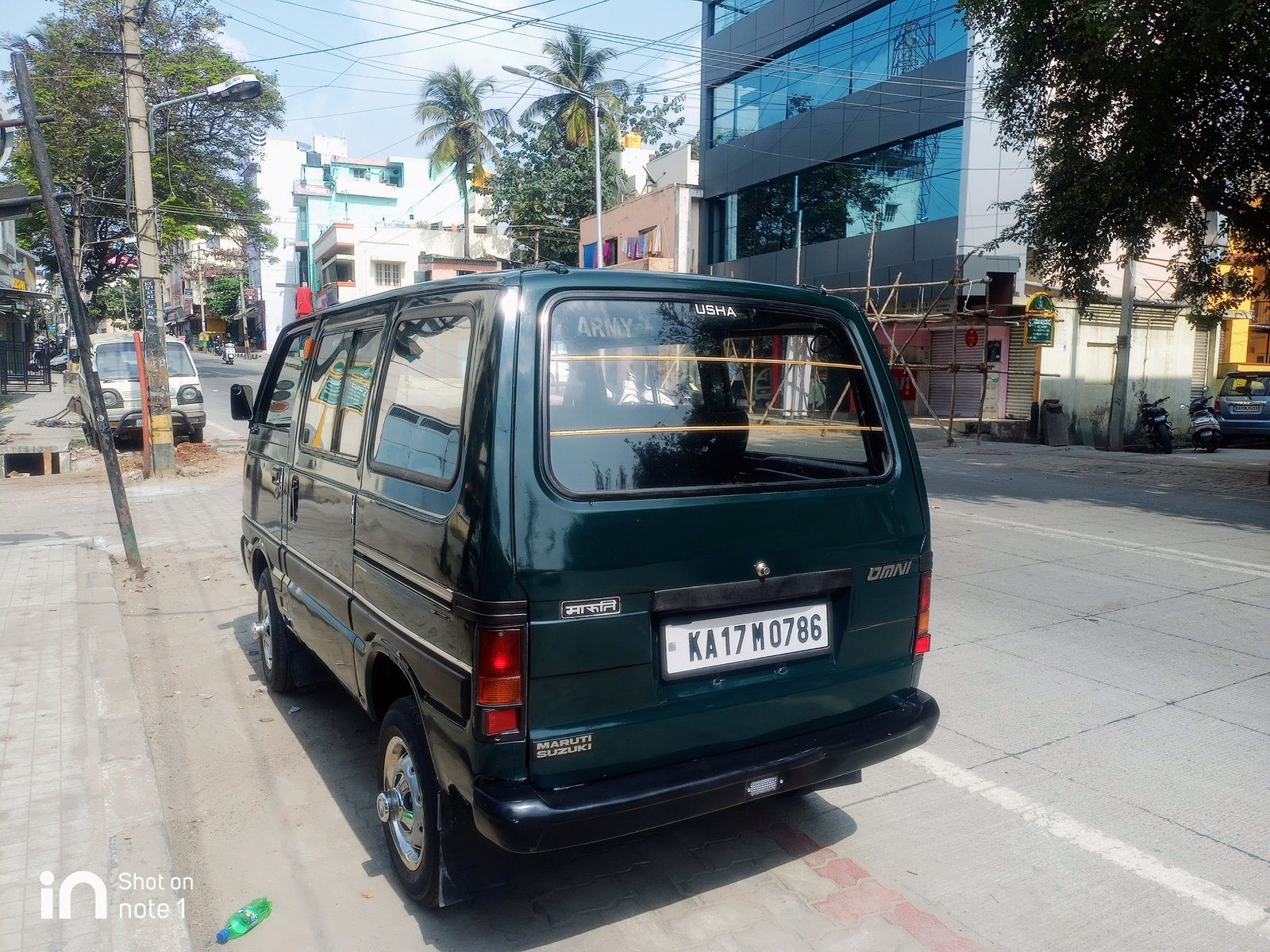
Maruti Omni (Van)
The Sliding-Door National Time Machine: 35 Years of Kidnappings, School Runs & Lifesaving Sprints
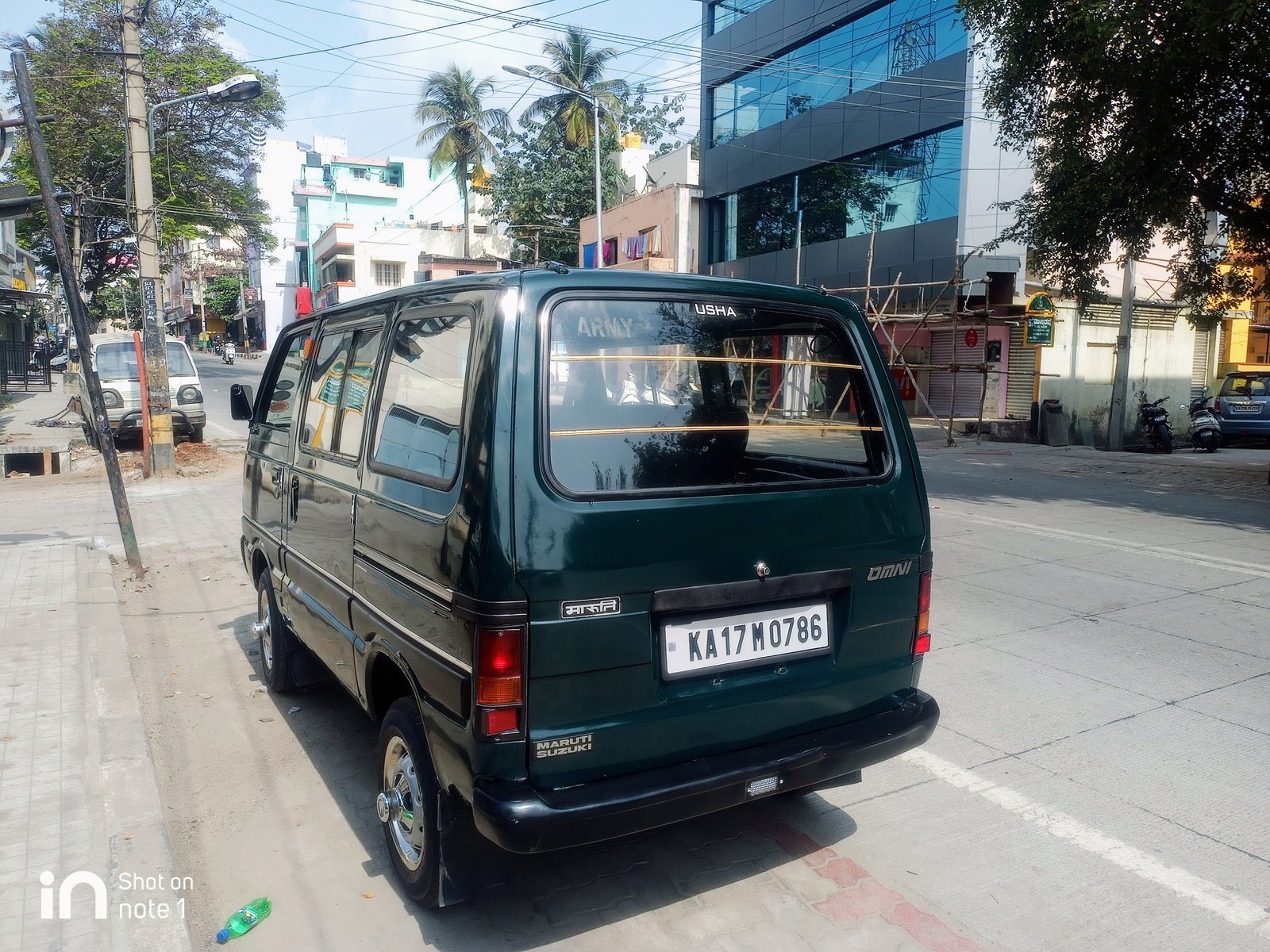
Historical Significance & National Impact
Cultural Phenomenon & Bollywood Lore
The Bollywood Kidnapping Van Meme
From Amitabh Bachchan and Mithun Chakraborty blockbusters in the late 1980s to 1990s and 2000s crime thrillers, the white Maruti Omni with dark tinted windows was the non-negotiable uniform of every movie henchman. Why? The dual side sliding doors could be whipped open in 0.5 seconds, the flat floorboard had zero lip so an actor could be hauled inside in one motion, and the 4.1-meter turning circle allowed getaway drivers to execute dramatic 180-degree handbrake turns in tight alleyways.
The Indian School Dabba
For millions of 90s and 2000s Indian kids, childhood smelled of school bags, ironed uniforms, and the humid interior of an Omni school van. Up to 12 children were packed like sardines on parallel jump seats, steel water bottles clanking against the exposed metal sides, while the driver slapped the heavy sliding door shut with a resounding, metallic "CLACK-THUMP".
The National Lifesaver in Varanasi & Old Delhi
In historic Indian cities characterized by medieval gullies—Varanasi, Chandni Chowk, South Mumbai, and Kolkata—modern ambulances get hopelessly wedged. The Omni Ambulance, with its razor-thin 1,410 mm width and flat floor, was the only emergency vehicle on earth capable of reaching patients trapped deep inside congested mohallas.
Mechanical Anatomy & Driving Soul
The Mid-Engine Layout Under Front Seats
The Omni does not have a front bonnet. The 796cc 3-cylinder engine is mounted longitudinally directly underneath the front driver and passenger seats. You unclip two metal clasps on the seat base and tilt the entire seat cushion backward to check oil. This gave the car 50:50 weight distribution, but also meant free seat heating in winter and roasted thighs in 47°C summer heatwaves.
You Are The Front Bumper: Zero Crumple Zone Physics
In the Omni, your kneecaps sit precisely 8 inches behind the thin pressed-steel front valence panel. The steering column is angled sharply upward at 65 degrees like a city bus, meaning any frontal collision transfers kinetic force directly into the driver's lower limbs.
The Unintentional Dirt Drift Machine: 785 kg + Rear-Wheel Drive
Because the engine powered the rear wheels through a solid live axle with stiff leaf springs, an unladen Omni carrying only a driver had almost 60% of its weight over the front wheels. On loose gravel trails, wet monsoon tarmac, or unpaved village roads, snapping the throttle in first or second gear would break the rear 145-section tyres loose into effortless, controllable oversteer drifts.
The Long Radiator Cooling Trap
Because the radiator sits in the extreme front nose to catch ram-air, while the engine sits in the middle of the chassis, two long steel coolant tubes snake under the floorboards. If an inexperienced roadside mechanic changed the coolant without using the manual bleed screw on the thermostat housing, a trapped air pocket would immediately cause the engine head to overheat and warp the cylinder gasket within 15 kilometers.
Production Milestones Timeline
Launch of the "Maruti Van"
Debuted in December 1984 as Maruti Udyog's second model with round sealed-beam headlamps, chrome Suzuki front grille, and Japanese Mikuni carb F8B engine making 35 bhp.
The "Omni" Rebranding & Rectangular Fascia
Officially named "Omni". Received rectangular headlamps with black plastic surrounds, revised front fascia, and improved door weather-strips.
The Major Facelift: Omni E & Twin Sliding Doors
Received an all-new molded grey dashboard, hazard switches, dual side sliding doors for easier curb boarding, and front disc brakes.
Bharat Stage III (BS3) MPFI Era & Factory LPG
Equipped with 32-bit ECM and multi-point fuel injection (MPFI) with dual oxygen sensors. Launched factory-fitted Omni LPG and CNG variants.
The Curtain Falls (April 1, 2019)
After 35 continuous years and 15,70,000+ units, production was permanently ceased as the flat-front cabover architecture could not meet India's new BNVSAP mandatory front-offset crash and pedestrian impact safety standards.
Factory Engineering Blueprint
Restorer's Reality & Critical Rust Zones
Rust Hotspots
The front floor pan beneath driver pedals is susceptible to rainwater pooling from windshield weatherstrips; sliding door nylon runner bearings wear down and drop the doors off tracks; long coolant hoses running from the front radiator to the mid-mounted engine corrode and cause boiling if neglected. The mechanicals are so simple any village mechanic in Bihar or Rajasthan can rebuild them with a pair of pliers and a 10mm spanner.
Collector Index (2026)
Early 1980s Japanese-spec "Maruti Van" models with round sealed-beam headlamps, chrome center caps, and rear quarter pop-out glass are rapidly becoming cult collector retro vehicles across Kerala and Karnataka, trading for up to ₹1,50,000 - ₹2,25,000.
Frequently Asked Questions
Why was the Maruti Omni discontinued in 2019?
The Maruti Omni was discontinued on April 1, 2019, because of the implementation of India's Bharat New Vehicle Safety Assessment Program (BNVSAP). The flat-front cab-over design has no front crumple zone to absorb crash energy in 56 km/h frontal-offset barrier collisions, making it impossible to pass modern pedestrian and passenger crash mandates.
Is the Maruti Omni rear-wheel drive (RWD) or front-wheel drive (FWD)?
The Maruti Omni is Rear-Wheel Drive (RWD). Its 796cc 3-cylinder engine is mounted longitudinally in the middle of the vehicle beneath the front seats, transferring power through a 4-speed manual gearbox and a short propshaft to a solid live rear axle suspended on leaf springs.
What was the original price of a Maruti Omni when launched in 1984 vs 2019?
When launched in December 1984 as the Maruti Van, it had an ex-showroom price of approximately ₹45,000 to ₹47,000. When production ceased in March 2019, the base 5-seater Omni was priced around ₹2,85,000 ex-showroom, making it one of the most inflation-resistant, value-packed vehicles ever sold in India.
Can you still get spare parts for a Maruti Omni in India?
Yes, almost all mechanical, electrical, cooling, and braking components are readily available off-the-shelf at Maruti Genuine Parts (MGP) counters and local auto markets across India, because the Omni shares engine and running gear with the ubiquitous Maruti 800.
What is the real-world fuel mileage of a petrol Maruti Omni?
In real-world conditions, a well-tuned petrol Maruti Omni delivers between 13.5 kmpl and 15.0 kmpl in stop-and-go city traffic, and 17.5 kmpl to 19.5 kmpl on open highways when driven at its sweet spot speed of 70 to 75 km/h.
Maruti Suzuki Eeco
The Eeco brings a modern G12B 1.2L engine, reverse sensors, and ABS airbags, but lost the charming lightweight flat-nose character of the Omni.