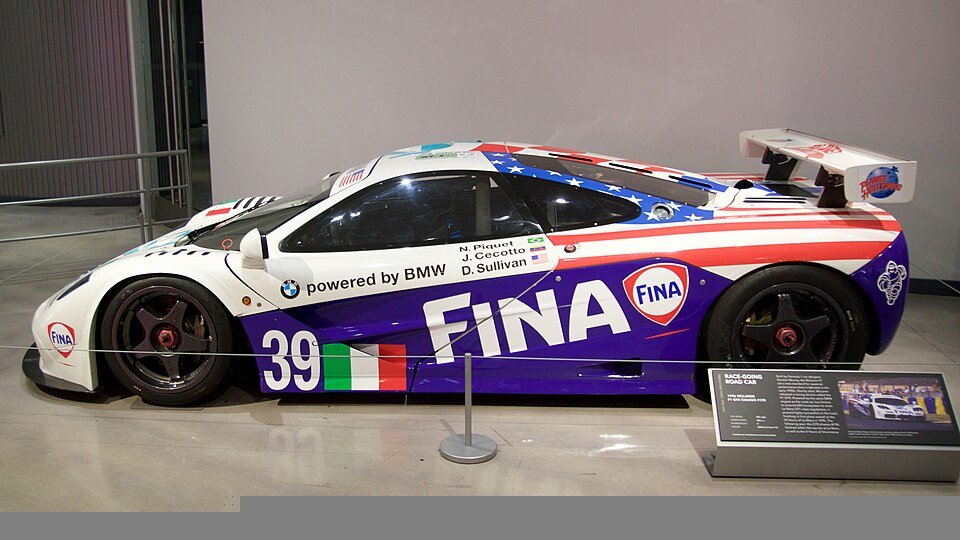
McLaren F1
Gordon Murray's Analog God: Central Seat, Gold-Foil Engine Bay & 240.1 mph World Record
Historical Significance & National Impact
Cultural Phenomenon & Bollywood Lore
The Central Pilot Cockpit
Gordon Murray positioned the driver directly in the center of the cabin, flanked slightly behind by passenger seats on the left and right. This eliminated pedal offset, provided panoramic forward visibility, and placed the driver at the exact yaw center of the vehicle like a fighter jet.
The 24-Karat Gold Foil Heat Shield
Because the high-revving BMW V12 radiated immense thermal energy that could damage the carbon-fiber rear bodywork, Murray lined the entire engine bay with 16 grams of pure 24-karat gold foil—the most efficient heat reflector known to physics.
The 240.1 mph Speed Record
On March 31, 1998, racing driver Andy Wallace piloted prototype XP5 at Volkswagen's Ehra-Lessien test track in Germany. With the rev limiter bumped to 8,300 RPM, the F1 averaged an astonishing 240.14 mph (386.4 km/h), a record for naturally aspirated cars that has stood undefeated for nearly thirty years.
Mechanical Anatomy & Driving Soul
The 6.1L BMW Motorsport S70/2 60° V12
All-aluminum crankcase with Nikasil cylinder coating, dry-sump lubrication, continuously variable intake valve timing (VANOS), 12 individual throttle butterflies, and magnesium castings producing 627 PS and 650 Nm.
Full Carbon-Fiber Monocoque Architecture
Constructed using aerospace-grade pre-preg carbon fiber and aluminum honeycomb core, providing monumental torsional stiffness while weighing just 100 kg.
Active Aerodynamic Ground Effect & Airbrake
Two internal electric Kevlar fans underneath the floor evacuated turbulent air from underbody diffusers to create downforce without aerodynamic drag, while an active rear wing deployed under hard braking.
Production Milestones Timeline
Unveiled at Monaco Grand Prix
Revealed on May 28, 1992, at the Sporting Club in Monaco to universal awe.
Outright Victory at 24 Hours of Le Mans
McLaren F1 GTR #59 wins the world's greatest endurance race on debut.
Production Concludes at 106 Units
Concludes after 64 road cars, 28 race cars, and prototypes, concluding on May 1998.
Factory Engineering Blueprint
Restorer's Reality & Critical Rust Zones
Rust Hotspots
The fuel cell bladder requires mandatory replacement every 5 years, and titanium suspension bolts undergo aerospace ultrasound inspection during annual MSO recommissioning.
Collector Index (2026)
Unchallengeable global supremacy; widely acknowledged as the greatest driver's car ever created in automotive history.
Frequently Asked Questions
Why does the McLaren F1 have three seats?
Chief Engineer Gordon Murray wanted the driver positioned dead center for perfect weight distribution, uncompromised pedal alignment, and unmatched road visibility, leaving room on either side for two passengers.
Is the McLaren F1 still the fastest naturally aspirated car in the world?
Yes! While modern supercars with massive turbochargers and electric hybrid batteries have gone faster, the McLaren F1's 240.1 mph record remains the fastest top speed ever achieved by a naturally aspirated production road car.
How much did a McLaren F1 cost when new versus today?
When launched in 1994, the McLaren F1 cost approximately £540,000 (around $815,000). In 2026, pristine examples command over $20,000,000 to $25,000,000 at international collector auctions.
GMA T.50 (Gordon Murray Automotive)
Gordon Murray's modern fan-car successor, but the original F1 remains the untamed Le Mans-winning monarch.