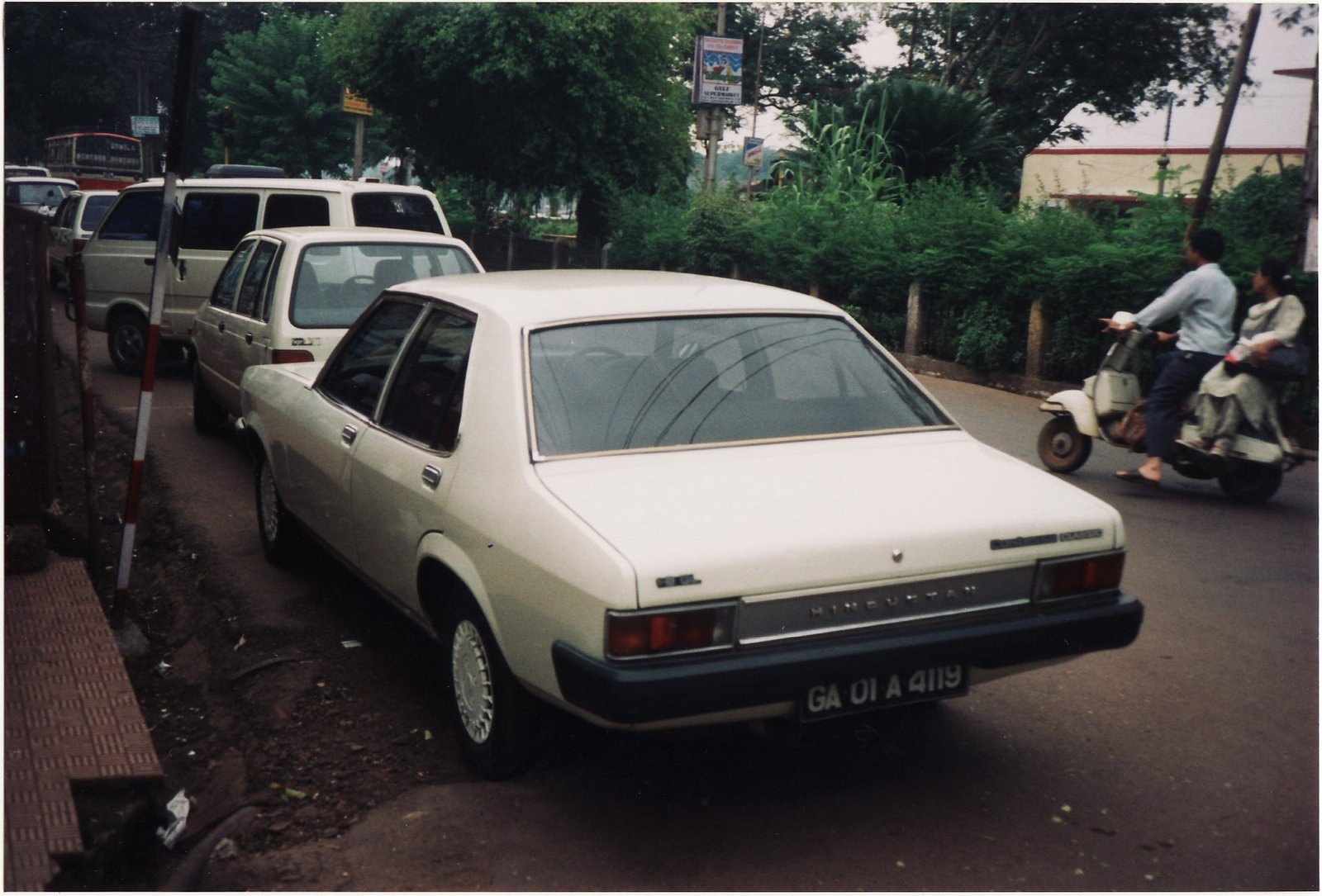
Hindustan Ambassador (Mark I to Grand)
The Undisputed King of Indian Roads: Sovereign of the Lal Batti & Kolkata Kaali-Peeli
Historical Significance & National Impact
Cultural Phenomenon & Bollywood Lore
The Lal Batti Sovereign
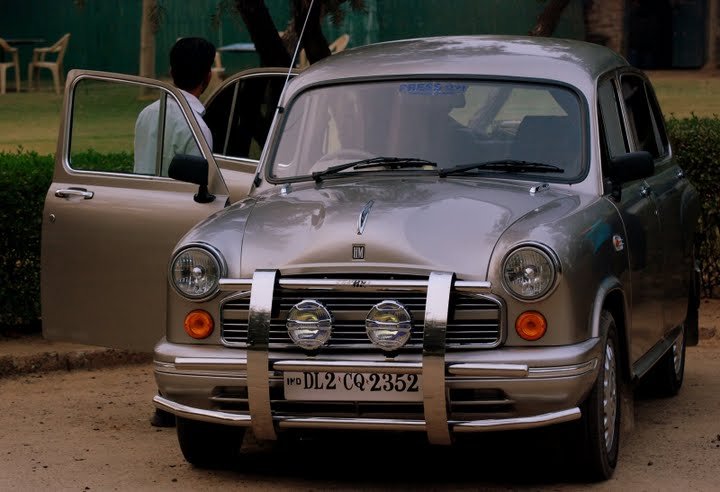
For over four decades, a white Ambassador with a spinning red beacon (Lal Batti), star plates, and white lace curtains was the definitive visual grammar of political power in New Delhi. When an Ambassador convoy approached with sirens blaring, entire state highways parted in deference.
The World's Best Taxi Award
In 2013, global motoring show Top Gear pitted the world's most famous taxis against each other at Brooklands—including the London Black Cab, New York Crown Victoria, and Russian GAZ. The yellow Kolkata Hindustan Ambassador won overall, praised for its indestructible leaf-spring suspension, spacious rear bench, and ability to conquer flooded monsoon streets.
The Rear Sofa That Built Bureaucracies
The Ambassador's rear seat was an upholstered living room sofa. Designed with deep coil-sprung padding and generous legroom, generations of Indian policy decisions, royal decrees, and family business empires were decided from its plush back seat while a chauffeur steered via the spindly two-spoke horn ring.
Mechanical Anatomy & Driving Soul
The 1.8L Isuzu 1800 ISZ Powertrain
The mechanical salvation of late-era Ambassadors. The 1,817cc Isuzu 4ZB1 engine brought Japanese fuel injection, silky smoothness, and modern reliability to the 1950s British chassis, allowing government convoys to cruise effortlessly at triple-digit speeds.
Heavy-Gauge 18-Gauge Pressed Steel Monocoque
Unlike modern tin-can cars built with thin high-tensile steels, the Ambassador was pressed from heavy 18-gauge cold-rolled steel. It could survive side impacts from trucks with little more than a dent, earning it the reputation of an indestructible armored tank.
Front Independent Torsion Bar Suspension
The front suspension utilized longitudinal torsion bars rather than coil springs, providing immense wheel travel and an uncanny ability to soak up deep ruts and rural craters without bottoming out.
Production Milestones Timeline
Launch of the Mark I
Debuts as the replacement for the Hindustan Landmaster based on Morris Oxford III tooling.
First Indian Diesel Passenger Car
Mark IV launches with 1,489cc BMC diesel engine, revolutionizing fleet and taxi economics.
The 1800 ISZ Isuzu Era
Adopts 1.8L Isuzu petrol engine and 5-speed transmission, creating the fastest Ambassador in history.
Uttarpara Plant Closes
Production permanently ceases on May 24, 2014, ending a world-record 56-year production run.
Factory Engineering Blueprint
Restorer's Reality & Critical Rust Zones
Rust Hotspots
Rust prevention and vapor locking on carburetted models in summer heat. Upgrading to an electric fuel pump and dual-circuit power brakes modernizes drivability.
Collector Index (2026)
Steadily rising cultural heritage asset. Preserved by vintage car clubs across the Commonwealth.
Frequently Asked Questions
How long was the Hindustan Ambassador in production?
The Hindustan Ambassador was produced continuously for 56 years, from 1958 to 2014, making it one of the longest production runs of any automobile in global history.
Why was the Ambassador nicknamed the 'Lal Batti' car?
Because for over four decades, it was the exclusive, mandatory official vehicle used by Indian cabinet ministers, chief ministers, bureaucrats, and judges who had the statutory privilege of mounting a red flashing beacon (Lal Batti) on the roof.
Who owns the Ambassador brand name today?
In 2017, French automotive conglomerate Groupe PSA (now Stellantis) bought the iconic 'Ambassador' brand name and trademarks from the CK Birla Group for ₹80 crore.
Toyota Innova Crysta / Hycross
Modern chauffeur-driven government flagship, but lacks the round chrome soul and national political iconography of the Ambassador.